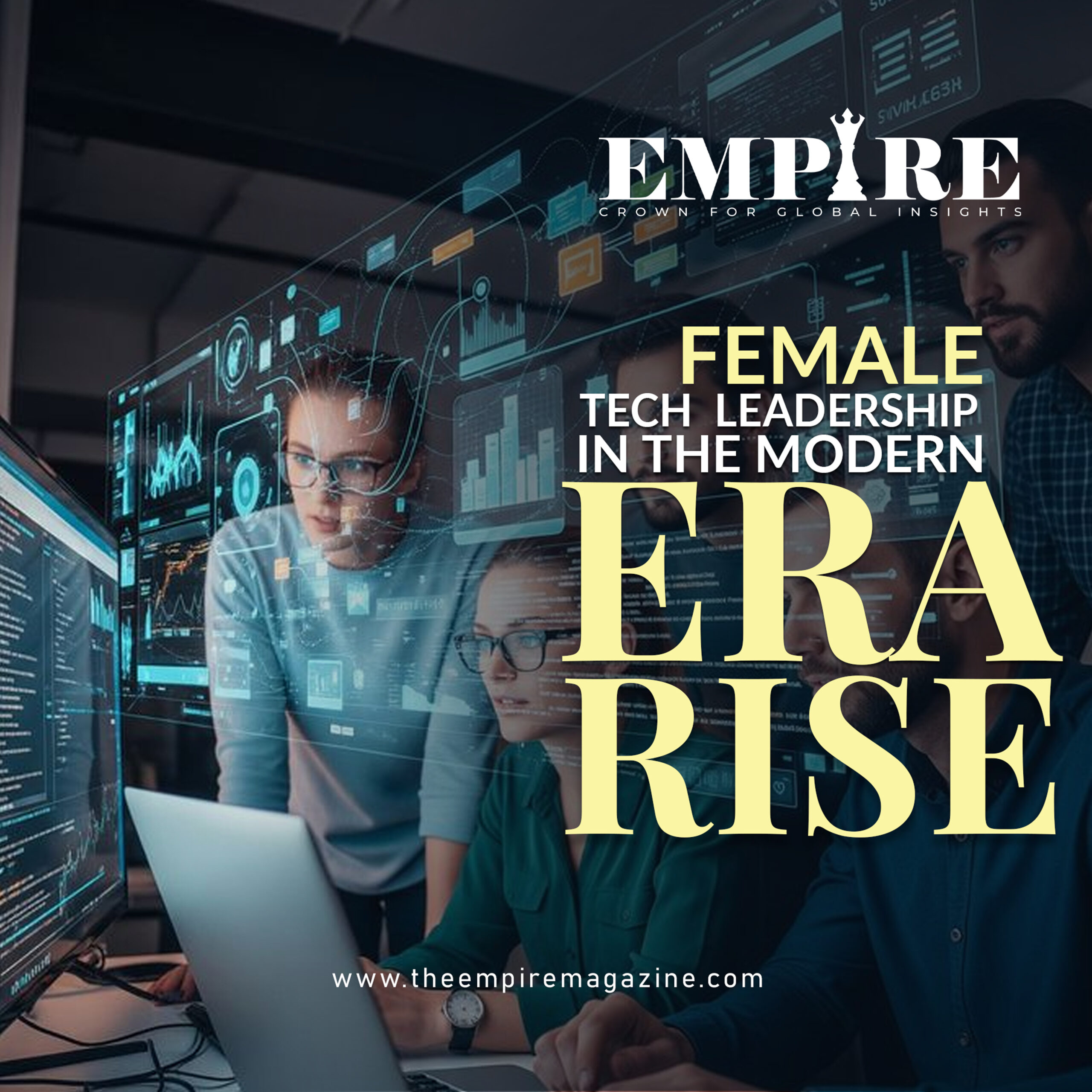
The technology industry is undergoing one of the most significant transformations in its history. Beyond artificial intelligence, semiconductors, and digital infrastructure, another powerful shift is redefining the sector: the rise of Female Tech Leadership in the Modern Era. Women leaders are not only participating in technological innovation—they are shaping its direction, scale, and ethical foundation.
For decades, the tech world was widely perceived as male-dominated, particularly at executive and engineering levels. However, the landscape is changing rapidly. Visionary women are stepping into leadership roles across global technology companies, venture capital firms, startups, and research institutions. Their impact is not symbolic—it is structural and strategic.
Breaking Barriers in a Traditionally Male-Dominated Industry
The path to leadership in technology has historically been challenging for women. Representation gaps, funding disparities, and cultural biases limited access to executive roles. Yet persistence, performance, and strategic excellence have begun to dismantle those barriers.
One of the most compelling examples is Lisa Su, CEO of Advanced Micro Devices (AMD). Under her leadership, AMD transformed from a struggling semiconductor company into one of the most competitive players in the global chip industry. Through strategic innovation, operational focus, and visionary product development, Su repositioned AMD as a formidable competitor in high-performance computing.
Her success illustrates how Female Tech Leadership in the Modern Era is redefining corporate turnaround strategies and technological advancement.
Strategic Vision and Long-Term Thinking
Many women leaders in technology emphasize long-term strategy over short-term visibility. This approach has proven particularly valuable in industries such as semiconductors, artificial intelligence, and cloud computing, where sustained research and development drive competitive advantage.
Female tech executives often focus on:
- Building resilient innovation pipelines
- Strengthening collaborative cultures
- Encouraging inclusive product development
- Prioritizing sustainable growth
These leadership styles foster environments where creativity and discipline coexist, resulting in sustainable transformation.
Innovation Beyond Products
Female leadership in technology extends beyond hardware and software. It reshapes how organizations operate internally. Inclusive leadership models encourage diversity of thought, cross-functional collaboration, and transparent communication.
Research consistently shows that diverse leadership teams improve decision-making quality. When women contribute to executive strategy, organizations gain broader perspectives on consumer behavior, ethical considerations, and global markets.
As discussed in our related feature on leadership evolution:
https://theempiremagazine.com/?p=5413
Modern leadership is no longer about authority alone—it is about adaptability, inclusivity, and long-term impact.
Redefining Corporate Culture
Female Tech Leadership in the Modern Era is also transforming corporate culture. The emphasis is shifting from rigid hierarchies toward more agile, people-centric environments.
This shift matters because technology companies depend on attracting highly skilled engineers, designers, and strategists. Talented professionals increasingly seek workplaces that value inclusion and purpose alongside innovation.
Leaders who cultivate psychologically safe workplaces often unlock higher performance and creativity. When employees feel heard and supported, they are more willing to take calculated risks—an essential factor in breakthrough innovation.
Ethical Technology and Responsible Innovation
As artificial intelligence and digital platforms influence society at unprecedented levels, ethical leadership becomes essential. Female leaders frequently champion responsible technology practices, including data privacy, algorithmic fairness, and environmental sustainability.
This emphasis strengthens corporate reputation and aligns innovation with societal expectations. In a world where regulatory scrutiny is increasing, ethical foresight is not only a moral imperative—it is a competitive advantage.
Women executives are playing critical roles in shaping conversations around AI ethics, sustainability standards, and digital governance frameworks.
Entrepreneurial Momentum
The rise of female tech leadership is not limited to large corporations. Female founders are building high-growth startups across fintech, healthtech, AI, cybersecurity, and climate technology.
Venture capital is gradually recognizing the economic value of investing in women-led ventures. Although funding gaps remain, the momentum is shifting. Successful exits and scalable platforms are demonstrating that female-founded tech companies are not niche—they are powerful market drivers.
Entrepreneurship amplifies leadership influence. Female founders are creating ecosystems that inspire future generations to pursue careers in science, engineering, and innovation.
Global Influence and Representation
Representation matters. When women occupy high-profile executive roles, they redefine what leadership looks like. This visibility encourages young professionals worldwide to envision themselves in technology leadership.
In global markets such as North America, Europe, and Asia, female executives are increasingly participating in boardrooms, policy discussions, and innovation councils. Their voices influence international collaboration and digital policy development.
The impact extends beyond business performance. It reshapes cultural perceptions of who leads technological progress.
Challenges Still Ahead
Despite progress, challenges remain. Gender disparities in STEM education and executive advancement persist. Closing these gaps requires sustained commitment from organizations, policymakers, and educational institutions.
Mentorship programs, inclusive hiring strategies, and equitable funding initiatives will play key roles in sustaining growth in female tech leadership.
The transformation is ongoing, but the trajectory is promising.
The Future of Female Tech Leadership
The next decade will likely see further expansion of Female Tech Leadership in the Modern Era. As digital transformation accelerates globally, companies that prioritize inclusive leadership will be better positioned to innovate responsibly and scale sustainably.
The technology industry thrives on disruption. Today, women leaders are among the most powerful disruptors—challenging outdated norms and redefining executive excellence.
Their influence is not limited to boardrooms. It shapes global innovation ecosystems, product development strategies, and corporate governance standards.
The future of technology is being shaped by diverse minds and visionary women who understand that leadership is not defined by tradition, but by transformation.
– The Empire Magazine
Crown For Global Insights