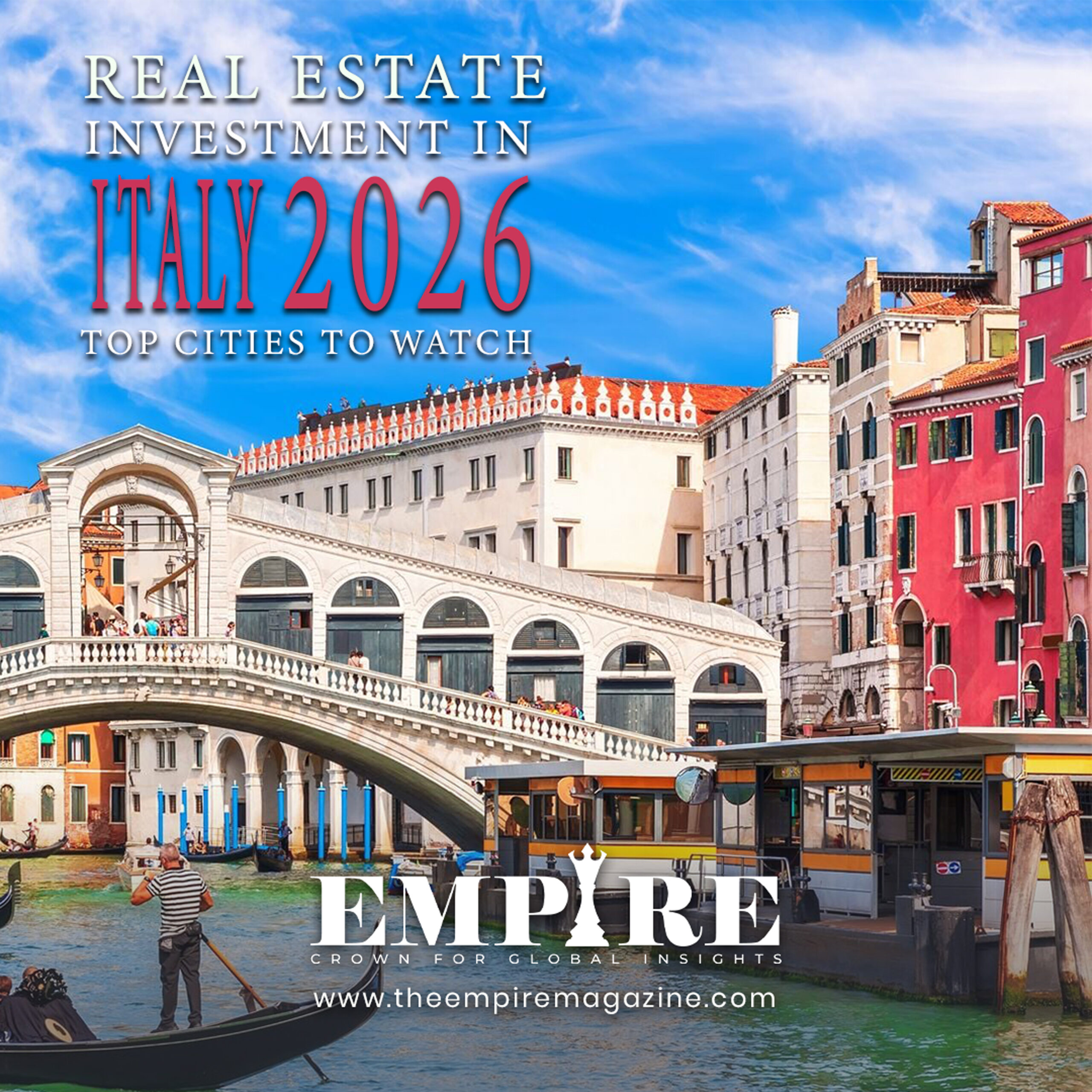
Real Estate Investment in Italy 2026: Top Cities to Watch
Real Estate Investment in Italy 2026 is entering a new phase of opportunity as investors seek stability, sustainability, and long-term growth across Europe. Italy has always held global appeal because of its culture, tourism strength, and architectural heritage. However, in 2026, the focus is shifting beyond traditional hotspots. Investors are now analyzing innovation corridors, smart city developments, and emerging southern markets with renewed interest.
Italy’s property market is no longer driven only by lifestyle purchases or holiday homes. It is increasingly influenced by infrastructure modernization, energy-efficient development, and evolving work patterns. For those planning strategic investments, 2026 presents a landscape shaped by transformation rather than tradition alone.
To explore how global real estate dynamics are influencing investment strategies, read our related insight:
https://theempiremagazine.com/?p=5340
Milan: Innovation and Stability Combined
When discussing Real Estate Investment in Italy 2026, Milan continues to dominate. As the country’s financial and business center, Milan has strengthened its position through large-scale regeneration and smart city projects.
Areas such as Porta Nuova and CityLife have matured into thriving mixed-use districts that blend residential, office, and retail space. Demand for energy-efficient apartments and flexible office spaces remains strong, especially with hybrid work models still shaping business culture.
Milan’s international connectivity, modern infrastructure, and technology-driven economy make it one of the safest long-term real estate markets in Italy. While entry prices are higher than in other cities, consistent appreciation and rental demand support investor confidence.
Rome: Enduring Value in a Historic Capital
Rome continues to offer stability within Real Estate Investment in Italy 2026. As a political, administrative, and cultural hub, it benefits from diverse demand sources including tourism, public sector employment, and education.
Infrastructure improvements, particularly metro expansions and suburban modernization projects, are reshaping previously overlooked neighborhoods. Investors are finding opportunities near transport corridors and university districts where rental yields remain reliable.
Rome’s global identity ensures that it remains a consistent performer, particularly in long-term residential rentals and hospitality-related investments.
Turin: The Tech and Innovation Contender
Turin’s evolution is one of the most compelling stories in Real Estate Investment in Italy 2026. Once defined by its automotive heritage, the city is now positioning itself as a technology and research center.
With strong academic institutions and expanding innovation hubs, Turin attracts young professionals and startups. Compared to Milan and Rome, property prices remain accessible, allowing investors to enter the market at competitive levels.
Urban renewal projects and smart infrastructure upgrades indicate that Turin’s growth trajectory is steady rather than speculative, making it appealing for strategic investors.
Bologna: Consistent Rental Demand
Bologna continues to stand out for its stable rental market. As a university city with a strong economy and high quality of life, it provides consistent occupancy rates.
In 2026, Real Estate Investment in Italy increasingly favors cities with dependable student and professional populations. Student housing, co-living developments, and eco-friendly residential projects are particularly attractive segments.
Bologna’s investments in green mobility and public infrastructure further enhance its long-term investment appeal.
Florence: Luxury and Cultural Capital
Florence remains a magnet for premium real estate investment. The city’s global cultural recognition ensures ongoing demand in the luxury hospitality and high-end residential markets.
For Real Estate Investment in Italy 2026, Florence offers strong value preservation rather than rapid appreciation. Restored heritage properties and boutique serviced residences continue to attract international buyers.
Careful navigation of rental regulations is essential, but compliant luxury properties remain highly desirable.
Bari: Southern Italy’s Emerging Growth Market
Southern Italy is playing a larger role in Real Estate Investment in Italy 2026, and Bari is at the center of this transformation.
Infrastructure expansion, improved port facilities, and rail upgrades have strengthened Bari’s economic prospects. Government-backed incentives for renovation and development continue to attract investors seeking higher growth potential.
Lower entry prices compared to northern cities provide room for appreciation, especially in logistics, residential development, and mixed-use projects.
Naples: Renewal and Opportunity
Naples is gradually shifting its image through redevelopment initiatives and infrastructure modernization. Seafront projects and urban renewal efforts are enhancing both safety and investor perception.
In 2026, Naples represents a selective investment opportunity. Investors focusing on revitalized neighborhoods and transport-linked areas may benefit from upward value adjustments as redevelopment progresses.
While Naples carries more variability than Milan or Rome, it also offers stronger upside potential.
Key Drivers Shaping Real Estate Investment in Italy 2026
Several structural trends are influencing investment decisions this year:
- Continued growth of smart city infrastructure and digital integration
- Rising demand for energy-efficient, ESG-compliant properties
- Hybrid and remote work supporting regional city growth
- Tax incentives and renovation subsidies encouraging redevelopment
- Tourism resilience strengthening hospitality and short-term rental markets
Investors are increasingly prioritizing sustainability, connectivity, and demographic stability when evaluating opportunities.
A Market Defined by Strategy, Not Speculation
Real Estate Investment in Italy 2026 is less about short-term speculation and more about strategic positioning. Cities that balance cultural preservation with modernization are outperforming those relying solely on historical prestige.
Investors who analyze infrastructure plans, demographic shifts, and sustainability policies are better positioned to secure long-term returns. Italy offers a diverse landscape—from global finance in Milan to innovation in Turin and emerging growth in Bari.
In 2026, Italy’s real estate market reflects both continuity and change. For investors seeking a European market that blends tradition with forward-thinking development, Italy remains a compelling destination.
– The Empire Magazine
Crown For Global Insights