
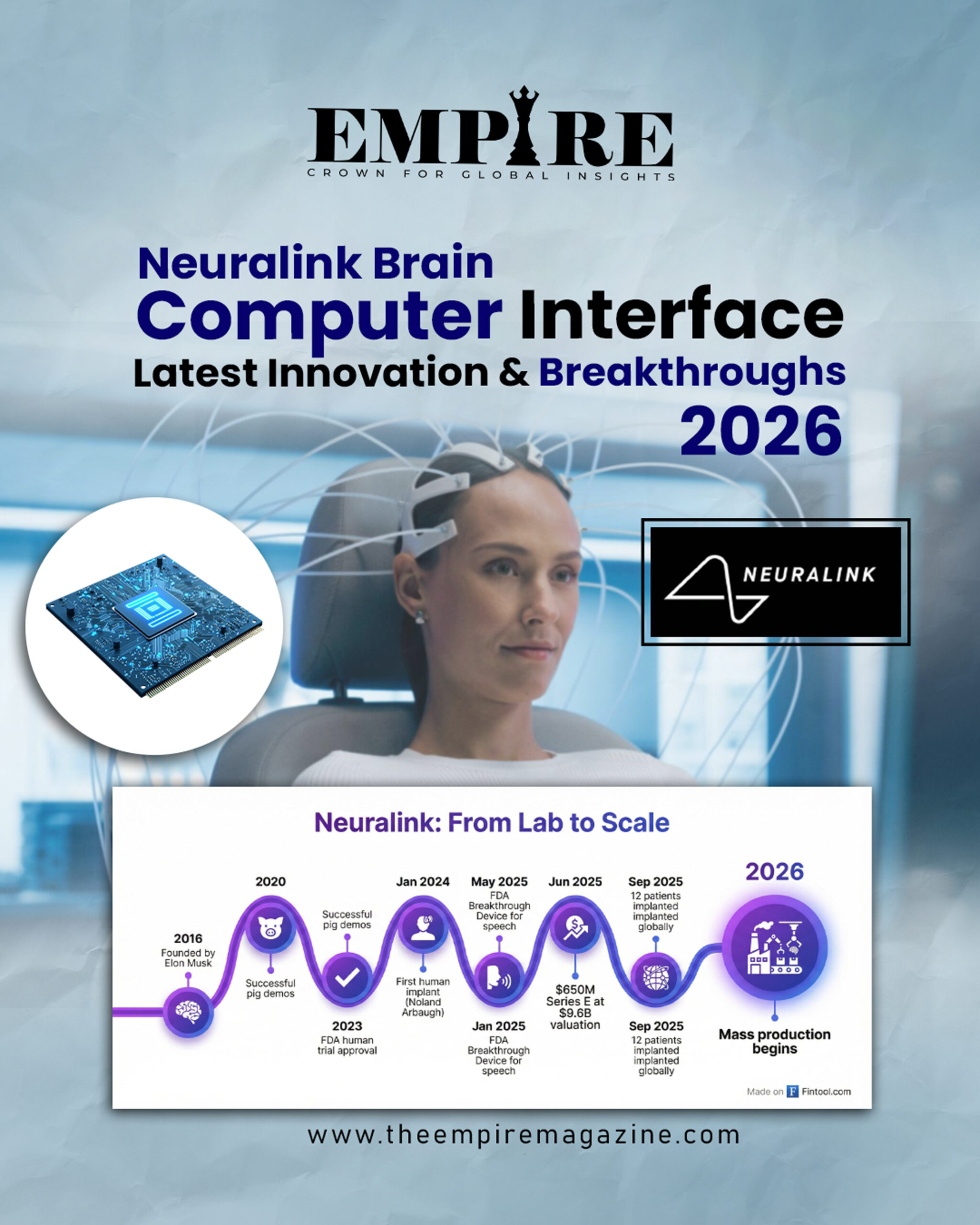
Neuralink Brain-Computer Interface has become one of the most exciting and talked-about technological developments in 2026. Elon Musk’s neurotechnology company continues to make rapid progress, turning science fiction into medical reality with its advanced brain implants that enable direct communication between the human brain and digital devices.
Major Breakthroughs in 2026
This year, Neuralink has achieved several significant milestones in its clinical trials. The latest version of its N1 Implant features ultra-thin, flexible threads with thousands of electrodes that can both read and stimulate brain activity with exceptional precision. These improvements have resulted in better signal quality, longer battery life, and fully wireless operation.
Patients implanted with the device have demonstrated remarkable capabilities. Individuals with paralysis can now control computers, smartphones, and prosthetic limbs using only their thoughts. Some participants have achieved high-speed cursor control, smooth typing, and even the ability to play video games with impressive accuracy and speed.
Key Innovations Driving Progress
1. Enhanced Surgical Robot Neuralink’s custom-built surgical robot has been refined for greater precision and safety. The robot enables minimally invasive implantation of the ultra-fine electrode threads, reducing recovery time and potential complications.
2. Improved Wireless Technology The latest implants feature faster data transmission and more efficient wireless charging. Patients can now charge their devices overnight using a simple, comfortable external charger, making daily use far more practical.
3. Advanced AI Signal Processing Sophisticated artificial intelligence algorithms decode brain signals in real time with increasing accuracy. This allows for more natural and intuitive control of external devices, significantly improving the user experience.
4. Vision Restoration Program Neuralink has initiated early human trials for vision restoration. By directly stimulating the visual cortex, the technology aims to help people who are blind regain some level of visual perception. Initial results have shown promising signs of light detection and basic shape recognition.
Medical Applications and Patient Impact
The Neuralink Brain-Computer Interface is showing strong potential beyond mobility restoration. Early data suggests benefits for patients with epilepsy, Parkinson’s disease, and treatment-resistant depression. The ability to monitor and modulate brain activity offers new hope for managing complex neurological conditions.
Several patients have publicly shared transformative experiences. Some have regained independence in daily tasks, while others report improved quality of life through better communication and interaction with the world around them.
Technical Excellence
The Neuralink system consists of a small implant placed flush with the skull, connected to thousands of electrode threads that interface directly with neurons. This design allows for high-bandwidth communication between the brain and computers. The entire system is engineered to be biocompatible and long-lasting, addressing key challenges faced by earlier brain-computer interface technologies.
Challenges and Ethical Considerations
Despite impressive progress, important challenges remain:
- Long-term safety and durability of the implants
- Protection of highly sensitive brain data and privacy concerns
- Regulatory approval for wider medical use
- High cost and accessibility of the technology
- Ethical questions around human enhancement and cognitive augmentation
Neuralink continues to work closely with regulatory bodies and ethics committees to ensure responsible development and patient safety.
Competitive Landscape
While Neuralink leads in fully implantable, high-bandwidth interfaces, other companies and research institutions are developing alternative approaches, including non-invasive and semi-invasive technologies. This healthy competition is accelerating innovation across the entire brain-computer interface field.
Future Possibilities
Looking ahead, Neuralink aims to expand clinical trials to treat more conditions and improve device performance. Long-term goals include seamless integration with augmented reality, direct brain-to-brain communication, and enhanced cognitive abilities.
The convergence of Neuralink’s technology with artificial intelligence, robotics, and virtual reality could fundamentally change how humans interact with machines and each other.
Why Neuralink Matters in 2026
Neuralink Brain-Computer Interface: Latest Innovation & Breakthroughs 2026 represents more than just medical technology — it marks a significant step toward a future where humans and artificial intelligence can work in closer partnership. For people with disabilities, it offers life-changing possibilities. For humanity as a whole, it opens new frontiers in cognitive enhancement and human potential.
As the technology matures, society will need to carefully navigate the opportunities and challenges it presents. Issues around equity, ethics, privacy, and the definition of human capability will become increasingly important.
Conclusion
Neuralink’s progress in 2026 has captured global attention and renewed optimism about the potential of brain-computer interfaces. While still in early clinical stages, the technology has already demonstrated its ability to restore lost functions and improve quality of life for patients.
The coming years will be critical as Neuralink scales its trials, refines its technology, and works toward broader medical applications. What began as a bold vision is steadily moving toward becoming a transformative reality in neurotechnology.
For more technology and innovation insights, explore related coverage here: Internal Link.
Follow The Empire Magazine on Instagram and Facebook for the latest updates.
– The Empire Magazine
Crown For Global Insights