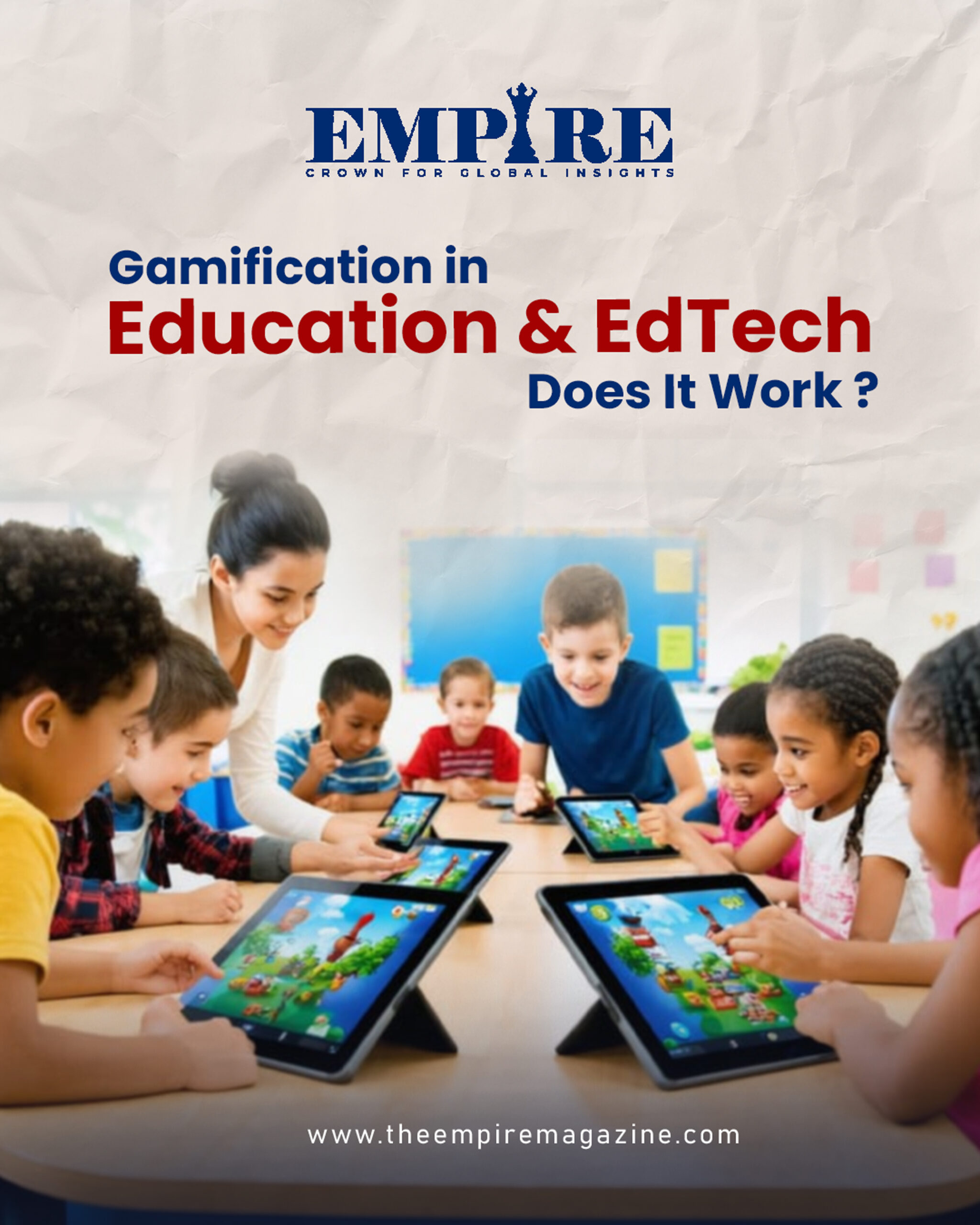
Gamification in Education has become one of the most discussed trends in EdTech. By incorporating game elements such as points, badges, leaderboards, levels, challenges, and rewards into learning experiences, educators and platforms aim to boost student engagement and improve learning outcomes. But the big question remains: Does gamification in education actually work?
What is Gamification in Education?
Gamification applies game design principles to non-game contexts, specifically learning environments. It transforms traditional lessons into interactive, motivating experiences. Students earn points for completing assignments, unlock badges for mastering skills, compete on leaderboards, and progress through levels as they learn.
Popular EdTech platforms have successfully integrated gamification features, making subjects from mathematics and language learning to coding and professional skills more engaging. The goal is to tap into natural human desires for achievement, competition, status, and instant feedback.
The Case For Gamification: Proven Benefits
There are several compelling reasons why gamification in education shows strong potential:
1. Increased Student Engagement Traditional lectures often struggle to hold attention. Gamified learning makes education more interactive and fun. Students report higher motivation levels when learning feels like playing a well-designed game rather than completing mandatory tasks.
2. Better Knowledge Retention Game mechanics encourage repeated practice and active recall. Immediate feedback loops help students understand mistakes quickly and reinforce correct concepts, leading to improved long-term retention compared to passive learning methods.
3. Personalized Learning Paths Modern gamified systems adapt difficulty levels based on student performance. Advanced students can progress faster while those needing more support receive additional challenges and resources, creating a more personalized experience.
4. Development of 21st-Century Skills Beyond academic content, gamification helps develop important skills such as problem-solving, critical thinking, collaboration, resilience, and digital literacy.
5. Higher Completion Rates Many EdTech platforms report significantly higher course completion rates when gamification elements are included. The sense of progress and achievement encourages students to finish what they started.
Real-World Results and Evidence
Numerous schools, universities, and corporate training programs have implemented gamification with positive outcomes. Language learning apps using streaks, daily goals, and leaderboards have helped millions of users maintain consistent study habits. Coding platforms that turn programming exercises into quests and challenges have made complex subjects more approachable for beginners.
In K-12 education, teachers using gamified classroom management systems report improved behavior, higher participation, and better homework submission rates. Higher education institutions have seen success with gamified online courses, particularly in STEM subjects where student dropout rates are traditionally high.
Potential Drawbacks and Criticisms
Despite its advantages, gamification in education is not without challenges:
- Overemphasis on Extrinsic Motivation: Critics argue that points and badges may undermine intrinsic motivation to learn. Students might focus on collecting rewards rather than genuinely understanding the material.
- One-Size-Fits-All Risk: Not all students respond positively to competition. Leaderboards can demotivate some learners who feel constantly behind.
- Poor Implementation: Badly designed gamification can feel gimmicky and actually decrease engagement. Superficial elements without meaningful progression systems often fail.
- Equity Concerns: Students from different socioeconomic backgrounds may have varying access to technology or different responses to gamified systems.
- Burnout Risk: Constant notifications, streaks, and pressure to maintain daily activity can lead to student fatigue.
Best Practices for Effective Gamification
For gamification in education to succeed, it must be implemented thoughtfully:
- Align game elements with clear learning objectives
- Balance competition with collaboration
- Provide meaningful choices and autonomy
- Ensure fairness and transparency in scoring systems
- Combine with strong pedagogical foundations
- Regularly update and refresh content to avoid repetition
- Gather student feedback and iterate continuously
The most successful implementations treat gamification as a tool to support good teaching rather than a replacement for it.
The Future of Gamification in EdTech
As technology advances, gamification is evolving rapidly. Virtual reality (VR) and augmented reality (AR) are creating immersive learning environments where students can explore historical events, conduct virtual science experiments, or practice professional skills in realistic scenarios.
Artificial intelligence is making gamified experiences more adaptive and personalized. Future systems will likely adjust storylines, difficulty, and rewards in real time based on individual learning patterns and emotional states.
Social features are also expanding, allowing students to collaborate in gamified environments across geographical boundaries, fostering global learning communities.
Final Verdict: Does It Work?
Yes, gamification in education works — when done correctly. It is not a magic solution that automatically improves all learning outcomes, but a powerful methodology that, when thoughtfully applied, significantly enhances engagement, motivation, and results.
The evidence suggests that well-designed gamification delivers better results than traditional methods in many contexts, particularly for digital-native generations. However, its success depends heavily on quality design, proper integration with curriculum goals, and balance with other teaching approaches.
Educators and EdTech developers should view gamification as one tool in a larger toolkit rather than a complete solution. The most effective learning experiences will likely combine gamification with strong content, supportive teaching, and meaningful assessment.
As the education world continues to evolve in the digital age, gamification is set to play an increasingly important role. The challenge for educators and platforms is to move beyond superficial game elements toward deep, meaningful gamified learning experiences that genuinely improve educational outcomes.
For more education and technology insights, explore related coverage here: Internal Link.
Follow The Empire Magazine on Instagram and Facebook for the latest updates.
– The Empire Magazine
Crown For Global Insights