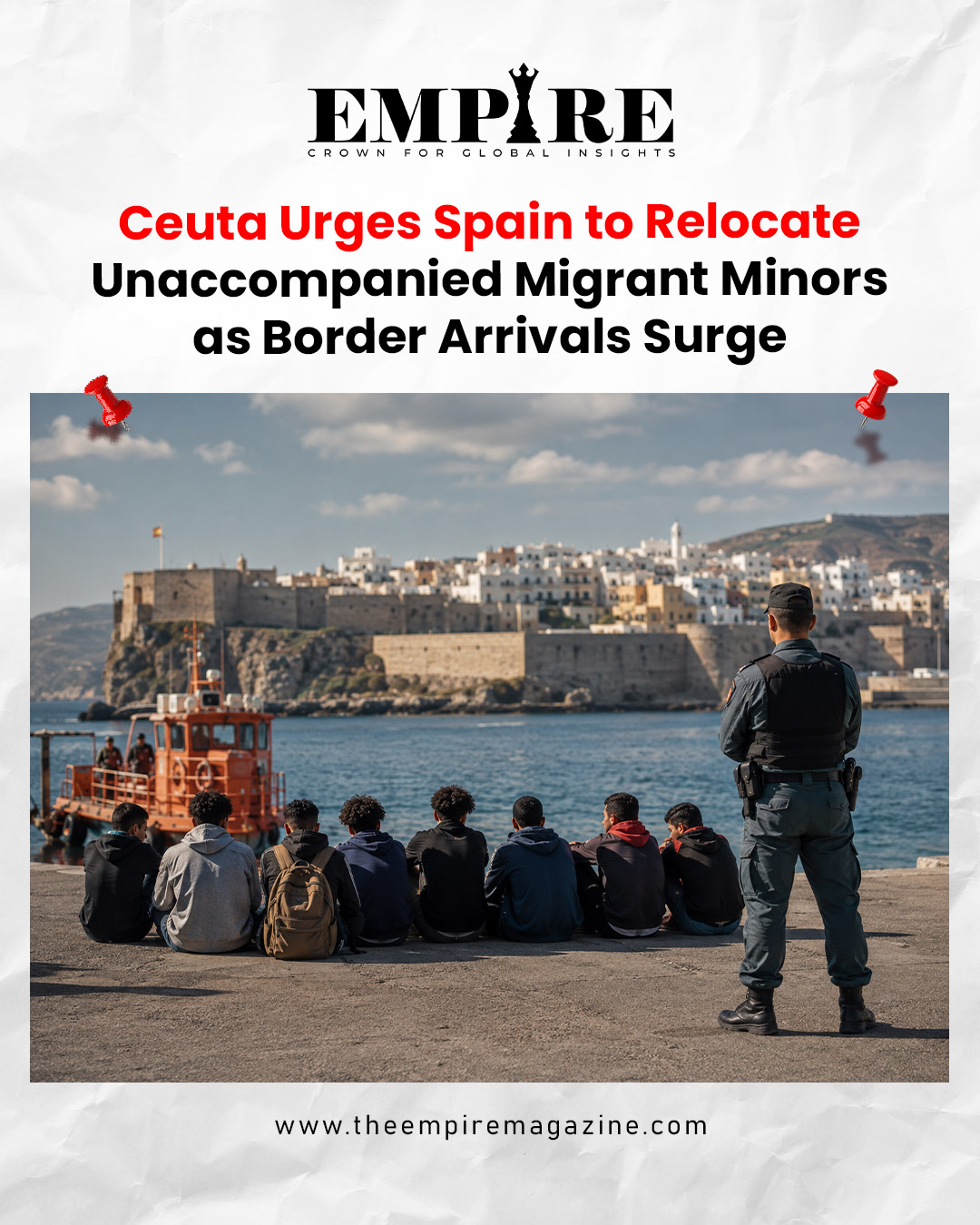
Ceuta urges Spain to relocate unaccompanied migrant minors as border arrivals surge, raising humanitarian, legal, and political challenges. Ceuta has urged Spain to relocate unaccompanied migrant minors as border arrivals continue to surge, placing immense pressure on local child protection services. The crisis highlights the humanitarian, legal, and political challenges of managing migration while ensuring vulnerable children receive adequate care, education, and long-term support.
Ceuta struggles to cope with a sharp increase in the arrival of unaccompanied migrant minors
Europe’s migration debate has once again returned to the spotlight as the Spanish autonomous city of Ceuta struggles to cope with a sharp increase in the arrival of unaccompanied migrant minors. Situated on the northern coast of Africa and sharing one of Europe’s only land borders with the African continent, Ceuta has long served as a gateway for migrants hoping to enter the European Union. However, the latest surge has placed extraordinary pressure on the city’s already stretched welfare, healthcare, education, and child protection systems. Local authorities are now urging the Spanish government to relocate hundreds of unaccompanied migrant minors to other regions across Spain, arguing that the city can no longer shoulder the responsibility alone. The situation is not merely about border management; it is a humanitarian challenge involving vulnerable children who arrive after dangerous journeys, often fleeing conflict, poverty, persecution, or unstable living conditions. As Spain balances legal obligations, domestic politics, and European migration policies, the Ceuta unaccompanied migrant minors crisis has become a defining example of the complex realities facing border regions across Europe. The developments have renewed discussions about burden-sharing, humanitarian responsibility, and the need for long-term migration reforms that protect both national interests and human dignity.
Ceuta Unaccompanied Migrant Minors Crisis Intensifies
The recent increase in arrivals has pushed Ceuta’s reception centres beyond their intended capacity, creating significant logistical and humanitarian concerns. Facilities designed to house a limited number of children are now accommodating far more than they were built for, making it increasingly difficult to provide adequate healthcare, education, psychological support, and social integration services. Local officials have repeatedly warned that without immediate intervention from Madrid, the city’s child welfare infrastructure could become unsustainable. The situation is especially challenging because Spanish law and international conventions require authorities to prioritise the protection and well-being of minors regardless of their immigration status. Unlike adult migrants, unaccompanied children must receive specialised care, legal assistance, and guardianship until long-term arrangements can be made. This legal obligation reflects Spain’s commitment to international human rights standards but also places considerable administrative and financial pressure on smaller territories like Ceuta. Local authorities argue that relocating these children across Spain would ensure better living conditions while distributing responsibilities more fairly among autonomous communities.
Why Ceuta Faces Growing Migration Pressure
Ceuta occupies a unique geographical position that has made it one of Europe’s most closely watched migration entry points. Surrounded by Morocco while remaining Spanish territory, the city has historically attracted migrants seeking access to Europe through legal crossings, maritime routes, or attempts to bypass border barriers. Economic disparities between Europe and parts of Africa, coupled with political instability, armed conflicts, climate-related displacement, and limited employment opportunities, continue to drive migration toward the region. Many of the unaccompanied minors arriving in Ceuta originate from North African countries, while others have travelled through multiple nations before reaching the border. Their journeys often involve dangerous sea crossings, exploitation by trafficking networks, and significant physical and emotional trauma. Experts note that migration involving children is becoming increasingly complex because families facing desperate circumstances sometimes send younger members ahead in hopes of improving future opportunities. Consequently, Ceuta has become more than a border checkpoint—it represents both a humanitarian refuge and a frontline testing ground for European migration policies. The city’s repeated appeals underline how border communities often experience migration pressures long before national governments fully respond.
Spain’s Response to Ceuta Unaccompanied Migrant Minors
The Spanish government has acknowledged the growing strain on Ceuta and has previously implemented relocation mechanisms aimed at transferring unaccompanied migrant minors to other autonomous regions. These redistribution efforts seek to balance responsibilities while ensuring children receive proper accommodation and support services. However, the process has frequently encountered political disagreements, administrative delays, and legal challenges, particularly when regional governments question resource availability or oppose compulsory relocation quotas. Spain must simultaneously uphold domestic child protection laws, comply with European human rights obligations, and address public concerns regarding immigration management. Officials emphasise that relocation is not solely an immigration policy but a child welfare measure designed to protect vulnerable young people from overcrowded facilities and inadequate services. Financial assistance from the central government has also become part of discussions, with local authorities requesting additional funding for education, healthcare, social workers, and integration programmes. While emergency transfers may provide temporary relief, policymakers increasingly recognise that sustainable migration governance requires coordinated planning between local administrations, Madrid, and European institutions to avoid recurring crises whenever border arrivals increase.
Humanitarian Challenges Before reaching Ceuta
Beyond political discussions and migration statistics lie the individual stories of children who have endured extraordinary hardships before reaching Ceuta. Many unaccompanied migrant minors arrive without documentation, family support, or certainty about their future. Some have escaped armed conflict, while others have fled poverty, violence, or unstable home environments in search of safety and opportunity. Mental health specialists working with migrant children frequently highlight the emotional trauma associated with separation, uncertainty, and dangerous migration routes. These young people often require psychological counselling, educational support, language training, and community integration programmes before they can begin rebuilding their lives. Child protection organisations stress that prolonged stays in overcrowded reception centres increase emotional distress and reduce opportunities for healthy development. Humanitarian groups therefore advocate for quicker relocation, improved guardianship systems, and stronger coordination among social services. They argue that addressing the Ceuta unaccompanied migrant minors crisis should extend beyond border control measures and focus equally on children’s rights, welfare, and long-term integration into society. Ultimately, successful migration management depends not only on security policies but also on recognising the human experiences behind every arrival.
Political Debate Over Ceuta Unaccompanied Migrant Minors
The issue has also intensified political debate within Spain, where migration continues to be one of the country’s most discussed public policy topics. Different political parties propose varying approaches ranging from stronger border enforcement and accelerated returns to expanded humanitarian assistance and broader relocation programmes. Regional governments have also expressed differing views regarding responsibility-sharing, funding mechanisms, and the capacity to accommodate relocated children. These disagreements occasionally slow implementation even when emergency measures receive broad public attention. Meanwhile, Ceuta’s local administration maintains that the city cannot continue managing disproportionate migration pressures without greater national support. European migration policy further complicates the discussion because Spain serves as one of the EU’s external border states, making domestic decisions relevant to broader European security and humanitarian strategies. Experts suggest that balancing border protection with child welfare obligations will remain a defining challenge for policymakers in the coming years. The debate surrounding Ceuta unaccompanied migrant minors therefore reflects larger questions about solidarity, legal responsibility, and the future direction of European migration governance.
Europe’s Migration Challenge Continues
The developments in Ceuta illustrate a broader European challenge that extends well beyond Spain’s borders. Countries across southern Europe, including Italy, Greece, and Malta, continue to face significant migration pressures due to their geographic proximity to major migration routes. The European Union has introduced reforms aimed at strengthening asylum systems, improving border coordination, and encouraging fairer distribution of responsibilities among member states. Nevertheless, implementation remains uneven, and frontline regions often continue to bear the greatest burden during sudden increases in arrivals. Human rights organisations consistently argue that protecting children should remain a shared European responsibility rather than falling primarily on border communities. At the same time, governments emphasise the importance of combating human trafficking, preventing irregular migration, and addressing the root causes driving displacement. International cooperation with countries of origin and transit is increasingly viewed as essential for reducing dangerous migration journeys while expanding legal pathways for protection. The Ceuta situation therefore represents not only a Spanish issue but also a wider European test of humanitarian values and collective policy coordination.
The Road Ahead for Ceuta and Spain
As Ceuta continues to seek immediate assistance, Spain faces the difficult task of balancing humanitarian commitments with practical governance and political realities. Relocating unaccompanied migrant minors may ease immediate pressure on the city’s child protection services, but experts widely agree that long-term solutions require broader reforms addressing migration management, international cooperation, and child welfare systems. Strengthening reception facilities, increasing financial support, expanding regional cooperation, and improving integration programmes will likely remain central priorities. Equally important is addressing the conditions that compel children to undertake dangerous journeys in the first place through development partnerships, diplomatic engagement, and conflict resolution initiatives. The Ceuta unaccompanied migrant minors crisis serves as a reminder that migration is ultimately a human story shaped by hope, survival, and resilience. As Spain and Europe continue searching for balanced solutions, the choices made today will influence not only border policy but also the future of thousands of vulnerable children seeking safety, dignity, and the opportunity for a better life. By combining compassion with effective governance, policymakers have an opportunity to transform a humanitarian challenge into a model of responsible and coordinated migration management.
Ceuta Unaccompanied Migrant Minors Highlight Need for Long-Term Solutions
While relocating unaccompanied migrant minors can provide immediate relief for Ceuta, experts caution that it is only a short-term measure unless accompanied by broader structural reforms. Migration patterns across the Mediterranean and North African routes have become increasingly dynamic, influenced by geopolitical tensions, climate-related displacement, economic inequality, and organised trafficking networks. Addressing these root causes requires coordinated international efforts involving Spain, the European Union, African nations, and humanitarian organisations. Investments in education, employment opportunities, border cooperation, and safe migration pathways can help reduce the risks that force vulnerable children to undertake perilous journeys. At the same time, Spain must continue strengthening its child protection framework by expanding foster care programmes, increasing funding for social services, and improving integration initiatives that help migrant minors become active members of society. For Ceuta, sustainable support from the central government will be essential to maintain public services while safeguarding the rights and dignity of every child arriving at its borders. As Europe continues to redefine its migration strategy, the experiences of Ceuta demonstrate that effective policy must combine security with compassion, ensuring that humanitarian responsibilities remain central to every decision.
Ceuta unaccompanied migrant minors
The unfolding situation surrounding Ceuta unaccompanied migrant minors is more than a regional immigration challenge it is a reflection of the broader humanitarian and policy dilemmas confronting Europe today. Ceuta’s appeal to Spain underscores the immense pressure that frontline border communities face when migration surges unexpectedly, particularly when vulnerable children are involved. While emergency relocation can alleviate immediate strain, lasting progress will depend on comprehensive migration reforms, stronger intergovernmental cooperation, and sustained investments in child welfare and integration. Equally important is addressing the socioeconomic and political factors that continue to drive irregular migration from neighbouring regions. As Spain works alongside the European Union to navigate these complexities, the response to Ceuta’s crisis will serve as a critical benchmark for balancing border security with the protection of human rights. Ultimately, every unaccompanied migrant minor represents not just a policy challenge but a young life seeking safety, stability, and hope for a better future. By adopting solutions rooted in solidarity, responsibility, and compassion, Spain has an opportunity to set an example for humane migration governance across Europe.
For more business and retail insights, read more on The Empire Magazine
Previous article: https://theempiremagazine.com/singapores-gic/
Magazine Feautures | Podcasts: Empire Global Talks
Follow The Empire Magazine on Facebook | Instagram | LinkedIn | YouTube
The Empire Magazine | Crown for Global Insights