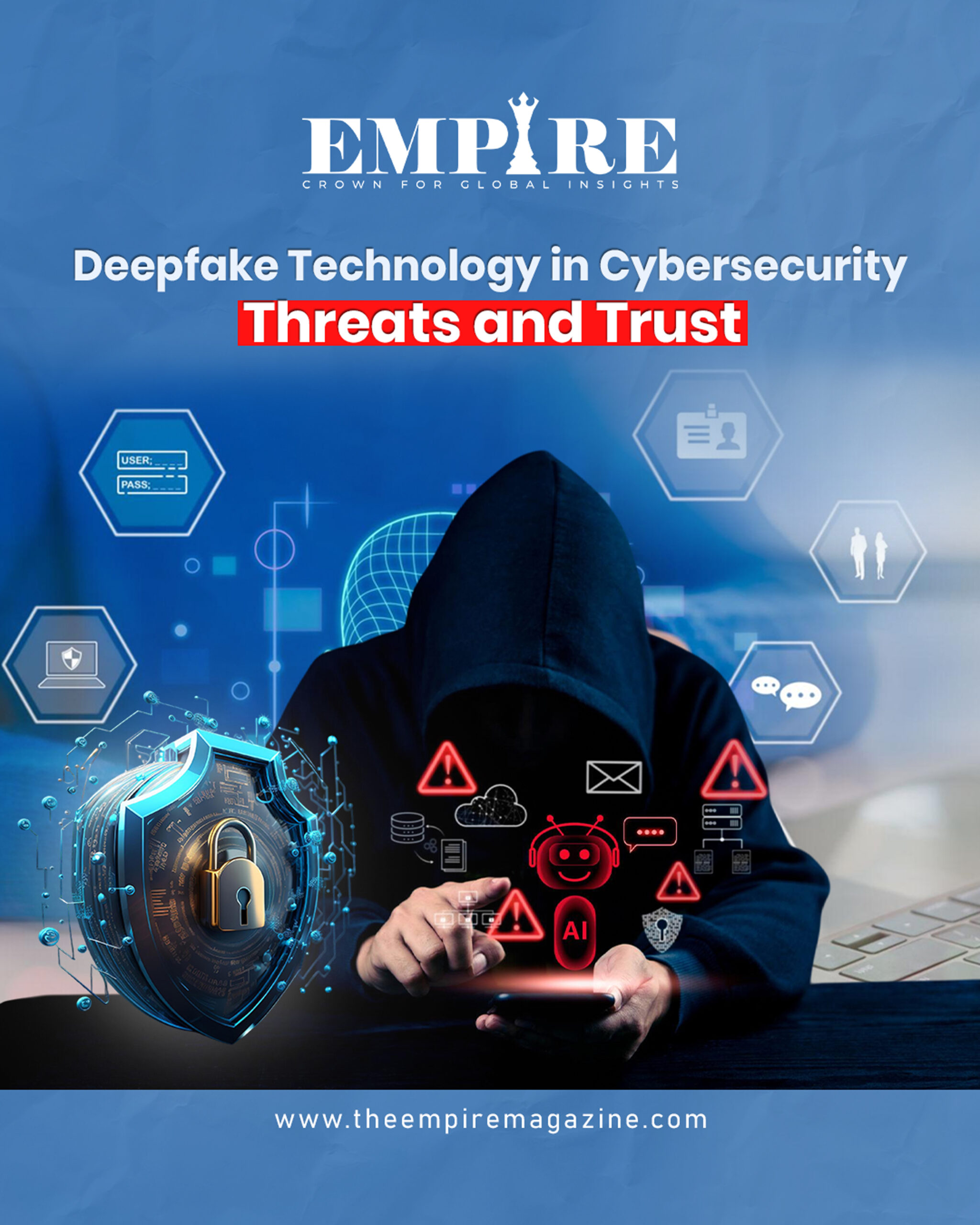
Deepfake Technology in Cybersecurity is rapidly becoming one of the most serious threats in the modern digital era. As artificial intelligence evolves, it has enabled the creation of highly realistic synthetic media, including videos, audio, and images that can mimic real individuals with remarkable precision. While this technology offers innovative opportunities in entertainment and communication, it also introduces significant risks to cybersecurity, digital trust, and information integrity.
Understanding Deepfake Technology in Cybersecurity
Deepfake Technology in Cybersecurity refers to the use of artificial intelligence to create manipulated media that appears authentic. These deepfakes are generated using advanced machine learning algorithms that analyze large datasets of a person’s facial expressions, voice patterns, and behaviors.
By combining these elements, AI systems can produce convincing content that is difficult to distinguish from reality. This capability has transformed the digital threat landscape, making it increasingly challenging for individuals and organizations to verify the authenticity of information .
The Erosion of Digital Trust
At the heart of Deepfake Technology in Cybersecurity lies a critical issue: the erosion of trust. In today’s digital world, communication and transactions rely heavily on the assumption that digital content is genuine. Deepfakes disrupt this assumption by enabling the creation of fake but believable content.
This has serious implications for businesses, governments, and individuals. Fake videos or audio recordings can be used to spread misinformation, manipulate public opinion, or damage reputations. As deepfakes become more sophisticated, the ability to trust digital content diminishes, creating uncertainty in online interactions.
Cybersecurity Threats and Attack Methods
Deepfake Technology in Cybersecurity introduces a wide range of cyber threats, many of which are more advanced and harder to detect than traditional attacks.
1. Executive Impersonation
One of the most dangerous uses of deepfake technology is impersonating senior executives. Cybercriminals can replicate the voice or appearance of company leaders to authorize fraudulent transactions or manipulate employees into sharing sensitive information.
2. Social Engineering Attacks
Deepfake audio and video can be used to create realistic scenarios that deceive individuals into taking harmful actions. For example, a fake video call from a trusted colleague can trick someone into revealing confidential data.
3. Identity Theft and Financial Fraud
Deepfake Technology in Cybersecurity is also being used to create fake identities or replicate real ones. This allows attackers to bypass security systems, including biometric authentication methods such as facial recognition and voice verification.
4. Business Email Compromise
Deepfakes are increasingly being integrated into business email compromise attacks, making them more convincing and harder to detect. These attacks can lead to significant financial losses and data breaches.
Why Deepfakes Are Difficult to Detect
One of the biggest challenges with Deepfake Technology in Cybersecurity is the difficulty in identifying manipulated content. Modern deepfakes are highly advanced and capable of replicating subtle details such as facial expressions, voice tones, and real-time interactions.
Several factors contribute to this challenge:
- Real-time generation of deepfake content
- Familiarity bias, where people trust known faces and voices
- Limitations of existing authentication systems
Although certain signs—such as unnatural eye movements, inconsistent lighting, or poor lip synchronization—can indicate deepfakes, these indicators are becoming less noticeable as technology improves .
Strategies to Combat Deepfake Threats
Addressing the risks associated with Deepfake Technology in Cybersecurity requires a comprehensive and multi-layered approach.
1. Strengthening Verification Protocols
Organizations should implement strict verification procedures for sensitive actions, such as financial transactions. Verifying requests through multiple communication channels can reduce the risk of deepfake-based attacks.
2. Advanced Detection Tools
AI-powered detection systems can analyze digital content for anomalies and inconsistencies. These tools can provide real-time alerts, helping organizations identify and respond to threats quickly.
3. Blockchain for Content Authentication
Blockchain technology can be used to verify the authenticity of digital content. By creating tamper-proof records, blockchain ensures that any alterations are easily detectable.
4. Employee Training and Awareness
Human awareness is a crucial defense against deepfake attacks. Training employees to recognize suspicious behavior and verify unusual requests can prevent many cyber incidents.
5. Multi-Factor Authentication (MFA)
Implementing advanced authentication methods adds an extra layer of security. MFA systems that are resistant to impersonation can help protect sensitive data and systems.
The Role of Innovation in Cyber Defense
As Deepfake Technology in Cybersecurity continues to evolve, cybersecurity strategies must also adapt. Innovation plays a key role in developing advanced detection methods and strengthening digital defenses.
AI itself is becoming a critical tool in cybersecurity. AI-powered systems can analyze large volumes of data, identify patterns, and respond to threats more efficiently than traditional methods. However, this also creates a technological arms race, as both attackers and defenders leverage AI capabilities.
Building a Secure Digital Future
The impact of Deepfake Technology in Cybersecurity extends beyond technical challenges—it affects the foundation of trust in digital environments. As societies become increasingly reliant on digital communication, ensuring the authenticity of information is more important than ever.
Creating a secure digital future requires collaboration between governments, organizations, and individuals. By investing in advanced technologies, implementing strong security measures, and promoting awareness, it is possible to mitigate the risks associated with deepfakes.
For more insights on technology, cybersecurity, and global innovation, visit:
https://theempiremagazine.com/?p=5989
Stay connected with us:
Instagram: https://www.instagram.com/the_empire_magazine/
Facebook: https://www.facebook.com/profile.php?id=61573749076160
– The Empire Magazine
Crown For Global Insights