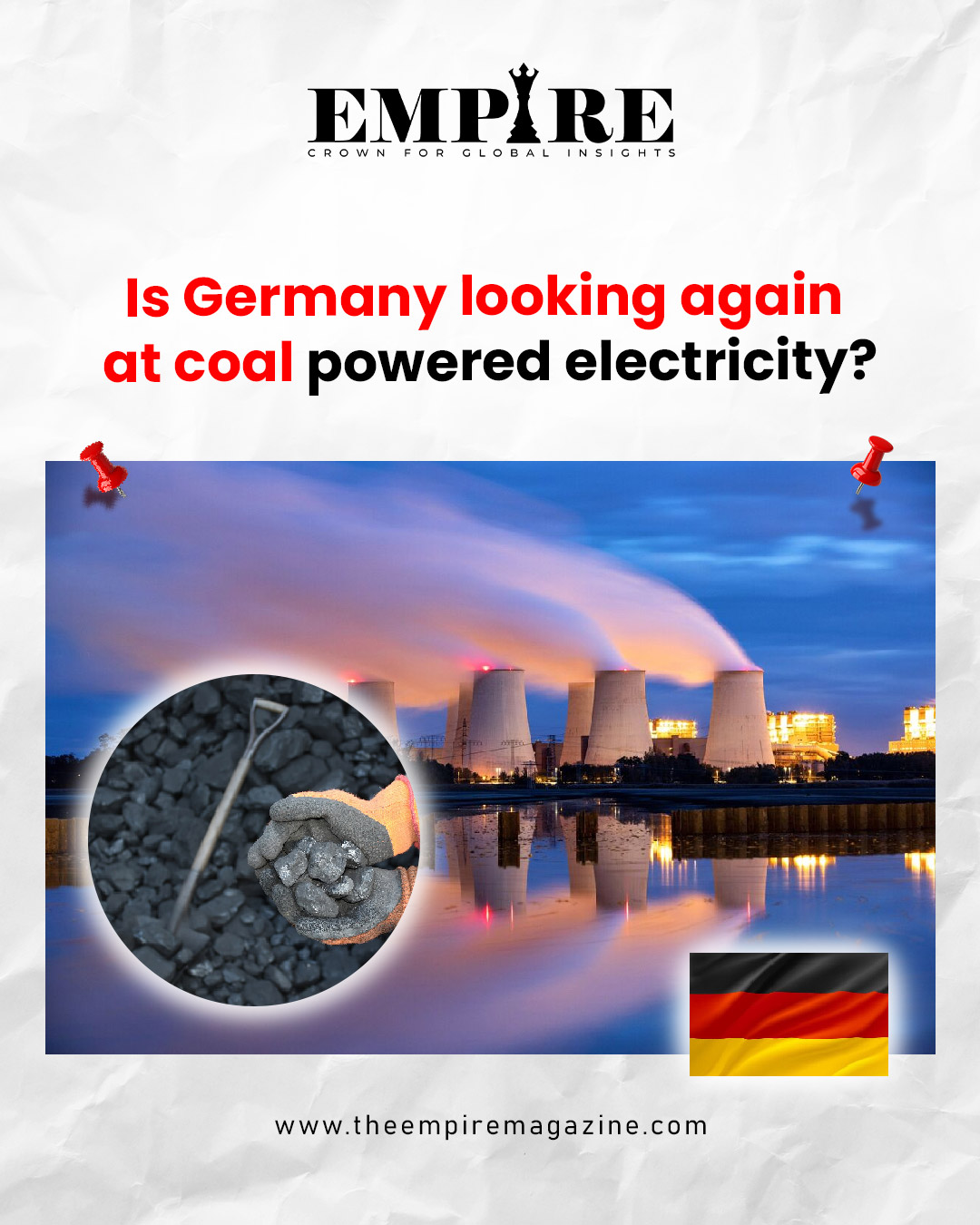
Germany is temporarily relying on reserve coal-powered electricity to strengthen energy security amid supply uncertainties and fluctuating renewable energy output. However, the country has not abandoned its long-term commitment to phase out coal by 2038 and continues to expand renewable energy and modern gas-fired backup capacity.
Germany’s Coal Revival: What’s Really Happening?
For years, Germany has been regarded as one of the world’s most ambitious nations in the transition toward clean energy. The country invested hundreds of billions of euros into renewable energy projects, pledged to eliminate nuclear power, and committed to phasing out coal as part of its climate strategy. Yet recent policy developments have reignited an important question: Is Germany looking again at coal-powered electricity?
The answer is both yes and no.
Germany is not reversing its coal exit policy, nor is it planning to build new coal-fired power stations. Instead, the government has chosen to temporarily rely on reserve coal plants and delay the retirement of some existing facilities as a safeguard against potential electricity shortages.
This decision reflects the difficult balancing act facing Europe’s largest economy. Germany must ensure reliable electricity supplies for households and industries while maintaining its long-term commitment to achieving carbon neutrality.
The move comes after several years of unprecedented disruption in European energy markets. Russia’s invasion of Ukraine dramatically altered natural gas supplies across Europe, forcing governments to reconsider how they guarantee energy security. Although gas imports have diversified since 2022, policymakers remain cautious about future supply risks, especially during winter months when electricity demand peaks.
At the same time, renewable energy sources such as wind and solar continue to expand rapidly but cannot yet provide consistent electricity throughout the day without extensive battery storage and modern grid infrastructure. Consequently, coal-fired plants are increasingly viewed as emergency backup rather than primary sources of electricity.
Rather than signalling a permanent return to coal, Germany’s latest measures illustrate how even advanced clean-energy economies sometimes require conventional power sources during periods of uncertainty.
Why Germany Needs Coal Again Despite Its Green Energy Push
Germany’s temporary reliance on coal-powered electricity stems from practical concerns rather than a change in climate ambition.
Electricity systems require continuous stability. Wind turbines cannot generate electricity without wind, and solar farms produce limited power during cloudy weather or at night. Until large-scale energy storage becomes commercially widespread, governments must maintain backup generation capable of operating whenever renewable output falls.
Coal plants, despite their environmental drawbacks, remain technically capable of providing this dependable baseload and dispatchable power.
Another important factor is Germany’s decision to permanently shut down its final nuclear power plants in 2023. Nuclear energy had supplied stable, low-carbon electricity for decades. With nuclear generation removed from the energy mix, Germany became more dependent on renewable energy, imported electricity, natural gas, and reserve fossil fuel capacity.
Following the reduction of Russian pipeline gas supplies, policymakers recognized the need for additional emergency electricity reserves. Rather than risking power shortages or industrial disruptions, Germany decided to keep several coal-fired plants available under reserve capacity mechanisms.
These facilities are not intended to operate continuously throughout the year. Instead, they can be activated during periods of exceptionally high electricity demand, reduced renewable generation, or unexpected disruptions in gas supplies.
This strategy reflects a broader reality facing energy transitions worldwide: achieving net-zero emissions requires maintaining system reliability while gradually replacing fossil fuels with cleaner alternatives.
Energy experts frequently note that successful decarbonization depends not only on renewable generation but also on investments in electricity storage, transmission networks, flexible gas plants capable of using hydrogen in the future, and demand-management technologies.
Germany’s approach therefore represents a temporary insurance policy rather than a reversal of its energy transformation.
The Russia Energy Crisis Continues to Shape Germany’s Decisions
Few countries experienced the geopolitical consequences of Russia’s invasion of Ukraine as profoundly as Germany.
For decades, Germany relied heavily on affordable Russian natural gas to power factories, heat homes, and support electricity generation. Before 2022, Russian gas accounted for a significant share of Germany’s energy imports, making the country particularly vulnerable when supplies were disrupted.
The sudden reduction in pipeline deliveries forced policymakers to rapidly diversify energy sources. Germany accelerated the construction of liquefied natural gas (LNG) import terminals, secured alternative suppliers including Norway and the United States, and expanded renewable energy investments.
Despite these achievements, energy security remains a top national priority. Global LNG prices remain sensitive to geopolitical tensions, extreme weather events, and rising demand from Asia. Simultaneously, electricity consumption is expected to increase over the coming decade as electric vehicles, heat pumps, artificial intelligence infrastructure, and industrial electrification expand.
To prepare for these future demands, Germany plans to develop new gas-fired power plants designed to operate initially with natural gas before transitioning to hydrogen as cleaner fuels become commercially viable.
Until that infrastructure is fully operational, reserve coal plants provide an additional layer of protection against potential electricity shortages.
Government officials have repeatedly emphasized that these measures are temporary and do not alter Germany’s legally established coal phase-out timetable. Instead, they represent an effort to balance climate commitments with the immediate responsibility of ensuring affordable and reliable electricity for Europe’s largest industrial economy.
Can Renewable Energy Replace Coal Fast Enough?
Germany’s long-term energy strategy leaves little doubt about the country’s destination. Renewable energy—not coal—is expected to become the backbone of the nation’s electricity system over the coming decades. The real question is whether that transformation can happen quickly enough to satisfy rising electricity demand while preserving grid stability.
Germany has made remarkable progress in expanding renewable energy capacity. Wind turbines across the country’s northern regions and offshore coastlines, along with rapidly growing solar installations, now account for a significant share of electricity generation during favorable weather conditions. Government policies continue to encourage investment in renewable projects, battery storage technologies, and modern transmission infrastructure.
However, the transition has exposed one of the biggest technical challenges facing modern power systems: renewable energy is variable by nature. Electricity demand remains constant, but wind and solar generation fluctuate depending on weather conditions and daylight hours. During periods of low wind speeds or prolonged cloudy weather, renewable output can fall sharply, requiring alternative sources of electricity to maintain a stable grid.
Energy storage technologies, particularly utility-scale batteries, are improving rapidly but have not yet reached the scale required to support an economy as large and industrialized as Germany’s. Pumped hydro storage remains limited, while hydrogen storage and advanced battery systems are still being developed for commercial deployment.
Another challenge lies in expanding Germany’s electricity transmission network. Much of the country’s wind energy is generated in northern Germany, while industrial demand is concentrated in the south. Delays in constructing high-voltage transmission lines have slowed the efficient distribution of renewable electricity across the country.
Recognizing these challenges, the German government is accelerating investments in grid modernization, battery storage, offshore wind projects, hydrogen-ready gas plants, and digital energy management systems. These investments aim to reduce dependence on coal over time rather than increase it.
Industry experts believe Germany’s temporary use of reserve coal plants reflects the practical realities of managing a complex energy transition. The country is not replacing renewable energy with coal; instead, it is using coal as a temporary bridge until cleaner technologies can reliably provide uninterrupted electricity throughout the year.
What This Means for Europe’s Energy Transition
Germany’s energy decisions extend far beyond its national borders. As Europe’s largest economy and one of the continent’s biggest electricity markets, Germany often sets the tone for broader European energy policy.
The temporary reliance on reserve coal capacity has sparked debate among policymakers, climate advocates, and industry leaders across Europe. Some environmental organizations argue that any continued use of coal risks slowing climate progress and undermining global decarbonization efforts. Others contend that energy security must remain the immediate priority, particularly in an era of geopolitical instability and volatile fuel markets.
The situation highlights a broader lesson for countries pursuing ambitious climate targets. Transitioning to a low-carbon economy is not simply about replacing fossil fuels with renewable energy. It also requires resilient infrastructure capable of maintaining reliable electricity supplies during periods of fluctuating renewable generation or external supply disruptions.
Several European countries have adopted similar approaches by retaining certain fossil fuel assets as emergency backup while simultaneously accelerating renewable energy deployment. The objective is to minimize emissions without compromising grid reliability or economic competitiveness.
Germany’s experience also underscores the growing importance of energy diversification. Rather than relying heavily on a single fuel source or foreign supplier, modern energy strategies increasingly emphasize a balanced mix of renewables, flexible gas-fired generation, battery storage, hydrogen technologies, cross-border electricity trading, and demand-response systems.
At the same time, Europe’s industrial competitiveness depends heavily on stable and affordable electricity prices. Manufacturing sectors including chemicals, automotive production, artificial intelligence infrastructure, semiconductor fabrication, and data centers require uninterrupted power to remain globally competitive.
For businesses and investors, Germany’s strategy sends a clear message: energy transitions must be both environmentally sustainable and economically resilient. Temporary reliance on coal reserves should therefore be viewed as a risk-management measure rather than a change in strategic direction.
The Future of Germany’s Coal Strategy
Looking ahead, Germany remains firmly committed to reducing greenhouse gas emissions and achieving climate neutrality in line with European Union objectives. The country’s official coal phase-out framework remains in place, with coal expected to be eliminated by 2038 at the latest, while some federal states continue to pursue earlier exit targets where feasible.
Future energy policy is expected to focus on several major priorities.
The first is accelerating renewable energy deployment through faster permitting processes and greater investment in offshore wind, onshore wind, and solar generation. Increasing renewable capacity remains central to reducing dependence on fossil fuels.
Second, Germany plans to expand flexible gas-fired power stations capable of operating on natural gas initially before transitioning to low-carbon hydrogen as production and infrastructure mature. These facilities are intended to provide reliable backup generation when renewable output declines.
Third, the country is investing heavily in electricity transmission networks, smart grids, battery storage systems, and hydrogen infrastructure to improve overall system flexibility and resilience.
Finally, policymakers continue working to reduce electricity costs for industries and households while maintaining supply security. Achieving these objectives simultaneously remains one of the most complex policy challenges facing Europe’s largest economy.
The coming years will determine how successfully Germany balances these competing priorities. If renewable deployment, storage technology, and hydrogen infrastructure advance as planned, reserve coal plants are expected to play an increasingly limited role before eventually being retired altogether.
Rather than representing a return to the past, Germany’s temporary use of coal illustrates the complexities of building the future. The transition to clean energy is rarely linear. It requires governments to make pragmatic decisions that protect economic stability while continuing to pursue ambitious environmental goals.
For the global energy sector, Germany’s experience serves as an important reminder that successful decarbonization depends not only on renewable energy investment but also on resilient infrastructure, technological innovation, and carefully managed policy decisions.
Is Germany looking again at coal-powered electricity?
The question, “Is Germany looking again at coal-powered electricity?”, reflects a broader global concern about balancing climate ambitions with energy security. The evidence suggests that Germany is not abandoning its clean energy transition or reviving coal as a long-term solution. Instead, it is temporarily relying on reserve coal-fired power plants to strengthen grid reliability during a period marked by geopolitical uncertainty, fluctuating renewable generation, and rising electricity demand.
Germany continues to invest aggressively in renewable energy, hydrogen-ready gas infrastructure, battery storage, and electricity grid modernization. These initiatives demonstrate that coal is being treated as a short-term contingency rather than a cornerstone of future energy policy.
For governments around the world, Germany’s approach offers a valuable lesson. The path to net-zero emissions is unlikely to be perfectly linear. Energy transitions require flexibility, resilient infrastructure, and practical policymaking that safeguards both economic growth and energy security.
As Europe navigates an increasingly complex energy landscape, Germany’s decisions will continue to influence global discussions on sustainability, industrial competitiveness, and the future of electricity generation. The country’s temporary reliance on coal is therefore less a reversal of climate policy than a reminder that even the most ambitious green transitions require dependable backup systems while the technologies of tomorrow continue to mature.
For more business and retail insights, read more on The Empire Magazine
Previous article: https://theempiremagazine.com/oracle-jobs/
Magazine Feautures | Podcasts: Empire Global Talks
Follow The Empire Magazine on Facebook | Instagram | LinkedIn | YouTube
The Empire Magazine | Crown for Global Insights