
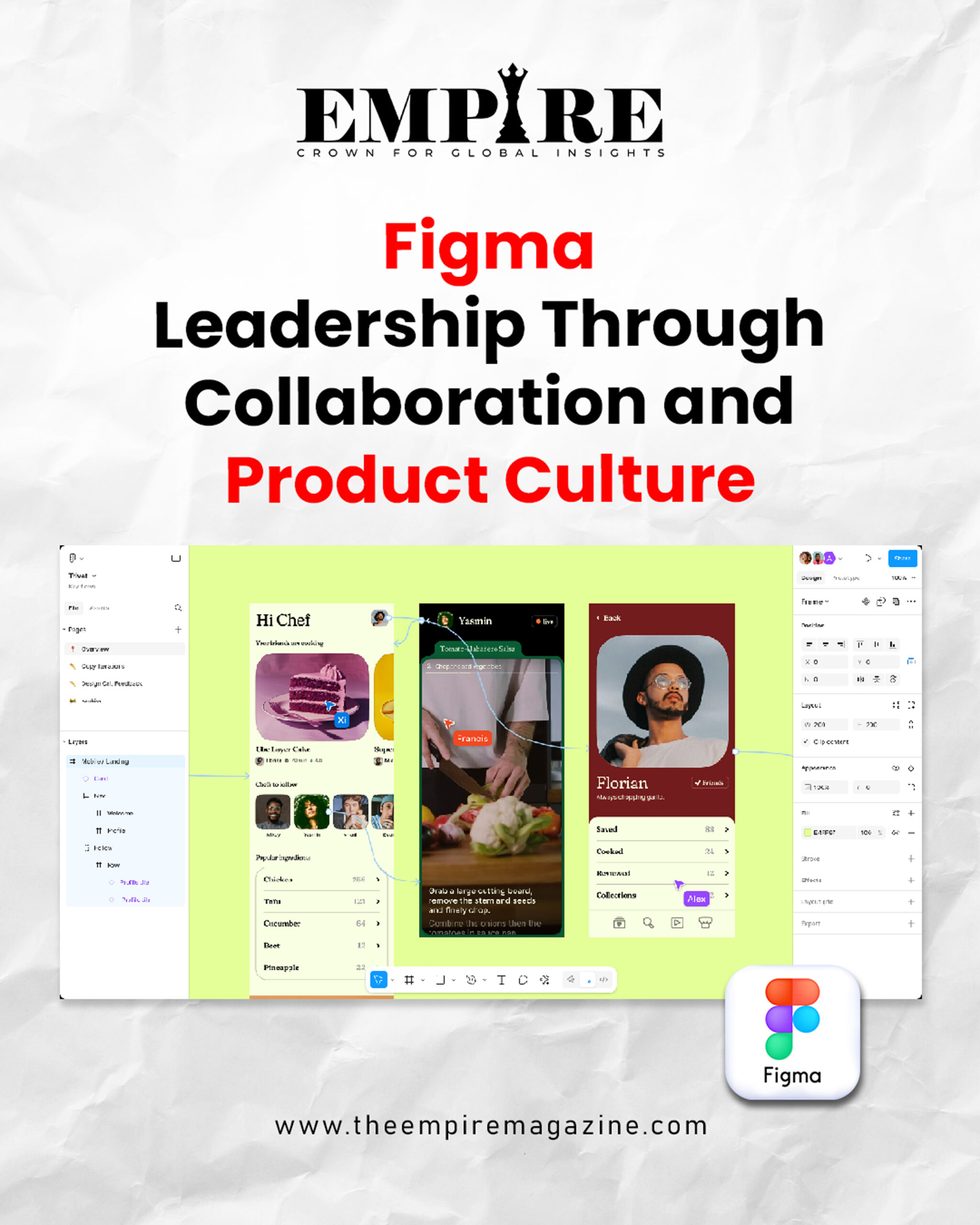
Figma Built Leadership Around Collaboration
Figma is one of the most important software companies in modern product design because it changed how teams create digital products together. The company became known for browser-based design software that allows designers, developers, product managers, marketers, and business teams to work in the same shared space.
Founded in 2012 by Dylan Field and Evan Wallace, Figma focused on making design more collaborative and accessible through the web. Before browser-based design tools became common, many design workflows depended on desktop software, file transfers, version confusion, and disconnected feedback. Figma changed that model by allowing multiple people to view, edit, comment, and collaborate on design files in real time.
This product direction helped Figma build a leadership identity around collaboration, openness, and strong product culture. The company’s growth shows how leadership in technology can come from solving a practical workflow problem and building a platform that teams trust every day.
Dylan Field and Founder-Led Product Direction
Dylan Field, Figma’s co-founder, has served as chief executive officer since the company’s early years. According to Figma’s investor leadership information, Field co-founded the company in 2012 and led the launch of the first public version of Figma Design in 2016. He also became chair of Figma’s board in April 2025.
Founder-led leadership has been a key part of Figma’s story. The company’s public communication has often focused on design as a shared process, not only a specialist function. In Figma’s 2025 IPO founder letter, Field described design as increasingly important for companies and emphasized the company’s continued commitment to closing the gap between imagination and reality.
Leadership Through Product Vision
Figma’s leadership style is closely connected to its product vision. The company did not only create a tool for designers. It built a system where teams could work together across functions. This mattered because modern product development requires close coordination between design, engineering, product, brand, marketing, and business teams.
By making design files more visible and collaborative, Figma helped reduce communication gaps. Teams could see product changes, leave feedback, test ideas, and move faster without waiting for static files or long review cycles.
Product Culture as a Growth Engine
Product culture means the habits, standards, and decision-making systems that guide how a company builds products. Figma’s product culture is visible in its focus on usability, collaboration, performance, and community feedback.
The platform became popular because it solved everyday problems for product teams. Designers could create interfaces and prototypes. Developers could inspect design details. Stakeholders could comment directly inside files. Teams could use shared components and design systems to maintain consistency.
Real-Time Collaboration
Real-time collaboration became one of Figma’s strongest product advantages. It made design work feel closer to tools like Google Docs, where multiple users can work together in one live document. This reduced the friction of sending files back and forth and helped teams make decisions faster.
For startups, agencies, and enterprise companies, this workflow was valuable because product teams are often distributed across offices, time zones, and departments. Figma’s browser-first model supported remote and hybrid work long before many companies fully adopted distributed teams.
Figma’s Role in Modern Product Development
Figma is now used not only for interface design but also for brainstorming, prototyping, design systems, developer handoff, and product planning. Its tools include Figma Design, FigJam, Dev Mode, and AI-related product features. Together, these products support different stages of product creation.
Figma’s website describes the platform as a collaborative design platform for building meaningful products. This positioning reflects how design has moved from a visual function into a central part of business strategy.
Design Systems and Team Consistency
Design systems are important for modern companies because they help teams maintain consistency across apps, websites, dashboards, and digital products. Figma allows teams to create reusable components, shared styles, libraries, and templates.
This supports faster product development because teams do not need to rebuild the same elements repeatedly. It also helps brands maintain visual and functional consistency as products grow.
Adobe Deal, Regulatory Review, and Independent Growth
Figma became the subject of major industry attention in 2022 when Adobe announced plans to acquire the company for about $20 billion. The deal was later terminated in December 2023 after regulatory pressure in the United Kingdom and the European Union.
After the Adobe deal ended, Figma continued as an independent company. In 2025, the company filed for a U.S. initial public offering and listed on the New York Stock Exchange under the ticker FIG. Reuters reported that Figma revealed strong financial growth in its IPO filing, including revenue growth and profitability in early 2025.
Public Market Attention
Figma’s public listing became one of the major technology IPO stories of 2025. Reuters reported that shares rose sharply during the company’s market debut, giving Figma a market capitalization of more than $50 billion at the close of its first trading day. The stock later moved lower, showing how public market valuations can shift quickly after high-profile IPOs.
The IPO marked an important moment for design software and collaboration platforms because it showed investor interest in companies that combine product-led growth, enterprise software, and strong user communities.
Collaboration as a Leadership Strategy
Figma’s leadership through collaboration is not only about software features. It also reflects how modern companies operate. Product decisions are no longer made by one department alone. Designers need input from engineers. Engineers need design clarity. Product managers need customer insight. Marketing and leadership teams need visibility into product direction.
Figma’s platform supports this kind of shared work. By giving different teams access to the same workspace, the company helped make design more transparent and connected to business execution.
Community and User Feedback
Figma’s community has also been part of its product culture. Designers and teams share templates, plugins, design systems, and educational resources. This community-driven model increased the platform’s value beyond its core software.
A strong community can help a software company grow because users become educators, advocates, and contributors. Figma benefited from this effect as designers shared workflows, tutorials, and resources across the internet.
AI and the Next Stage of Figma’s Product Culture
Artificial intelligence is becoming a larger part of design and product development. Figma has introduced AI-related features and continues to explore how AI can support design workflows, prototyping, and product creation.
The company’s leadership has positioned AI as a tool that can support creativity and productivity, while human judgment remains important in design. This is especially relevant because design is not only about generating screens. It involves understanding users, solving business problems, making trade-offs, and creating meaningful experiences.
Human Creativity and Software Assistance
AI tools can help teams move faster by generating ideas, exploring layouts, organizing content, or supporting early prototypes. However, design quality still depends on strategy, taste, user research, accessibility, brand standards, and product context.
Figma’s next stage will likely focus on combining collaboration, AI, and product development into one connected workspace for teams building digital products.
Why Figma Matters for Business Leadership
Figma matters because it shows how product culture can become a business advantage. The company built trust by solving real workflow problems, supporting collaboration, and keeping design connected to the broader product process.
Its founder-led direction, community growth, browser-first technology, and focus on team collaboration created a software company that influenced how digital products are built. Figma’s story also shows that leadership in technology is not only about speed or scale. It is also about creating tools that help people work better together.
For more leadership and startup insights, read this feature on The Empire Magazine.
Follow The Empire Magazine on Instagram and Facebook.
– The Empire Magazine
Crown For Global Insights