
Introduction
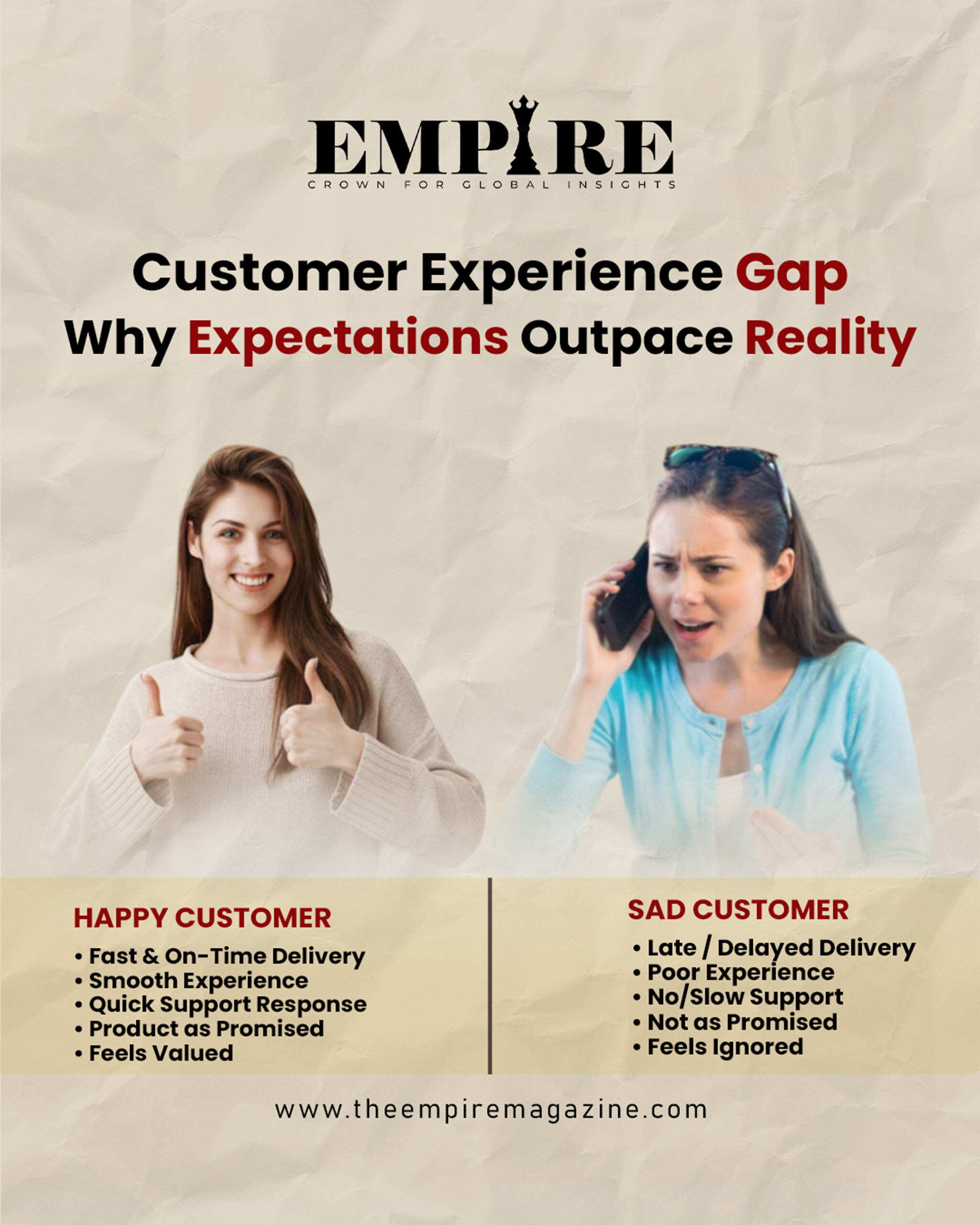
Customer experience gap is one of the most pressing challenges businesses face in today’s competitive environment. It represents the difference between what customers expect and what they actually receive. While many organizations believe they are delivering excellent service, customers often perceive the experience very differently.
In an era where experiences define brand value, this gap is becoming wider and more complex. Customers no longer compare businesses only with direct competitors—they compare every interaction with the best service they have ever experienced. This shift has fundamentally changed expectations, making it essential for companies to rethink how they deliver value. Pasted text
Understanding the Customer Experience Gap
The concept of a “gap” in business has evolved over time. Initially, it referred to the difference between goals and actual performance. Later, it expanded into competitive gaps between companies.
Today, the most critical gap is the customer experience gap—the difference between expected service and delivered service. This gap is not only about operational performance but also about perception. A company may believe it is providing exceptional service, but if customers do not feel the same, the gap persists.
This disconnect highlights a crucial reality: perception defines experience, not intention.
The Rise of Customer Expectations
One of the key drivers behind the customer experience gap is the rapid rise in customer expectations. Modern consumers are influenced by the best experiences they encounter across industries.
For example:
- A fast and seamless checkout process becomes the standard everywhere
- Instant responses from support teams are expected across all platforms
- Personalized recommendations are no longer optional but expected
As expectations rise, tolerance for delays and inefficiencies decreases. Customers are less willing to accept poor service, and even a single negative experience can impact loyalty. Pasted text
Why Customer Experience Gaps Occur
1. Misaligned Internal Perception
Organizations often overestimate the quality of their service. Without consistent and honest customer feedback, leadership may not realize the actual experience being delivered.
2. Fragmented Customer Journeys
Customers interact with businesses through multiple channels—websites, mobile apps, customer support, and physical locations. When these channels are not connected, the experience becomes inconsistent.
For instance, customers may need to repeat their concerns multiple times or receive conflicting information across platforms.
3. Lack of Customer-Centric Thinking
Many processes are designed for internal efficiency rather than customer convenience. This leads to systems that may work well internally but create frustration externally.
4. Poor Communication Across Teams
When departments do not communicate effectively, it results in inconsistent messaging and service delivery, further widening the gap.
5. Failure to Use Customer Data
Organizations often collect valuable customer data but fail to act on it. Without proper analysis and implementation, opportunities to improve experiences are missed.
The Impact of the Customer Experience Gap
Ignoring the customer experience gap can have serious consequences for businesses:
- Decline in customer trust and loyalty
- Higher customer churn rates
- Negative word-of-mouth and brand perception
- Reduced revenue and growth opportunities
In today’s competitive market, customers have countless alternatives. If their expectations are not met, they are quick to switch to another provider.
Common Customer Frustrations
The experience gap often becomes visible through everyday frustrations customers face, such as:
- Long waiting times for support
- Having to repeat the same issue multiple times
- Receiving inconsistent or unclear information
- Lack of timely follow-ups
While these issues may seem minor individually, they accumulate over time and significantly impact overall customer satisfaction. Pasted text
How to Close the Customer Experience Gap
Understand Customer Expectations
The first step is active listening. Businesses must gather feedback through surveys, reviews, and direct interactions to understand what customers truly expect.
Create Seamless Experiences
All customer touchpoints should be connected. Whether online or offline, the experience should feel consistent and smooth.
Focus on First-Contact Resolution
Customers value quick and effective solutions. Resolving issues in the first interaction enhances satisfaction and reduces frustration.
Use Technology Strategically
Technology should support better experiences. Tools like automation and analytics can help deliver faster responses and personalized interactions.
Build a Customer-Centric Culture
Customer experience should be a shared responsibility across the organization. Every employee, from leadership to frontline staff, must prioritize customer satisfaction.
Act on Feedback
Collecting feedback is not enough. Businesses must analyze it and implement changes to continuously improve their services.
Becoming a Market Leader in Experience
The ultimate goal is not just to close the customer experience gap but to lead the market by setting new standards.
Businesses can achieve this by:
- Delivering consistent and high-quality service
- Exceeding customer expectations
- Continuously innovating and improving processes
When companies reach this level, they move from reacting to expectations to shaping them. They become the benchmark others strive to match.
To explore more insights, visit:
👉 https://theempiremagazine.com/?p=6086
Stay connected with us:
📸 Instagram: https://www.instagram.com/the_empire_magazine/
📘 Facebook: https://www.facebook.com/profile.php?id=61573749076160
– The Empire Magazine
Crown For Global Insights