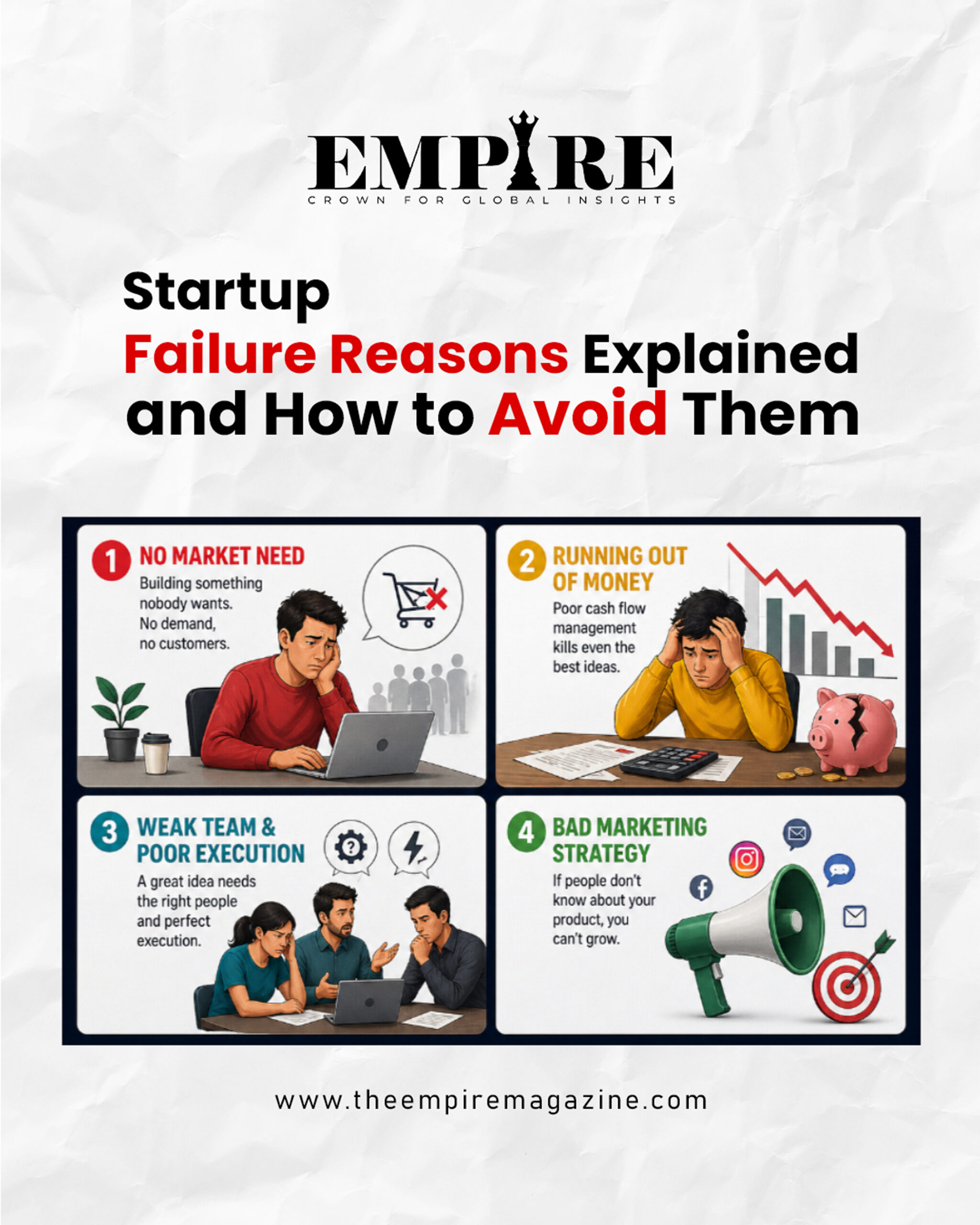
Startup Failure Reasons Explained and How to Avoid Them with proven strategies to prevent business collapse and build long-term success.
Starting a business is often seen as an exciting journey filled with innovation, ambition, and growth opportunities. However, the reality is far more complex. Many startups fail within the first few years, not because of external competition, but due to internal weaknesses and poor strategic decisions. Understanding Startup Failure Reasons Explained and How to Avoid Them is essential for entrepreneurs who want to build sustainable and successful businesses.
In today’s fast-paced and highly competitive market, launching a startup is easier than ever. But sustaining and scaling it requires careful planning, strong execution, and continuous adaptation. While failure rates remain high, they are not unavoidable. With the right knowledge and approach, entrepreneurs can significantly improve their chances of success.
The Hidden Challenge Behind Startup Failures
One of the most overlooked startup failure reasons is poor information management. As businesses grow, communication becomes more complex, and critical knowledge often gets lost within teams.
In the early stages, startups rely on informal communication, which works well in small teams. However, as the organization expands, the lack of structured systems leads to confusion, inefficiencies, and operational breakdowns. This phenomenon, often referred to as “information chaos,” can severely impact decision-making and execution.
To avoid this, startups must implement clear processes, documentation systems, and communication frameworks early in their journey.
Lack of Market Demand
One of the most common reasons startups fail is building products or services that customers do not need. Many founders focus on their ideas rather than solving real-world problems.
Studies indicate that a significant percentage of startups fail due to the absence of genuine market demand.
Successful startups prioritize customer validation. They conduct market research, gather feedback, and test their ideas before investing heavily. Understanding customer pain points and delivering value is the foundation of any successful business.
Poor Financial Management
Financial instability is another major factor behind startup failures. Running out of cash can quickly bring even the most promising ventures to an end.
Many startups overspend on branding, hiring, or expansion without establishing a steady revenue stream.
Effective financial management involves:
- Maintaining a clear budget
- Monitoring cash flow regularly
- Avoiding unnecessary expenses
- Planning for unexpected challenges
Entrepreneurs must treat financial discipline as a core business priority rather than an afterthought.
Weak Business Planning
A lack of clear direction can significantly hinder a startup’s growth. Without a well-defined business plan, companies struggle to navigate challenges and make informed decisions.
A strong business plan outlines goals, strategies, risks, and financial projections.
It serves as a roadmap that guides the company through different stages of growth. Startups that invest time in planning are better equipped to handle uncertainties and adapt to changing market conditions.
Rapid and Uncontrolled Growth
While growth is often seen as a sign of success, expanding too quickly can be dangerous. Startups that scale without proper systems and infrastructure often face operational chaos.
Rapid growth can lead to:
- Increased costs
- Resource shortages
- Declining product or service quality
Without a solid foundation, businesses may struggle to maintain consistency and efficiency.
Sustainable growth requires careful planning, strong systems, and the ability to manage increased demand effectively.
Leadership and Team Challenges
Leadership plays a crucial role in determining a startup’s success. Weak leadership can lead to poor decision-making, lack of direction, and team conflicts.
Team-related issues, such as skill gaps and misalignment, are also common causes of failure.
Strong leaders:
- Communicate a clear vision
- Foster collaboration
- Encourage innovation
- Build a positive work culture
Investing in the right team and leadership development is essential for long-term success.
Failure to Adapt to Change
Markets are constantly evolving, and businesses must adapt to stay relevant. Startups that fail to respond to changing trends, customer preferences, and technological advancements often struggle to survive.
Adaptability involves:
- Monitoring industry trends
- Being open to change
- Continuously improving products and services
Companies that embrace innovation and flexibility are more likely to succeed in dynamic environments.
Lack of Core Competencies
Another significant factor contributing to startup failure is the absence of essential skills and capabilities. Many startups lack expertise in areas such as data analysis, customer understanding, and strategic planning.
Deficiencies in these areas can lead to poor decision-making and missed opportunities.
Building a strong foundation of skills within the team ensures better execution and long-term growth.
Practical Strategies to Avoid Startup Failure
Understanding startup failure reasons is only the first step. The real value lies in applying strategies to prevent these challenges.
Focus on Solving Real Problems
Ensure your product or service addresses genuine customer needs through research and validation.
Manage Finances Carefully
Maintain strict control over expenses and ensure consistent cash flow.
Build Systems Early
Implement structured processes for communication, operations, and training.
Develop a Strong Team
Hire skilled individuals who align with your vision and contribute to growth.
Stay Adaptable
Be prepared to pivot and adjust strategies based on market changes.
Prioritize Information Management
Ensure knowledge is documented and accessible to all team members.
Building a Strong Foundation for Success
Long-term success is not just about avoiding mistakes—it is about building a resilient business model. Successful startups focus on:
- Clear strategy and planning
- Strong customer relationships
- Financial discipline
- Continuous innovation
- Effective leadership
These elements create a sustainable framework that supports growth and stability.
For more insights, visit:
https://theempiremagazine.com/?p=6076
Stay connected:
Instagram: https://www.instagram.com/the_empire_magazine/
Facebook: https://www.facebook.com/profile.php?id=61573749076160
– The Empire Magazine
Crown For Global Insights