Introduction
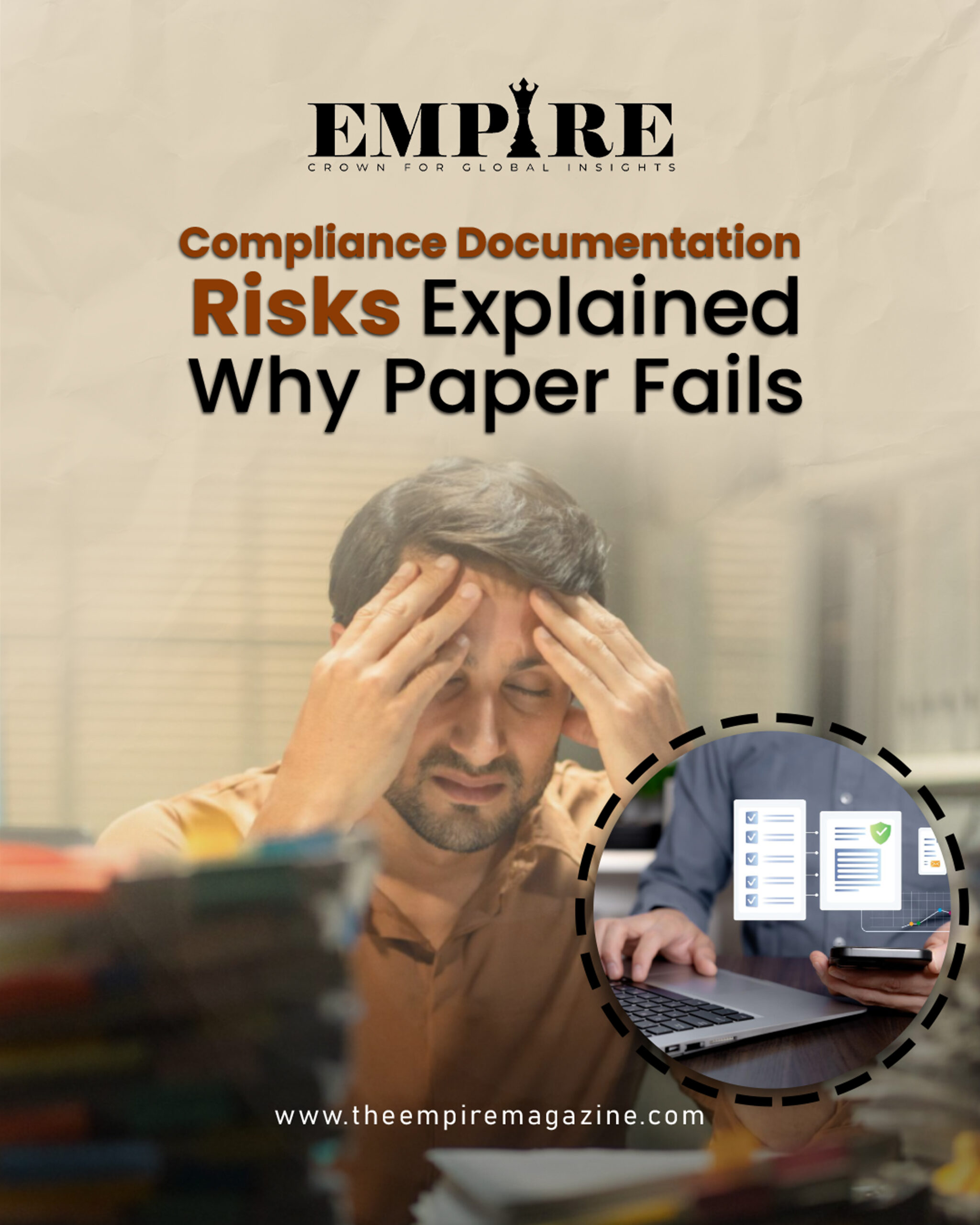
Compliance documentation risks are becoming a critical concern for organizations operating in regulated environments. Many businesses still assume that having policies, procedures, and formal documents is enough to ensure compliance. However, this assumption often leads to a dangerous gap between what is documented and what is actually practiced.
In reality, compliance today is not just about documentation—it is about execution, accountability, and continuous improvement. Organizations that rely only on written policies without integrating them into daily operations face what is commonly known as “paper compliance.” This creates an illusion of control that collapses during audits, inspections, or real-world incidents. Pasted text
What Is Paper Compliance?
Paper compliance refers to a situation where organizations maintain documentation purely for formal or regulatory purposes, without embedding those processes into actual workflows.
While policies may appear comprehensive on paper, employees often remain unaware of them. Even when they are aware, there is little enforcement or monitoring. As a result, when regulators or auditors request proof of compliance, organizations struggle to demonstrate real implementation.
This disconnect highlights one of the biggest compliance documentation risks—mistaking documentation for actual compliance.
Why Paper Compliance Fails
Understanding why paper compliance fails is essential to building stronger systems. Several key factors contribute to this issue:
1. Lack of Real Implementation
Policies are often created but not enforced. Employees continue to follow informal processes rather than structured guidelines, making compliance ineffective.
2. Outdated Risk Assessments
Many organizations fail to update their risk assessments regularly. As business environments evolve, new risks emerge, leaving outdated frameworks unable to protect the organization.
3. Ineffective Training Programs
Training is frequently treated as a one-time activity. Employees complete modules, but there is no measurement of understanding or behavioral change, making training ineffective in practice.
4. Weak Accountability
Without clear ownership, compliance becomes fragmented. Teams assume someone else is responsible, leading to gaps in execution.
5. Lack of Monitoring and Evidence
Regulators expect evidence, not assumptions. Without proper tracking, testing, and reporting, organizations cannot prove that their compliance systems are working.
The Real Cost of Poor Compliance Documentation
Ignoring compliance documentation risks can have severe consequences that go beyond regulatory penalties.
- Increased legal exposure and financial penalties
- Operational disruptions and security vulnerabilities
- Loss of customer trust and stakeholder confidence
- Inefficiencies caused by poor documentation practices
These risks can cost organizations significantly, both financially and reputationally. More importantly, they can impact long-term sustainability and growth.
What Effective Compliance Documentation Looks Like
Modern compliance systems are dynamic, integrated, and evidence-driven. They go beyond static documents and focus on measurable execution.
An effective compliance framework includes:
- Clearly defined policies aligned with regulatory requirements
- Training records that demonstrate employee understanding
- Audit trails that show ongoing monitoring and control testing
- Risk assessments that are regularly updated
- Incident reports with corrective actions for continuous improvement
These elements ensure that compliance is not just documented but actively practiced and validated.
From Paper to Practice: Building a Living Compliance System
To overcome compliance documentation risks, organizations must transition from static documentation to a living compliance system.
Integrate Compliance into Daily Operations
Compliance should influence decision-making at every level. It must become part of everyday workflows rather than a separate function.
Implement Role-Based Training
Training should be tailored to specific job roles. Employees must understand how compliance applies directly to their responsibilities.
Continuously Update Risk Assessments
Risk management should be proactive. Regular updates ensure that emerging threats are identified and addressed effectively.
Monitor and Test Controls
Organizations must regularly test their compliance controls and track performance. This provides measurable evidence of effectiveness.
Build a Culture of Accountability
Leadership plays a critical role. When managers actively enforce policies, employees are more likely to follow them.
The Role of Technology in Compliance
Technology has become essential in managing compliance documentation effectively. Modern tools help organizations move beyond paper-based systems and create integrated compliance environments.
Key benefits of technology include:
- Automated data collection and reporting
- Real-time compliance monitoring
- Centralized documentation access
- Version control and audit trails
By connecting documentation with operational processes, technology ensures that compliance becomes a continuous and measurable function rather than a static requirement.
Key Strategies to Reduce Compliance Risks
Organizations can significantly reduce compliance documentation risks by adopting structured strategies:
- Assign clear ownership for compliance responsibilities
- Standardize documentation formats and processes
- Conduct regular audits and internal reviews
- Ensure transparency across teams
- Align compliance objectives with business goals
These strategies help build a strong, resilient compliance framework that supports long-term success.
To explore more insights, visit:
👉 https://theempiremagazine.com/?p=6084
Stay connected with us:
📸 Instagram: https://www.instagram.com/the_empire_magazine/
📘 Facebook: https://www.facebook.com/profile.php?id=61573749076160
– The Empire Magazine
Crown For Global Insights