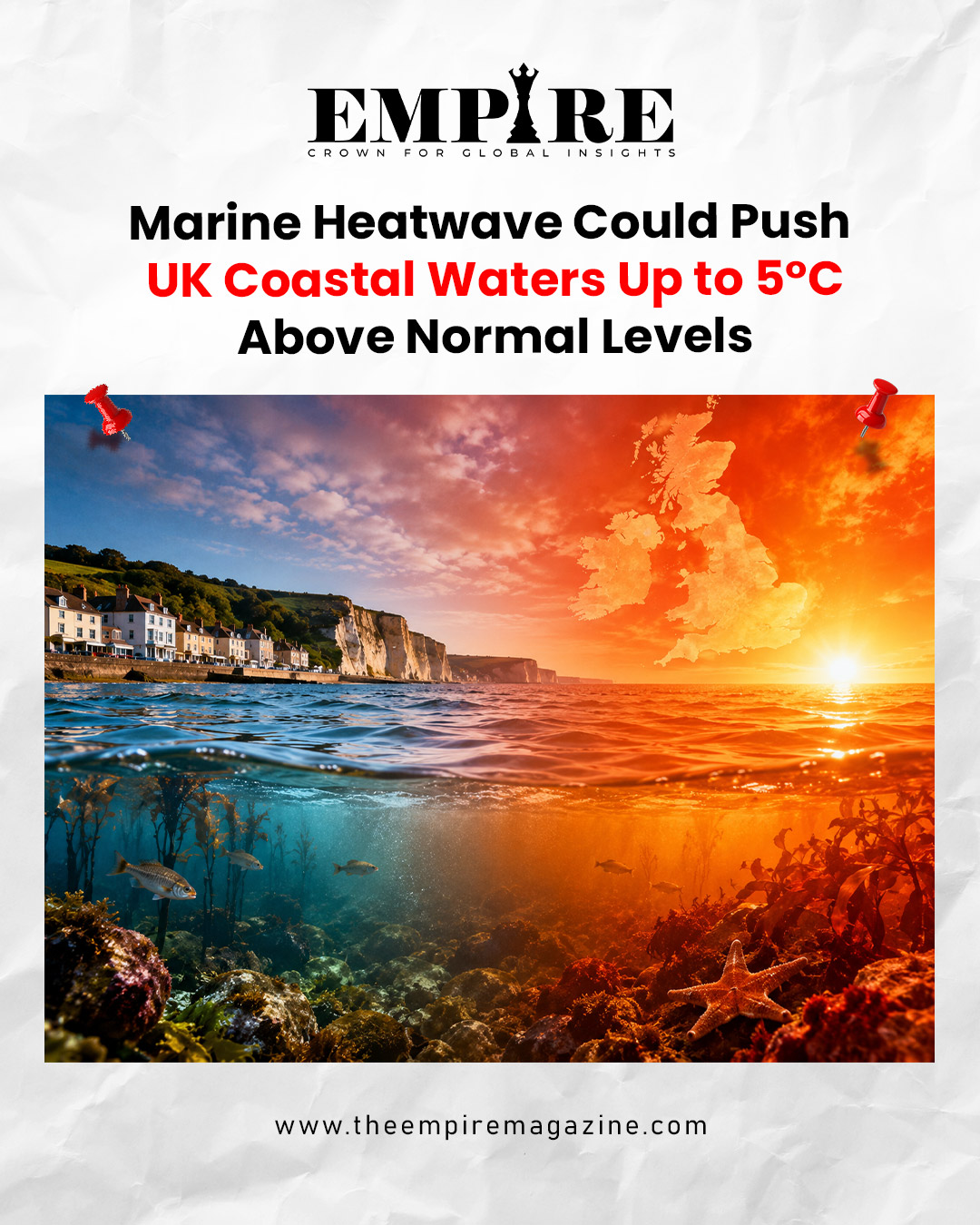
A marine heatwave is expected to push UK coastal waters up to 5°C above normal, threatening marine ecosystems, fisheries, tourism, and climate resilience. A powerful Marine Heatwave is forecast to raise UK coastal waters by as much as 5°C above seasonal averages, posing serious risks to marine biodiversity, fisheries, tourism, and coastal ecosystems. Scientists warn that ocean warming is becoming more frequent and intense, highlighting the growing influence of climate change on Britain’s surrounding seas.
Marine Heatwave Raises Concern Across UK Waters
A powerful Marine Heatwave developing around the United Kingdom is drawing significant attention from climate scientists, marine researchers, and policymakers as forecasts suggest that coastal waters could become as much as 5°C warmer than the long-term seasonal average. While heatwaves are commonly associated with rising air temperatures, marine heatwaves are prolonged periods of exceptionally warm ocean temperatures that can last for weeks or even months. Such events have become increasingly frequent over the past decade as climate change continues to warm the world’s oceans at an unprecedented pace. Around the British coastline, unusually warm sea surface temperatures are expected to affect regions stretching from the English Channel and Celtic Sea to parts of the North Sea and the western coastline of Scotland. Scientists explain that this warming is being driven by a combination of persistent high atmospheric pressure, reduced cloud cover, weaker winds, and the broader trend of global ocean warming. Although many people may view warmer seas as favourable for beach tourism, experts caution that the consequences beneath the surface are far more serious, affecting delicate ecosystems that have evolved under relatively stable temperature conditions for centuries.
Why the Marine Heatwave Is Intensifying
The current Marine Heatwave is not an isolated weather event but part of a broader global pattern of warming oceans. More than 90 percent of the excess heat trapped by greenhouse gases is absorbed by the oceans, making them one of the clearest indicators of climate change. When prolonged periods of sunshine combine with calm weather and weak ocean mixing, surface waters heat rapidly and retain that warmth for extended periods. Climate scientists note that these conditions are becoming increasingly common because rising global temperatures are altering atmospheric circulation and seasonal weather patterns. The North Atlantic Ocean has already experienced record-breaking temperatures in recent years, and the waters surrounding the UK are now reflecting this trend. Warmer oceans also reduce the natural cooling effect that coastal communities often experience during summer months while increasing the energy available for storms and changing rainfall patterns. Researchers emphasise that although natural climate variability influences individual marine heatwaves, the intensity and frequency observed today would have been highly unlikely without long-term human-driven climate change, making this event another powerful example of how global warming is reshaping marine environments.
Marine Heatwave Threatens Marine Life
The ecological consequences of the Marine Heatwave extend far beyond warmer swimming conditions. Marine organisms are highly sensitive to even small changes in water temperature, and an increase of several degrees can disrupt entire ecosystems. Cold-water species such as cod, haddock, and certain shellfish may struggle to survive or migrate towards cooler northern waters, altering long-established food chains. At the same time, warmer-water species from southern regions may expand into UK waters, introducing new competition and changing biodiversity patterns. Marine heatwaves also reduce oxygen availability in seawater, placing additional stress on fish populations and increasing the likelihood of disease outbreaks. Seagrass meadows, kelp forests, and other critical coastal habitats may suffer reduced growth or widespread die-offs, removing essential breeding grounds for countless marine species. Scientists have also warned that warmer conditions can encourage harmful algal blooms, which release toxins capable of killing fish, contaminating shellfish, and affecting water quality. These cascading impacts demonstrate that a marine heatwave is not simply a temporary rise in ocean temperature but a complex environmental event capable of reshaping entire marine ecosystems for years to come.
Economic Impact of the Marine Heatwave
The Marine Heatwave is expected to create significant economic challenges for industries that depend on healthy coastal ecosystems. The UK’s commercial fishing sector could experience declining catches if valuable species migrate into cooler waters or experience increased mortality from heat stress. Aquaculture operations, particularly those farming salmon and shellfish, face higher risks from disease outbreaks, lower oxygen levels, and reduced water quality. Tourism presents a more complicated picture, as warmer beaches may initially attract visitors, but harmful algal blooms, jellyfish populations, or declining marine biodiversity could eventually reduce the appeal of coastal destinations. Ports, shipping operations, and offshore renewable energy infrastructure may also need to adapt to changing marine conditions over the coming decades. Insurance providers and local governments are increasingly recognising that climate-driven ocean changes represent long-term financial risks rather than isolated environmental events. Scientists believe that investing in marine monitoring systems, habitat restoration, sustainable fisheries management, and climate adaptation strategies will ultimately prove far less expensive than responding to repeated ecological crises after they occur, making proactive planning essential for protecting both livelihoods and biodiversity.
Marine Heatwave Signals a Changing Climate
Scientists view the latest Marine Heatwave as another reminder that climate change is transforming not only the atmosphere but also the oceans that regulate Earth’s climate system. Oceans absorb enormous quantities of heat and carbon dioxide, acting as a natural buffer against even faster global warming. However, this protective role comes at a cost, as warmer and increasingly acidic oceans threaten marine ecosystems worldwide. Similar marine heatwaves have already contributed to coral bleaching across tropical reefs, mass mortality events among marine wildlife, and significant declines in fisheries from Australia to North America. The UK, once considered relatively insulated from such extreme marine conditions, is now witnessing firsthand how global climate patterns are shifting closer to home. Researchers stress that reducing greenhouse gas emissions remains the most effective long-term solution for limiting future marine heatwaves. Alongside emission reductions, stronger scientific monitoring, international collaboration, and improved forecasting systems will enable governments, businesses, and coastal communities to prepare more effectively for increasingly frequent episodes of ocean warming in the years ahead.
How Governments and Communities Can Respond to the Marine Heatwave
Responding effectively to the Marine Heatwave requires coordinated action from governments, researchers, industries, and coastal communities. Expanding real-time ocean temperature monitoring can provide earlier warnings to fisheries, conservation organisations, and local authorities, allowing them to implement protective measures before severe ecological damage occurs. Marine protected areas can improve ecosystem resilience by reducing additional pressures such as overfishing and habitat destruction, while restoring seagrass meadows and kelp forests strengthens natural carbon storage and supports biodiversity. Coastal businesses dependent on tourism and seafood can also diversify their operations and adopt climate adaptation strategies to reduce long-term financial risks. Public awareness campaigns play an equally important role by helping communities understand how ocean warming affects food security, biodiversity, and local economies. Policymakers must continue supporting international climate agreements alongside domestic investments in renewable energy and sustainable coastal management. Although no single initiative can eliminate marine heatwaves entirely, combining scientific innovation with environmental stewardship offers the strongest pathway for protecting marine ecosystems while helping coastal societies adapt to an increasingly warming world.
Marine Heatwave Is a Warning the World Cannot Ignore
The emergence of another severe Marine Heatwave around the United Kingdom serves as a compelling reminder that climate change is reshaping environments both above and below the ocean’s surface. Waters that could rise up to 5°C above normal represent more than an unusual seasonal event they illustrate the accelerating pace of global environmental change. From disrupting fisheries and marine biodiversity to challenging coastal economies and conservation efforts, the implications extend well beyond Britain’s shores. Scientists continue to emphasise that every fraction of a degree matters, and reducing future warming depends on sustained global efforts to cut greenhouse gas emissions while strengthening climate resilience. As research and monitoring improve, societies will be better equipped to anticipate marine heatwaves, but preparation alone cannot replace meaningful climate action. Protecting the oceans ultimately means protecting the communities, industries, and ecosystems that depend on them, making today’s marine heatwave an urgent call for collective responsibility rather than a temporary environmental headline.
For more business and retail insights, read more on The Empire Magazine
Previous article: https://theempiremagazine.com/eu-fines-google/
Magazine Feautures | Podcasts: Empire Global Talks
Follow The Empire Magazine on Facebook | Instagram | LinkedIn | YouTube
The Empire Magazine | Crown for Global Insights