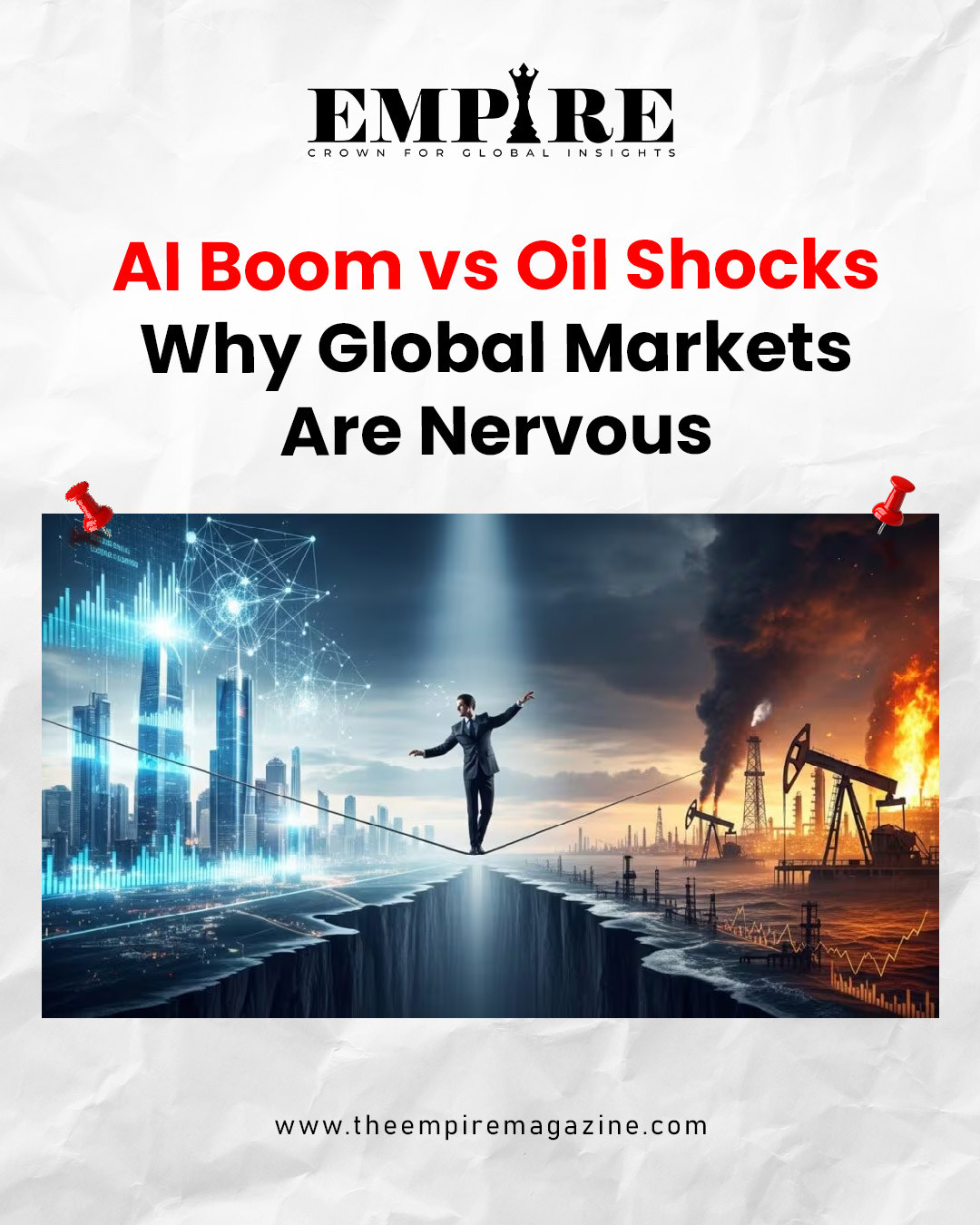
AI is rewriting the future of business, while geopolitical conflicts over Oil are reminding the world that Global Market risks have never disappeared. In 2026, these two powerful forces have collided in a way few analysts expected. On one side, AI companies continue to attract billions of dollars in investments, driving stock markets to fresh highs and convincing businesses that the next industrial revolution has already begun. On the other side, rising tensions in major oil-producing regions, uncertain energy supplies, and volatile crude prices have revived fears of inflation, slower economic growth, and another period of global instability. The result is a financial market caught between extraordinary optimism and growing caution. Investors are celebrating breakthroughs in generative AI, robotics, automation, and semiconductor technologies while simultaneously worrying about supply chain disruptions, rising fuel costs, and central banks delaying interest-rate cuts. From Wall Street to London, Tokyo, Mumbai, and Singapore, markets are reacting almost daily to headlines about AI investments as well as developments in energy markets. The unusual combination has created one of the most complex investing environments seen since the pandemic recovery. Analysts increasingly describe today’s economy as one where future technologies are driving long-term confidence, while traditional commodities continue to dictate short-term market movements. Understanding why both stories matter simultaneously is essential for businesses, investors, policymakers, and consumers trying to make sense of today’s rapidly changing global economy.
Two Powerful Forces: AI Boom and Oil Driving the Global Markets
The remarkable rise of artificial intelligence has fundamentally changed how investors value companies across almost every sector. Technology giants are investing hundreds of billions of dollars into AI infrastructure, data centers, advanced chips, cloud computing, and intelligent software capable of transforming industries ranging from healthcare to manufacturing. Companies producing AI hardware, semiconductor equipment, and enterprise software have witnessed unprecedented demand as organizations race to adopt automation and machine learning. Investors view AI as a long-term productivity revolution comparable to the internet boom, believing it will increase efficiency, reduce operational costs, and unlock entirely new business models. Yet while the AI narrative fuels optimism, oil continues to influence the world’s economic heartbeat. Geopolitical tensions in the Middle East, production decisions by oil-exporting nations, shipping disruptions, and unexpected supply shortages have repeatedly pushed crude prices higher. Higher oil prices affect transportation, manufacturing, aviation, agriculture, logistics, and household expenses, making inflation harder to control. Central banks closely monitor these developments because expensive energy often leads to higher consumer prices, forcing policymakers to maintain elevated interest rates for longer periods. Higher borrowing costs then reduce corporate spending, slow housing markets, and weaken consumer demand. Consequently, investors find themselves balancing two competing narratives: AI promises faster growth tomorrow, while expensive energy threatens economic stability today. This unusual combination explains why markets often swing sharply despite seemingly positive corporate earnings or encouraging economic data.
Why Investors Are Feeling the Pressure of the Global Markets
Financial markets dislike uncertainty more than bad news itself, and today’s environment offers uncertainty from multiple directions. Investors are trying to determine whether AI-driven corporate earnings can continue growing if energy costs rise significantly and global inflation returns. Technology companies depend heavily on enormous data centers that consume vast amounts of electricity, making energy prices increasingly relevant even to digital businesses. At the same time, manufacturing companies adopting AI-powered automation may see productivity gains offset by higher transportation and raw material expenses. Global investment funds are therefore carefully rebalancing portfolios, increasing exposure to sectors benefiting from artificial intelligence while reducing positions vulnerable to commodity price fluctuations. Currency markets are also responding as stronger oil prices often strengthen exporting nations while creating economic challenges for oil-importing countries such as India, Japan, and much of Europe. Bond markets have become equally sensitive because persistent inflation could delay monetary easing by major central banks. Every statement from policymakers now carries greater significance as investors attempt to predict future interest-rate decisions. Adding another layer of complexity is consumer confidence. Households excited about technological innovation may still reduce spending if fuel, electricity, and food prices continue climbing. Businesses are responding by investing aggressively in AI to improve efficiency while simultaneously implementing cost-control measures to protect profitability. The coexistence of optimism about technological transformation and caution about macroeconomic risks explains why daily market movements have become increasingly unpredictable despite generally healthy corporate earnings.
AI Stocks Keep Rising Despite Economic Risks in the Global Markets
One of the most fascinating aspects of the current market cycle is the resilience of AI-focused companies even during periods of economic uncertainty. Major technology firms continue reporting strong demand for AI chips, cloud infrastructure, enterprise software, and automation platforms as businesses across industries accelerate digital transformation. Investors increasingly believe that artificial intelligence is no longer a speculative trend but a structural shift that will influence global productivity for decades. This confidence has supported high valuations for semiconductor manufacturers, cloud computing providers, cybersecurity firms, robotics companies, and software developers despite concerns about inflation and slowing economic growth. Many fund managers argue that AI investment resembles essential infrastructure spending rather than discretionary technology expenditure, making it relatively resistant to economic cycles. However, critics warn that elevated valuations leave little room for disappointment if revenue growth slows or regulatory challenges increase. Another concern is whether the enormous capital expenditure required to build AI infrastructure will generate sustainable returns over time. Nevertheless, corporate executives continue emphasizing that delaying AI adoption may create greater competitive risks than investing aggressively today. This explains why businesses across finance, healthcare, retail, logistics, manufacturing, education, and professional services continue allocating significant budgets toward AI implementation even as broader economic conditions remain uncertain. For investors, this creates a unique scenario where traditional defensive sectors coexist with rapidly growing technology companies, making portfolio diversification more important than ever before.
Can Global Markets Handle Two Mega Trends at Once?
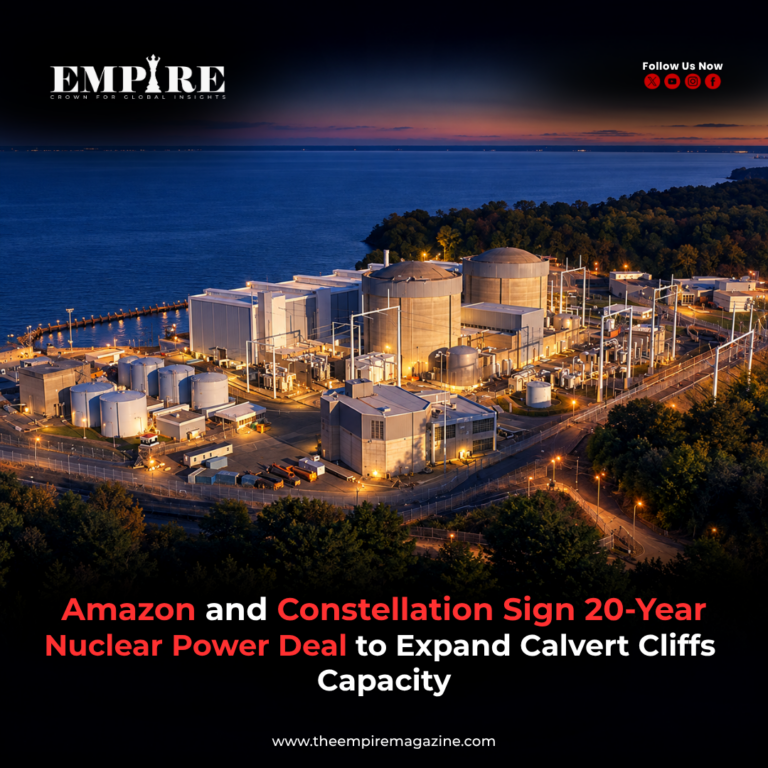
History shows that markets often struggle when transformative technological change occurs alongside geopolitical or commodity-related shocks. During previous decades, innovation frequently coincided with periods of economic disruption, forcing investors to separate long-term structural growth from short-term volatility. Today’s AI revolution appears to follow a similar pattern. While technological breakthroughs continue attracting capital and driving productivity expectations higher, oil market instability reminds investors that the global economy still depends heavily on traditional energy systems. This relationship becomes even more complicated because artificial intelligence itself requires enormous electricity consumption through expanding data centers and advanced computing infrastructure. Governments are therefore increasingly discussing energy security alongside digital competitiveness, recognizing that future economic leadership depends not only on AI innovation but also on stable and affordable energy supplies. Businesses are responding by investing in renewable energy, nuclear power partnerships, and more efficient computing technologies to reduce long-term operating costs. Meanwhile, investors are paying closer attention to companies capable of combining technological innovation with operational resilience. Rather than chasing short-term market rallies, institutional investors are increasingly evaluating whether businesses can withstand both higher energy costs and changing technological landscapes. This shift reflects a broader understanding that successful companies over the coming decade will need to balance innovation, sustainability, cost efficiency, and geopolitical preparedness simultaneously.
What Businesses and Investors Should Watch Next in the Global Markets
Looking ahead, the direction of global markets will likely depend on whether artificial intelligence continues delivering measurable economic value faster than geopolitical risks disrupt growth. If AI investments generate stronger productivity, improved corporate profitability, and higher consumer efficiency, they could offset many inflationary pressures created by volatile energy prices. Conversely, prolonged oil supply disruptions or escalating geopolitical tensions could weaken consumer spending and corporate investment despite technological progress. Businesses should therefore monitor not only AI adoption trends but also energy markets, inflation data, central bank policies, and international diplomatic developments. Investors, meanwhile, may increasingly favor diversified portfolios that include both technology leaders and sectors capable of benefiting from higher commodity prices or infrastructure spending. Rather than viewing AI and oil as separate stories, today’s markets demonstrate how closely digital innovation and traditional economics remain interconnected. The companies that succeed over the next decade are likely to be those capable of embracing AI while managing operational risks arising from energy, supply chains, and global uncertainty. For policymakers, the challenge will be encouraging innovation without ignoring economic vulnerabilities that continue affecting millions of households worldwide.
Conclusion: A Defining Moment for the Global Economy
The global economy is entering one of its most fascinating transitions in modern history. Artificial intelligence is creating unprecedented opportunities for productivity, innovation, and economic expansion, while oil shocks continue reminding the world that geopolitical realities remain powerful market forces. Investors are no longer navigating a single dominant trend but two transformative narratives unfolding simultaneously. One represents the future of technology, while the other reflects the enduring importance of energy security and macroeconomic stability. This unusual combination explains why financial markets appear both optimistic and anxious at the same time. Although short-term volatility is likely to remain, history suggests that periods of disruption often produce the strongest long-term opportunities for businesses prepared to adapt. As AI reshapes industries and energy markets evolve under geopolitical pressure, the winners will be organizations that combine innovation with resilience rather than relying solely on growth or cost-cutting. For businesses, investors, and governments alike, understanding the relationship between these two powerful forces will be essential. The AI boom may define tomorrow’s economy, but oil shocks continue to influence today’s reality. Successfully navigating both could determine who leads the next chapter of global economic growth.
For more business and retail insights, read more on The Empire Magazine
Previous article: Genesis AI Builds Non-humanoid Robot for Factories
Magazine Feautures | Podcasts: Empire Global Talks
Follow The Empire Magazine on Facebook | Instagram | LinkedIn
The Empire Magazine | Crown for Global Insights