The New Luxury Economy
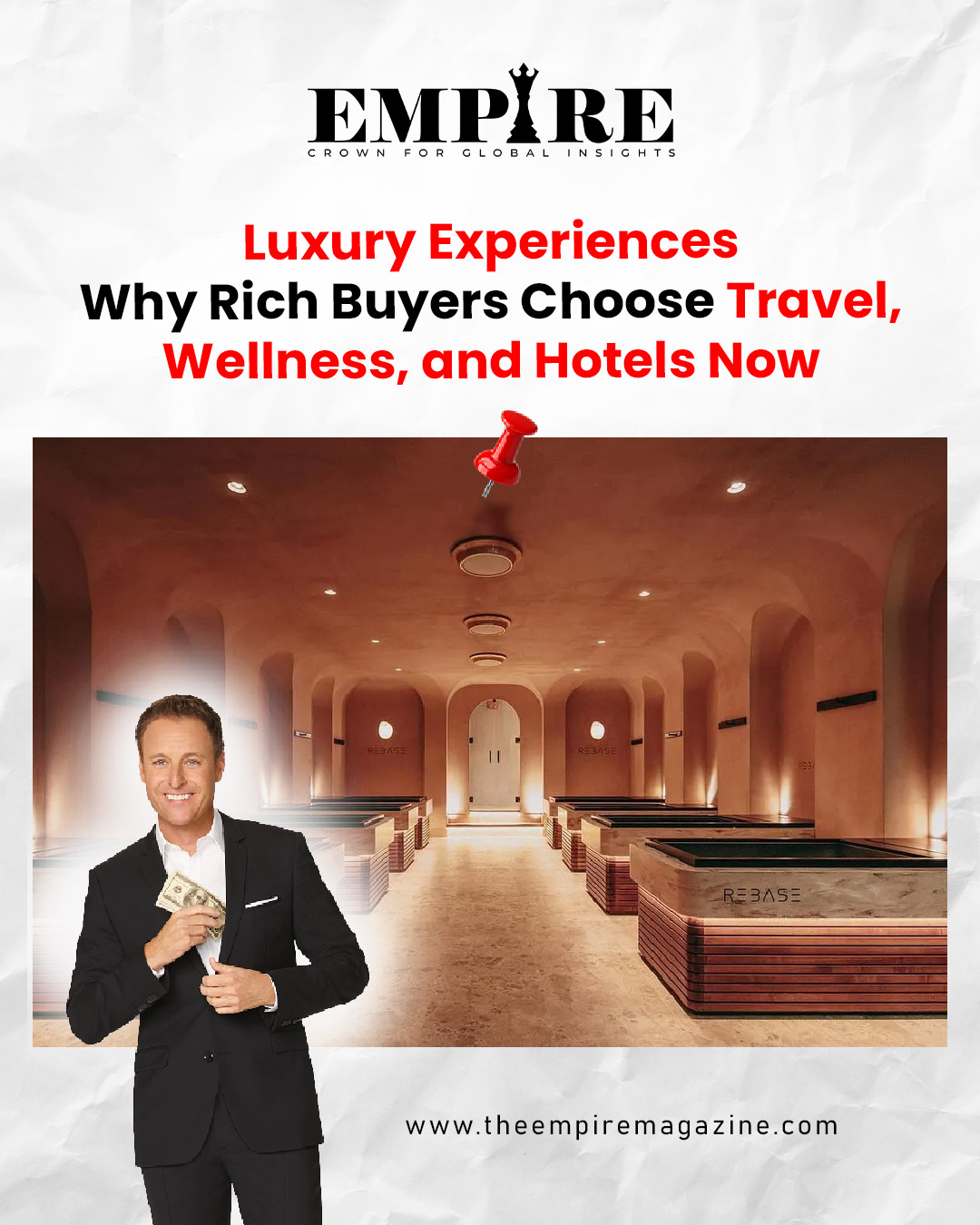
Luxury is no longer defined by what people own, but by what they experience. Across global wealth hubs; from Dubai and London to Singapore and Mumbai, the ultra-wealthy are steadily shifting their spending away from material goods and toward curated experiences that feel personal, immersive, and irreplaceable. High-end watches, designer handbags, and luxury cars still hold relevance, but they are no longer the ultimate expression of status. Instead, private island retreats, tailored wellness journeys, and hyper-personalised hotel stays are shaping a new economy of luxury consumption. This shift reflects a deeper cultural change where time, privacy, and emotional satisfaction are becoming the rarest and most valuable assets. Luxury today is less about display and more about depth, less about possession and more about memory creation.
Experience Over Ownership: A Global Shift in Wealth
The global wealthy class is increasingly prioritising experiences because they offer something physical assets cannot, emotional permanence. A luxury handbag may signal status, but a safari in Botswana or a Michelin-star dining experience in Kyoto becomes part of a person’s identity narrative. Wealth advisors and luxury analysts have observed that younger millionaires, particularly those from tech and finance backgrounds, are driving this transformation. Their consumption patterns lean toward “living well” rather than “owning more.” This shift is also influenced by social media, where experiences generate stronger engagement and storytelling value than static possessions. In this new hierarchy of luxury, exclusivity is no longer just about price but about access, access to places, moments, and feelings that cannot be easily replicated or purchased at scale.
Luxury Travel Redefined: Privacy, Space, and Storytelling
Luxury travel has evolved far beyond five-star resorts and first-class cabins. Today’s high-net-worth travellers are seeking complete privacy, customised itineraries, and destinations that offer emotional resonance rather than just scenic beauty. Private villas in the Maldives, expedition cruises in Antarctica, and bespoke cultural immersions in Europe are becoming the new standard. What matters most is not just where one goes, but how the journey is designed. Luxury travel companies now function more like experience architects, curating every detail—from personal chefs and wellness experts to historians and local guides who can offer deeper context. Storytelling plays a critical role in this evolution. Travellers are not just visiting destinations; they are collecting narratives that reflect their identity, values, and aspirations. In many ways, luxury travel has become a form of self-expression, where the itinerary itself is a reflection of personal philosophy.
Wellness Becomes the New Status Symbol
In recent years, wellness has emerged as one of the most powerful pillars of luxury consumption. For the wealthy, health is no longer just a necessity but a long-term investment and a visible indicator of lifestyle quality. Luxury wellness retreats offering longevity programs, cellular health therapies, sleep optimisation, and mental rejuvenation are experiencing unprecedented demand. Unlike traditional spa culture, modern wellness tourism is deeply scientific and highly personalised. Genetic testing, biometric tracking, and AI-driven health plans are often integrated into these experiences, creating a fusion of medicine and luxury hospitality. What makes wellness the new status symbol is its invisibility, it cannot be easily displayed but is deeply felt. A well-rested, high-performing, and visibly balanced lifestyle becomes the ultimate marker of elite living. In this context, wellness is no longer an indulgence; it is a discipline of luxury.
Ultra-Luxury Hotels: Beyond Hospitality into Personalisation
Luxury hotels have undergone a fundamental transformation, moving from service providers to experience curators. The modern ultra-luxury hotel is no longer defined by marble lobbies or extravagant suites alone, but by the ability to anticipate and personalise every guest interaction. From remembering dietary preferences to tailoring entire floors based on guest mood profiles, hospitality has become hyper-intelligent. Many leading hotels now employ dedicated lifestyle managers who function almost like personal assistants, ensuring every detail of a guest’s stay is seamlessly aligned with their expectations. The emphasis is on invisibility of effort—luxury is most powerful when it feels effortless. Additionally, the architecture and design of luxury hotels are increasingly inspired by emotional psychology, using space, lighting, and texture to influence mood and relaxation. In this environment, hotels are no longer temporary stays but curated emotional ecosystems designed to make guests feel uniquely understood.
The Psychology of High-End Spending
The shift toward experiential luxury is deeply rooted in psychology. Research in behavioural economics suggests that experiences generate longer-lasting happiness than material possessions because they integrate into memory and identity. For wealthy individuals, whose material needs are already fulfilled, emotional return on investment becomes the primary driver of spending decisions. There is also a strong element of control and escape involved, luxury experiences allow individuals to step away from structured, high-pressure environments into spaces where time feels expanded and curated entirely around them. Scarcity plays a crucial role as well. The rarer and more inaccessible an experience is, the more valuable it becomes in the perception of the buyer. This is why private access, limited availability, and exclusivity are central to modern luxury design. Ultimately, high-end spending is no longer about consumption alone but about meaning-making in an increasingly fast and crowded world.
The Future of Luxury Is Lived, Not Owned
The future of luxury is clearly moving toward experiences that cannot be stored, displayed, or duplicated. As wealth continues to grow globally, particularly in emerging markets, the definition of luxury will further detach from material accumulation and align more closely with emotional depth, well-being, and uniqueness of experience. Travel, wellness, and hospitality are no longer separate sectors, they are converging into a single ecosystem of curated living. In this new paradigm, luxury is measured not by what one has, but by what one has felt, lived, and remembered. The richest individuals of tomorrow will not necessarily be those with the most possessions, but those with the most meaningful experiences shaping their personal story.
For more business and retail insights, read more on The Empire Magazine
Previous article: AI Cybersecurity
Magazine Feautures | Podcasts: Empire Global Talks
Follow The Empire Magazine on Facebook | Instagram | LinkedIn
The Empire Magazine | Crown for Global Insights