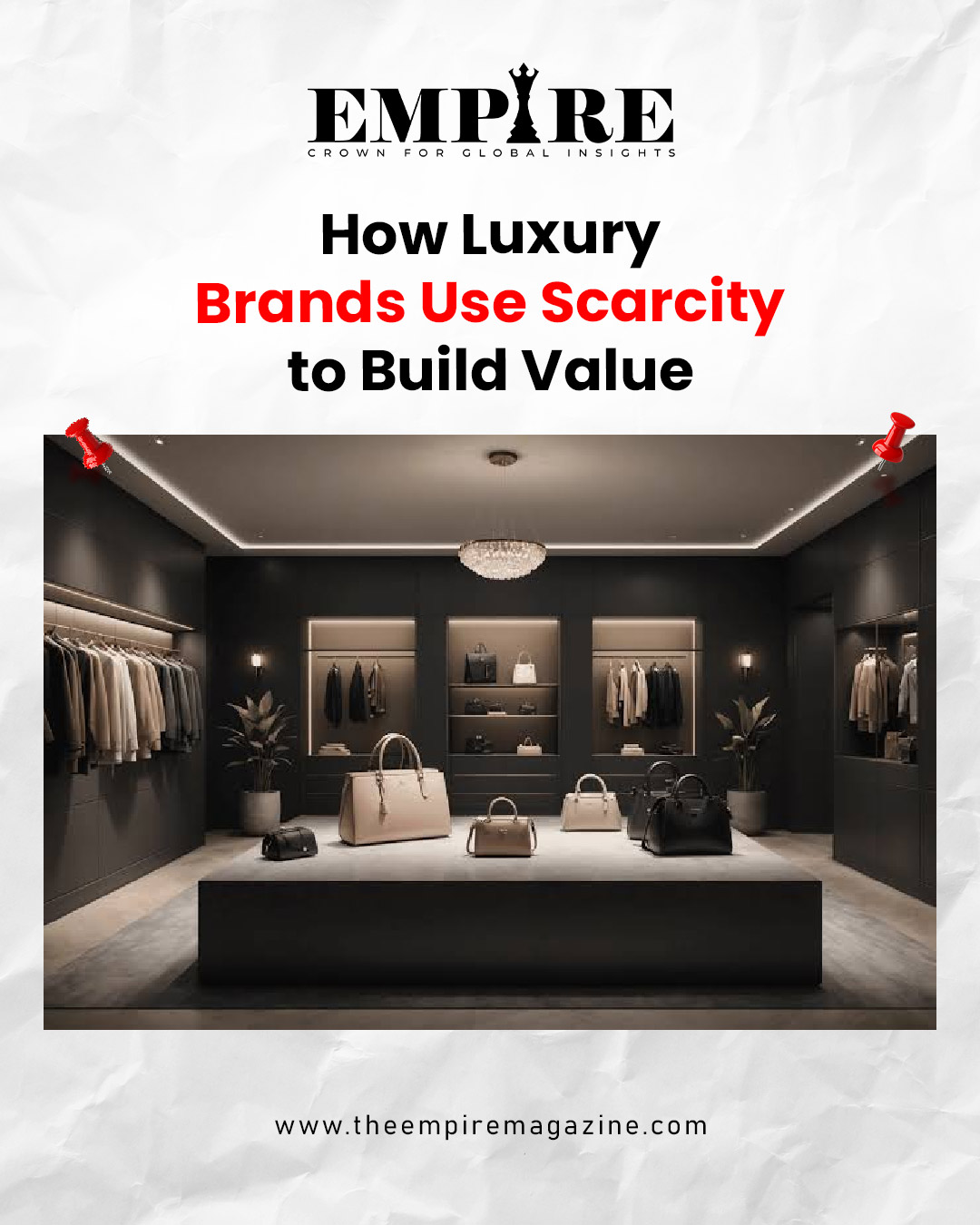
Luxury has never been about selling the highest number of products. Instead, it has always been about creating lasting desire. From iconic handbags and Swiss watches to limited-edition sports cars, some of the world’s most successful luxury brands deliberately produce less than market demand. The result is a level of exclusivity that strengthens their reputation, protects pricing power, and keeps customers engaged over the long term.
In an era where products can be manufactured and distributed faster than ever, scarcity has become one of the most valuable business strategies in luxury retail. While many industries compete by expanding production and increasing accessibility, luxury companies often move in the opposite direction. They carefully control inventory, restrict availability, and prioritize brand equity over short-term sales growth. This strategy has helped many of the world’s leading luxury houses maintain premium positioning for decades, even during periods of economic uncertainty.
Understanding Scarcity in the Luxury Industry
Scarcity in luxury is rarely accidental. It is typically the outcome of deliberate business decisions designed to preserve exclusivity and enhance perceived value.
Unlike mass-market brands that focus on maximizing sales volume, luxury companies often place greater emphasis on protecting their identity. Limited production runs, carefully selected retail partners, invitation-only launches, and waiting lists all contribute to making products feel more desirable.
The principle is simple: when customers know that not everyone can own a product, its perceived value increases. This approach extends beyond fashion. Luxury watchmakers, automotive manufacturers, jewelry brands, and premium lifestyle companies all use controlled availability to reinforce their market position.
Why Exclusivity Matters More Than Volume
Many luxury brands have discovered that selling fewer products can often create stronger long-term profitability than pursuing rapid expansion.
Premium pricing depends heavily on perception. If a luxury product becomes too common, customers may begin to question its exclusivity. Maintaining limited availability helps preserve both prestige and pricing power.
This strategy also strengthens customer loyalty. Buyers often feel they are joining an exclusive community rather than simply purchasing an item. That emotional connection becomes an important part of the overall brand experience.
The resale market demonstrates this clearly. Products with limited availability frequently retain or even increase their value over time, reinforcing the brand’s premium image.
How Luxury Brands Control Supply
Luxury companies employ a variety of methods to maintain scarcity without compromising customer interest.
Some intentionally manufacture fewer units than projected demand. Others release products through seasonal collections or exclusive collaborations that remain available for only a short period.
Waiting lists have become another powerful tool. Rather than viewing delays as an inconvenience, many luxury consumers interpret them as evidence of exceptional demand and craftsmanship.
Selective distribution also plays a significant role. Many premium brands avoid widespread retail partnerships, preferring flagship boutiques and carefully chosen locations that allow greater control over the customer experience.
Limited editions, numbered collections, and invitation-only product launches further reinforce exclusivity while generating anticipation among loyal customers.
The Psychology Behind Scarcity
Scarcity works because it taps into well-established principles of consumer psychology.
People naturally place greater value on items they perceive as rare or difficult to obtain. The possibility of missing an opportunity often encourages quicker purchasing decisions while increasing emotional attachment to the product.
Luxury purchases are also influenced by social signaling. Exclusive products can communicate achievement, personal taste, and individuality. Because relatively few people own them, these products become symbols of distinction rather than ordinary consumer goods.
Scarcity therefore creates value beyond functionality. Customers are not simply buying a handbag, watch, or vehicle they are investing in status, craftsmanship, heritage, and belonging.
Digital Scarcity and the New Luxury Economy
The digital era has introduced new ways for brands to create exclusivity without abandoning traditional luxury principles.
Online product drops, members-only shopping events, invitation-based purchasing opportunities, and exclusive digital communities have become increasingly common. These initiatives allow brands to maintain limited access while engaging customers through digital channels.
Social media has amplified this effect. Carefully planned product launches generate anticipation long before items become available, creating organic conversations and strengthening brand visibility without relying solely on traditional advertising.
Digital platforms also enable luxury companies to build closer relationships with their most loyal customers through personalized experiences and exclusive access.
Challenges of Maintaining Exclusivity
Scarcity can strengthen a luxury brand, but it also presents challenges.
Producing too few products may leave revenue on the table, while excessive scarcity can frustrate loyal customers and encourage speculative buying. Companies must carefully balance exclusivity with accessibility to ensure genuine customers remain engaged.
Counterfeit goods represent another challenge. As demand for limited products increases, so does the market for imitation items. Luxury brands continue to invest heavily in authentication technologies, supply-chain transparency, and customer education to protect both consumers and brand reputation.
Changing consumer expectations also require continuous adaptation. Younger luxury buyers increasingly value sustainability, transparency, and craftsmanship alongside exclusivity. Brands must ensure that scarcity reflects authentic quality rather than artificial limitation.
What Other Businesses Can Learn
Although not every company operates in the luxury sector, the underlying principles behind scarcity offer valuable lessons.
Businesses can benefit from focusing on differentiation instead of pursuing unlimited growth. Limited-edition products, premium memberships, exclusive experiences, or early-access programs can strengthen customer relationships while increasing perceived value.
More importantly, luxury brands demonstrate that long-term brand equity often delivers greater returns than short-term sales volume. Building trust, maintaining quality, and protecting reputation can create sustainable competitive advantages that extend far beyond individual product launches.
Conclusion
Scarcity remains one of the most effective strategies in the luxury industry because it transforms products into experiences that customers aspire to own. By carefully managing supply, protecting craftsmanship, and preserving exclusivity, luxury brands continue to justify premium pricing while maintaining enduring consumer demand.
As digital commerce evolves and customer expectations shift, the methods used to create exclusivity will continue to change. Yet the underlying principle remains constant: value is not determined solely by what a product is made of, but also by how carefully its availability is managed.
For luxury businesses, scarcity is far more than a sales tactic. It is a long-term brand strategy that reinforces trust, strengthens desirability, and ensures that prestige remains as valuable as the product itself.
For more business and retail insights, read more on The Empire Magazine
Previous articles: Luxury Hospitality | Apple Watch healthcare features
Magazine Edits: Magazines
Podcasts: Empire Global Talks
Follow The Empire Magazine on Facebook | Instagram | LinkedIn
The Empire Magazine | Crown for Global Insights