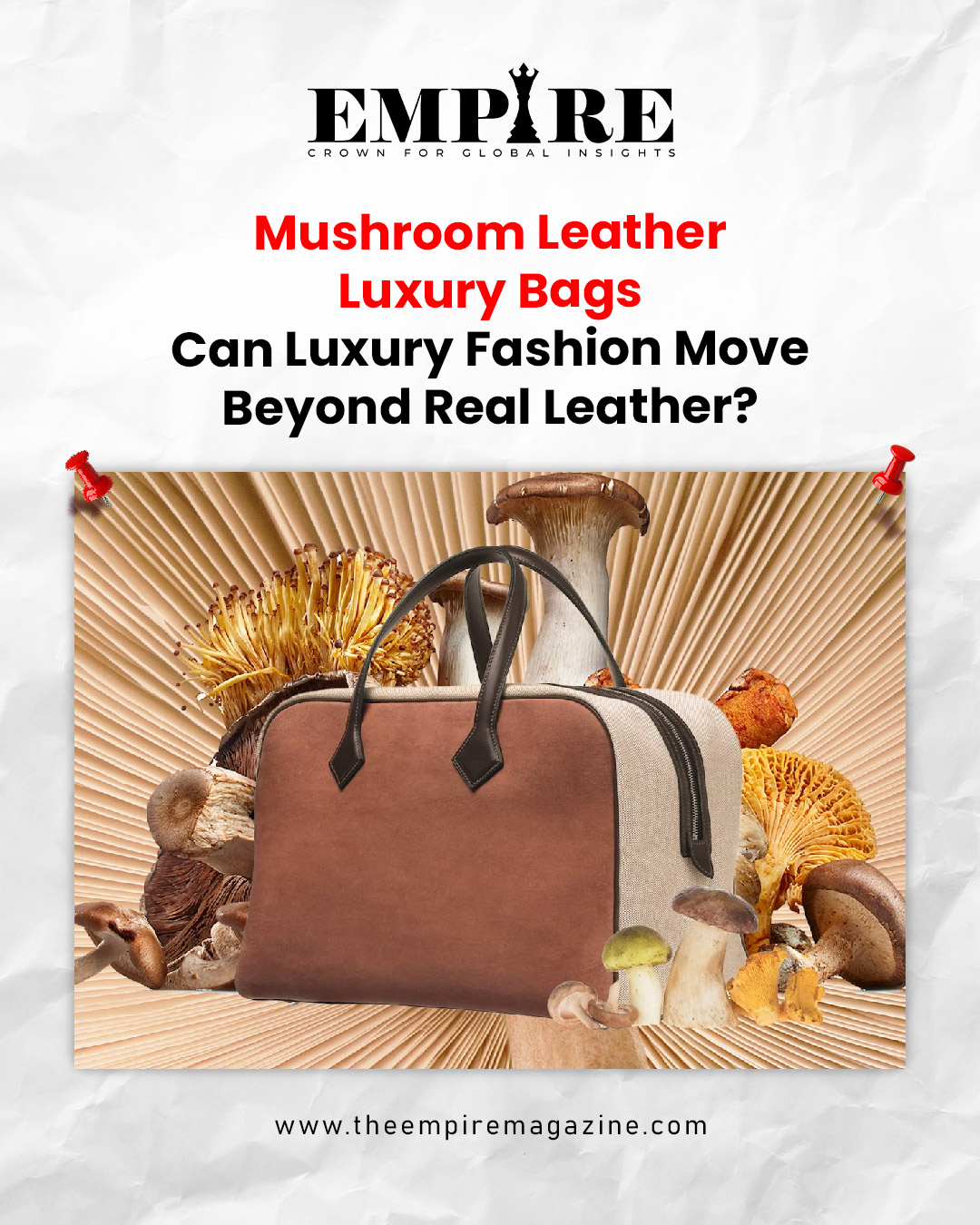
The Luxury Industry Faces a Material Shift
For decades, genuine leather has represented the highest standard of craftsmanship in luxury fashion. From iconic handbags to premium accessories, leather has long been associated with exclusivity, durability, and timeless design. Yet the industry that once celebrated traditional materials is now confronting a fundamental question: can luxury continue to rely on conventional leather as environmental expectations evolve?
Luxury consumers today are increasingly paying attention to how products are made, not just how they look. Climate concerns, animal welfare discussions, and stricter sustainability targets are influencing purchasing decisions across global markets. While premium buyers still value quality above all else, they are also looking for brands that demonstrate innovation and responsible sourcing.
This shift has encouraged fashion houses to explore next-generation materials that deliver luxury without depending entirely on animal leather. Among the most talked-about alternatives is mushroom leather, a bio-based material created from mycelium, the intricate root-like network of fungi.
Once considered an experimental concept, mushroom leather is now attracting investment from material science companies, luxury fashion brands, and venture capital firms alike. As production technologies improve, it is increasingly being viewed as a credible option for high-end accessories, particularly handbags where both aesthetics and durability are critical.
The conversation is no longer limited to sustainability alone. It is becoming a broader discussion about how luxury itself is defined in an era where innovation carries as much prestige as heritage.
What Exactly Is Mushroom Leather?
Despite its name, mushroom leather is not made from the visible mushroom found in forests or grocery stores. Instead, it is cultivated using mycelium, the underground network of microscopic fungal fibers that naturally grow into dense, interconnected structures.
Under carefully controlled laboratory conditions, mycelium grows within days rather than the years required to raise livestock. The resulting material is then processed, treated, and finished to achieve textures that resemble traditional leather while maintaining flexibility and strength.
Unlike many synthetic vegan leathers that rely heavily on petroleum-based plastics such as polyurethane, mycelium-based materials are largely derived from renewable biological resources. Although manufacturing methods vary among producers, the overall environmental footprint can be significantly lower than conventional leather production.
Several biotechnology companies have become pioneers in this field, developing proprietary manufacturing techniques that allow mushroom leather to be customized for different applications, from handbags and footwear to automotive interiors and furniture.
For luxury brands, the appeal lies not only in sustainability but also in design flexibility. Mycelium can be engineered to achieve consistent textures, unique finishes, and precise thicknesses, giving designers greater creative control than many traditional materials.
Why Luxury Brands Are Paying Attention
Luxury fashion has never been solely about preserving tradition. Throughout history, leading brands have adopted new materials and manufacturing techniques whenever they enhanced craftsmanship or opened creative possibilities.
Today, mushroom leather represents one of the industry’s most significant material innovations.
Several global luxury brands have already introduced prototype products or limited-edition collections featuring mycelium-based materials. While commercial adoption remains gradual, these collaborations demonstrate growing confidence that bio-based materials can meet luxury standards. The business rationale extends beyond environmental responsibility.
Luxury companies face mounting pressure from investors, regulators, and consumers to reduce carbon emissions and improve supply chain transparency. Leather production involves extensive land use, livestock emissions, water consumption, and complex tanning processes that contribute to environmental challenges.
Alternative materials offer brands an opportunity to diversify sourcing while supporting broader sustainability commitments.
Innovation also plays a strategic role in maintaining relevance among younger consumers. Millennials and Generation Z increasingly view sustainability as an essential component of brand value rather than a secondary consideration. According to multiple consumer studies, younger luxury buyers are more likely to reward brands that invest in environmentally responsible innovation without compromising quality.
Rather than replacing craftsmanship, mushroom leather allows brands to combine traditional design expertise with modern material science.
Can Mushroom Leather Match Traditional Leather?
The central question remains whether mushroom leather can truly deliver the qualities that luxury consumers expect.
Traditional leather has earned its reputation over centuries because it combines durability, flexibility, natural aging characteristics, and tactile richness. High-end handbags are often designed to last for decades, making longevity a defining feature of luxury.
Mycelium leather has made significant progress in recent years. Advances in cultivation and finishing technologies have improved tensile strength, softness, and resistance to everyday wear. Manufacturers are also developing treatments that enhance water resistance and surface durability.
However, industry experts acknowledge that mycelium has not yet replicated every characteristic of premium animal leather. Certain applications requiring exceptional long-term durability may still favour conventional leather, particularly for products expected to endure decades of intensive use. Scaling production while maintaining consistent quality also remains a technical challenge.
Nevertheless, innovation is advancing rapidly. Material scientists continue refining production techniques, while luxury brands are conducting extensive testing before introducing products to larger markets.
Much like recycled fabrics and plant-based textiles gradually gained acceptance, mushroom leather is following a similar trajectory, from experimental innovation toward commercial viability.
The Business Case for Sustainable Luxury
Luxury fashion has traditionally been driven by craftsmanship, exclusivity, and heritage. Today, another factor is influencing boardroom decisions: sustainability. While environmental responsibility was once viewed as a brand-building exercise, it has become an important business consideration. Investors, regulators, and consumers increasingly expect companies to demonstrate measurable progress toward reducing their environmental footprint.
Leather production has long been scrutinized for its impact on land use, greenhouse gas emissions, water consumption, and chemical-intensive tanning processes. Although many luxury brands source leather from certified suppliers and continue to improve their practices, the search for complementary materials has accelerated. Mushroom leather has emerged as one of the most promising options because it combines biological innovation with the possibility of a lower environmental impact.
For fashion houses, investing in mycelium-based materials is not simply about replacing leather. It is about building resilience within supply chains. Climate change, fluctuating raw material costs, and stricter environmental regulations are prompting companies to diversify their sourcing strategies. Bio-based materials can help brands reduce dependence on traditional inputs while positioning themselves for a market that increasingly values transparency and innovation.
The investment landscape reflects this momentum. Biotechnology startups developing mycelium materials have attracted funding from venture capital firms, sustainability-focused investors, and even established luxury groups. These partnerships are accelerating research into manufacturing techniques that improve quality while making production more commercially viable.
The opportunity extends beyond handbags. Mycelium materials are being explored for footwear, apparel, furniture, automotive interiors, and even packaging. As production scales, costs are expected to become more competitive, making adoption easier for both luxury and premium fashion brands.
Consumer Preferences Are Beginning to Change
Luxury consumers today are making purchasing decisions differently than they did a decade ago. While craftsmanship and design remain central, there is growing interest in understanding how products are sourced, manufactured, and distributed.
Younger buyers, particularly Millennials and Generation Z, have played a significant role in this shift. Many are willing to support brands that demonstrate genuine environmental commitments, provided the product maintains the quality expected of luxury goods. Sustainability alone is rarely enough to justify a purchase; performance, aesthetics, and durability continue to be essential.
This changing mindset has encouraged brands to communicate more openly about their material innovations. Rather than presenting alternative materials as compromises, companies are positioning them as examples of modern craftsmanship that combine design excellence with scientific advancement.
At the same time, consumers have become more informed. They are increasingly aware that not all vegan leathers are equally sustainable. Materials made primarily from petroleum-based plastics have faced criticism for their environmental impact, prompting greater interest in bio-based alternatives such as mushroom leather. This distinction has helped mycelium gain credibility within sustainability discussions.
However, consumer acceptance will depend largely on experience. Buyers need confidence that a mushroom leather handbag will age well, retain its appearance, and deliver the same level of satisfaction associated with traditional luxury products. Demonstrating this consistency will be critical to wider adoption.
Challenges That Still Need Solving
Despite the excitement surrounding mushroom leather, the material remains at an early stage of commercial development. Several challenges continue to limit widespread adoption.
One of the most significant is manufacturing scale. Producing mycelium materials with consistent texture, strength, and finish requires highly controlled cultivation environments and sophisticated processing techniques. Scaling these operations while maintaining luxury-grade quality is considerably more complex than producing conventional textiles.
Cost is another important consideration. At present, mushroom leather is generally more expensive to manufacture than many traditional materials. Although production costs are expected to decline as technology advances and facilities expand, premium pricing remains a barrier for broader market adoption.
Durability also remains under continuous evaluation. While laboratory testing has demonstrated encouraging results, luxury handbags are often expected to last for decades and, in some cases, become collectible pieces passed from one generation to another. Long-term performance data for mycelium leather is still relatively limited compared with centuries of experience using animal leather.
Consumer education represents another challenge. Many shoppers are unfamiliar with the term “mycelium” and may mistakenly assume mushroom leather is fragile or experimental. Brands will need to invest in clear communication that explains both the technology and its benefits without overstating environmental claims.
Finally, regulatory scrutiny around sustainability claims continues to increase worldwide. Companies introducing alternative materials must ensure that marketing messages accurately reflect the environmental benefits of their products, supported by credible lifecycle assessments and transparent reporting.
Will Mushroom Leather Become the New Standard?
The future of mushroom leather is unlikely to be defined by replacing traditional leather entirely. Instead, the industry appears to be moving toward a more diverse materials landscape where innovation and heritage coexist.
Luxury has always evolved alongside technological progress. New weaving techniques, advanced textiles, recycled materials, and digital manufacturing have all found their place within premium fashion over time. Mushroom leather represents another step in that ongoing evolution rather than a complete departure from tradition.
Its long-term success will depend on continued investment in material science, improvements in manufacturing efficiency, and consistent product performance. As these areas advance, mushroom leather could become a mainstream option for selected product categories, particularly handbags and accessories where design flexibility and sustainability are increasingly valued.
The pace of adoption will also vary across brands. Some fashion houses may continue to emphasize traditional leather as part of their heritage, while others are likely to expand collections featuring innovative bio-based materials. This diversity reflects the broader direction of the luxury market, where consumers increasingly expect choice rather than a single solution.
Ultimately, the question is no longer whether alternative materials belong in luxury fashion. The discussion has shifted toward identifying which innovations can meet the industry’s demanding standards without compromising craftsmanship or customer expectations.
Mushroom leather: Beyond Experimental Stage
Mushroom leather has moved well beyond the experimental stage, emerging as one of the most closely watched innovations in luxury fashion. Its appeal lies not only in its sustainability credentials but also in its ability to demonstrate how biotechnology and traditional craftsmanship can work together.
While challenges related to scalability, cost, and long-term durability remain, continued investment and technological progress suggest that mycelium-based materials will play an increasingly important role in the luxury industry. Rather than replacing conventional leather overnight, mushroom leather is likely to become part of a broader portfolio of premium materials that offer designers greater creative freedom and consumers more sustainable choices.
For luxury brands, the transition is about more than adopting a new material. It reflects a changing definition of value, one where innovation, responsible sourcing, and exceptional craftsmanship carry equal weight. As consumer expectations continue to evolve, the brands that successfully balance heritage with scientific advancement may be best positioned to shape the next chapter of luxury fashion.
For more business and retail insights, read more on The Empire Magazine
Previous articles: Subscription based models | AI Hardware vs AI Software
Magazine Edits: Magazines
Podcasts: Empire Global Talks
Follow The Empire Magazine on Facebook | Instagram | LinkedIn
The Empire Magazine | Crown for Global Insights