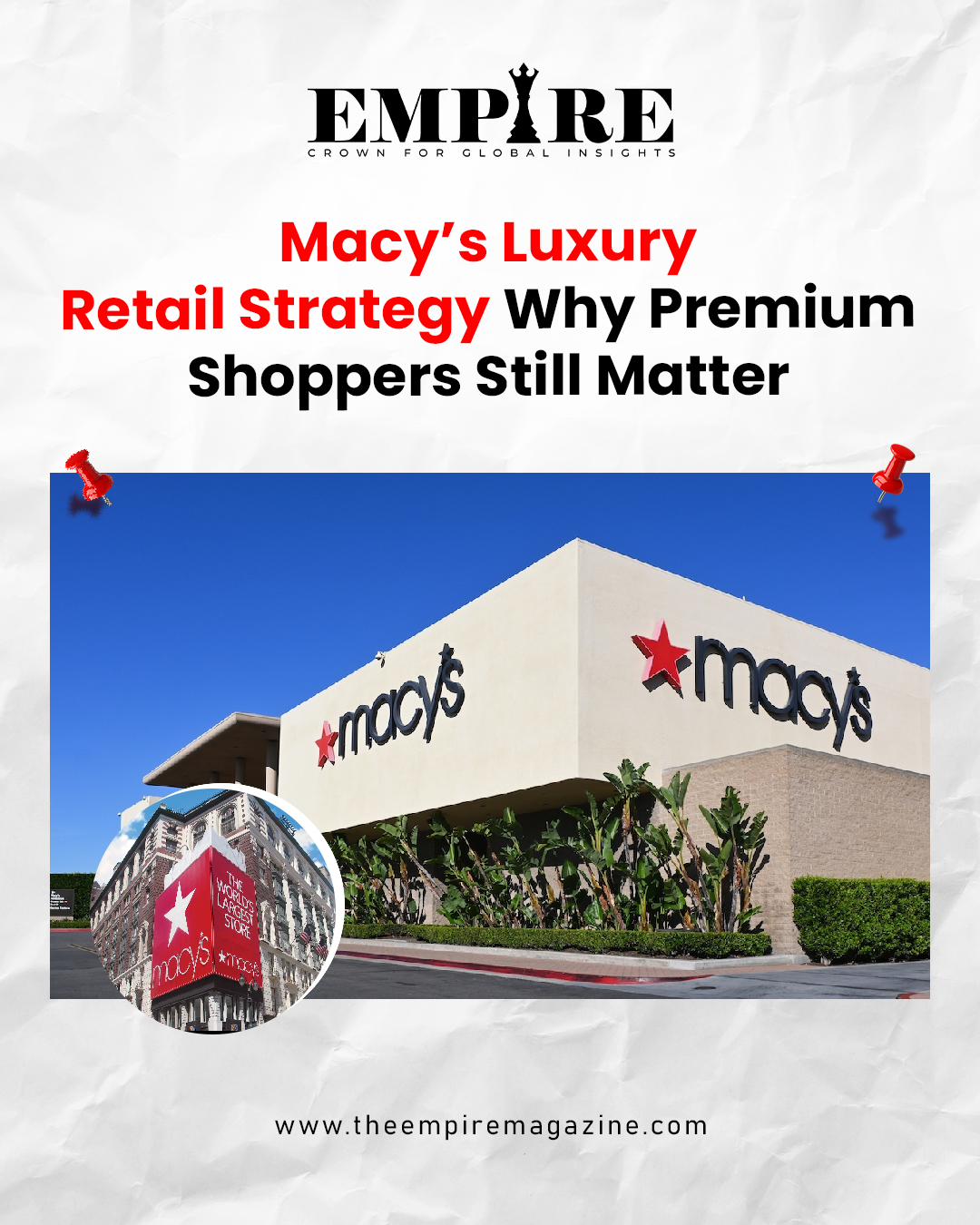
Macy’s Luxury Retail Strategy shows how one of America’s best-known department store companies is trying to build stronger growth by focusing on premium shoppers, better store experiences, and high-performing luxury banners. Macy’s, Inc. is not only known for its namesake department stores. The company also owns Bloomingdale’s and Bluemercury, two important brands that help it reach customers who spend more on fashion, beauty, accessories, and lifestyle products.
In today’s retail market, shoppers are not all behaving the same way. Many middle-income consumers are becoming more careful with spending because of inflation, higher living costs, and economic uncertainty. At the same time, wealthier shoppers are still buying quality products, luxury beauty, designer fashion, handbags, shoes, fragrances, and premium services. This difference is one reason Macy’s continues to see value in premium customers.
Macy’s Luxury Retail Strategy is important because it shows how department stores can remain relevant by improving product selection, investing in strong locations, and using luxury brands as growth drivers.
Macy’s Luxury Retail Strategy and the Changing Retail Market
Macy’s has been working through a major business transformation called “A Bold New Chapter.” The strategy was announced in 2024 and focuses on repositioning the company for long-term growth. Under this plan, Macy’s has been closing underperforming stores, improving its stronger locations, investing in digital channels, and expanding its luxury businesses.
The company’s strategy is not simply about becoming smaller. It is about becoming more focused. Macy’s wants to invest in stores and brands that can deliver stronger sales, better customer experience, and higher profitability. This is especially important in a retail market where shoppers have many options, from online marketplaces to specialty stores and direct-to-consumer brands.
Premium shoppers matter because they are often more willing to pay for quality, service, brand reputation, and convenience. They may still respond to promotions, but they are also drawn to curated merchandise, trusted brands, and elevated shopping environments.
Why Premium Shoppers Still Matter
Premium shoppers are valuable because they often spend more per visit and are more likely to buy across multiple categories. A customer shopping for designer fashion may also purchase beauty products, fragrances, shoes, accessories, or home items. This creates opportunities for Macy’s, Bloomingdale’s, and Bluemercury to increase customer lifetime value.
In the current market, spending patterns have become more divided. Some consumers are cutting back, while higher-income customers continue to spend selectively on products they believe are worth the price. This is why luxury and premium retail remain important for large retailers.
Macy’s benefits from serving a broad customer base, but its premium banners help the company reach customers who are less focused only on discounts. Bloomingdale’s offers a more upscale department store experience, while Bluemercury focuses on beauty, skincare, and personal care. These businesses support Macy’s goal of building a stronger and more balanced retail portfolio.
Bloomingdale’s as a Luxury Growth Engine
Bloomingdale’s plays a central role in Macy’s Luxury Retail Strategy. It has a strong position in the premium and luxury department store space, offering designer fashion, contemporary apparel, accessories, beauty, home products, and curated lifestyle merchandise.
Bloomingdale’s has also shown strong sales momentum compared with the broader department store sector. Its performance has helped Macy’s highlight the importance of upscale retail in its future growth plans. The brand attracts fashion-conscious shoppers who are looking for quality, style, and a more elevated shopping experience.
For Macy’s, Bloomingdale’s is more than just another retail banner. It is a way to compete for higher-spending customers and build stronger relationships with shoppers who value premium merchandise. The company has also discussed expanding Bloomingdale’s through selected store formats, including smaller concepts and outlet opportunities in markets where the brand has room to grow.
Bluemercury and the Power of Beauty Retail
Bluemercury is another important part of Macy’s premium strategy. Beauty has remained one of the most attractive areas in retail because customers often continue buying skincare, cosmetics, fragrance, and wellness products even when they reduce spending in other categories.
Bluemercury gives Macy’s access to the premium beauty market, where service, product knowledge, and brand trust matter. The business focuses on skincare, cosmetics, fragrance, and beauty services, making it different from a traditional department store beauty counter.
Premium beauty customers are valuable because they often return regularly. Skincare and cosmetic purchases are repeat-driven, and customers may build loyalty when they find trusted products and expert guidance. This makes Bluemercury an important growth platform for Macy’s as beauty continues to perform well across the retail industry.
Store Experience Matters More Than Ever
Macy’s Luxury Retail Strategy also depends on improving the physical shopping experience. Department stores have faced pressure for years because many shoppers moved online or shifted toward specialty retailers. To bring customers back, stores must feel organized, modern, helpful, and worth visiting.
Macy’s has been investing in better-performing locations while closing stores that no longer meet expectations. This approach allows the company to focus resources on stores with stronger sales potential. Improved merchandise displays, better staffing, cleaner layouts, and stronger product presentation can help create a better customer experience.
For premium shoppers, experience is especially important. They expect more than basic product availability. They want service, convenience, good presentation, and a shopping environment that feels elevated. This is why Bloomingdale’s and Bluemercury are important examples of how Macy’s can build deeper customer engagement.
The Role of Merchandise and Brand Partnerships
Strong merchandise is at the heart of Macy’s turnaround. Premium shoppers are often looking for fresh styles, trusted labels, quality materials, and brands that match their lifestyle. Macy’s has been working to improve product relevance across its stores and digital channels.
In fashion, categories such as women’s apparel, handbags, shoes, fragrances, and contemporary brands are important for attracting higher-spending customers. In beauty, skincare and fragrance continue to bring traffic and repeat purchases. These categories allow Macy’s to connect with shoppers who are willing to spend on products that feel special, useful, or aspirational.
Brand partnerships are also important. Retailers that offer a strong mix of national brands, private brands, and premium labels can create a more complete shopping experience. Macy’s must continue balancing value products with premium choices so that it can serve different income groups while still growing its higher-margin opportunities.
Digital Shopping and Omnichannel Growth
Modern premium shoppers often move between online and offline channels. They may research a product online, visit a store to see it, and complete the purchase through a website or mobile app. Macy’s strategy includes improving both stores and digital channels because customers now expect a connected shopping journey.
Omnichannel retail is especially important for department stores. Customers want easy returns, accurate inventory, fast delivery options, and the ability to shop across categories. Macy’s has a large customer base and strong brand recognition, but it must continue improving convenience to compete with online-first retailers and specialty luxury platforms.
For Bloomingdale’s and Bluemercury, digital growth can also help reach customers beyond traditional store markets. This gives Macy’s more ways to serve premium shoppers without depending only on large department store locations.
Why Macy’s Still Needs the Premium Customer
Macy’s still serves many types of shoppers, but premium customers remain essential to its future strategy. They help support higher-value categories, strengthen luxury banners, and improve the company’s ability to grow even when some consumers reduce spending.
The department store model is changing, but it is not disappearing. Macy’s strategy shows that success may depend on sharper focus, better stores, stronger digital service, and a clear understanding of which customers are driving growth.
Premium shoppers still matter because they are looking for quality, trust, and experience. Macy’s has the advantage of well-known retail names, including Bloomingdale’s and Bluemercury, that already connect with these expectations. If the company continues improving its store experience, product mix, and luxury positioning, its premium strategy can remain a key part of its retail future.
Readers can also explore more business and luxury industry insights through this related article: European Parliament and Qwant: Europe’s Push for Digital Sovereignty.
For more updates from The Empire Magazine, follow us on Facebook and Instagram.
– The Empire Magazine
Crown For Global Insights