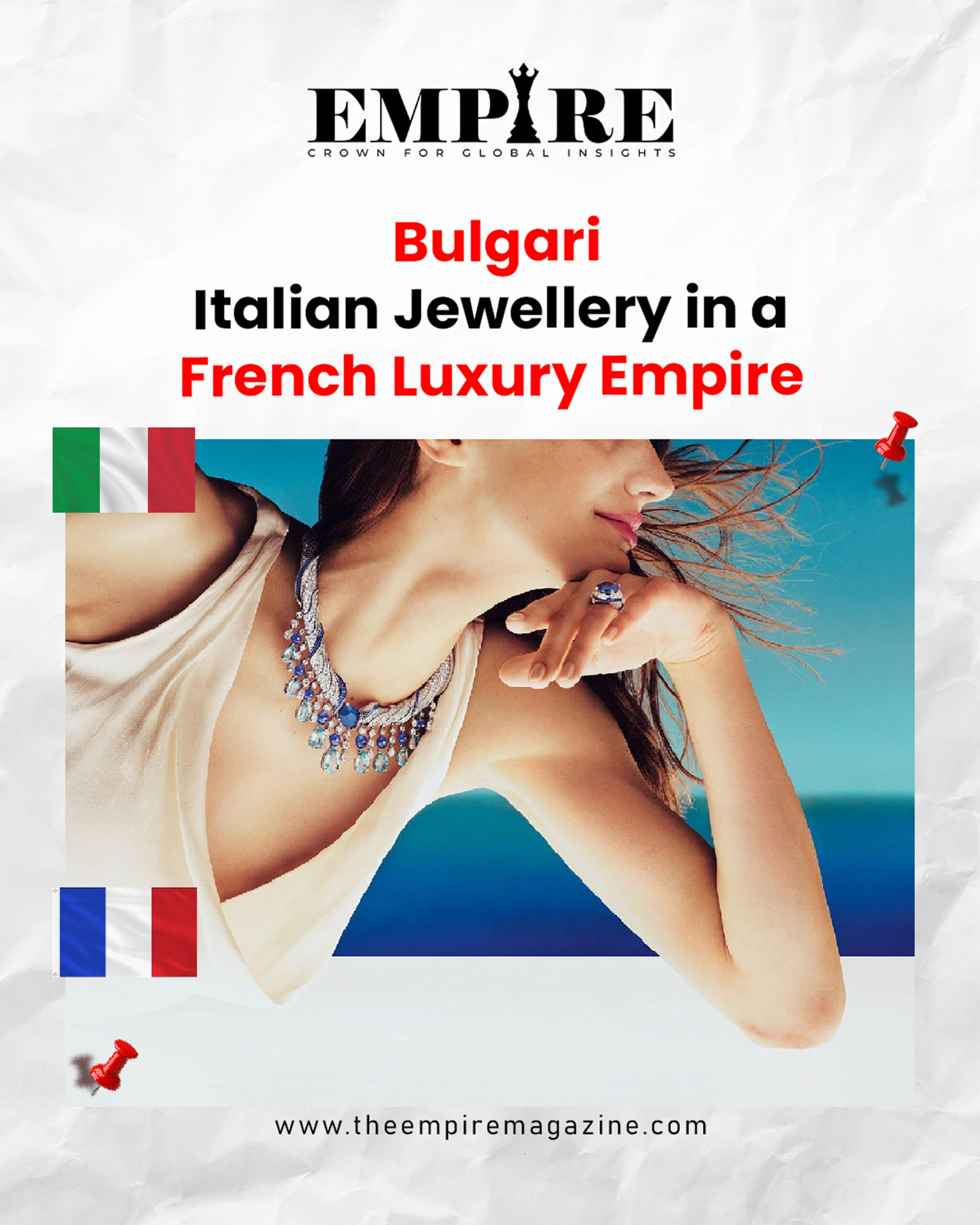
Bulgari is one of the most recognized luxury jewellery houses in the world and a major example of how Italian craftsmanship became part of a French luxury empire. The brand was founded in Rome in 1884 by Sotirio Bulgari, a Greek silversmith who built the company around jewellery, craftsmanship, and Roman design influence.
Over time, Bulgari became known for bold coloured gemstones, architectural jewellery forms, strong gold designs, watches, fragrances, leather goods, accessories, and luxury hospitality. The brand’s identity remained strongly connected to Rome, even after it became part of LVMH, the French luxury group that owns Louis Vuitton, Dior, Fendi, Tiffany & Co., TAG Heuer, Hublot, and many other luxury houses.
Bulgari’s story shows how luxury groups use acquisitions to build global portfolios while preserving the identity of historic maisons. The company became part of LVMH in 2011, but its Italian heritage, Roman visual language, and jewellery expertise remain central to the brand.
The Origins of Bulgari in Rome
Bulgari’s history began with Sotirio Bulgari, who came from a family of silversmiths. He moved to Italy and opened his first store in Rome. The brand grew from silver objects and jewellery into one of the most important luxury names in Italy.
Rome became central to Bulgari’s identity. The city’s architecture, ancient history, monuments, and colours influenced the brand’s design language. Bulgari jewellery often reflects Roman boldness, symmetry, and sculptural form.
The Via Condotti Boutique
Bulgari’s flagship store on Via Condotti in Rome became an important symbol of the brand. The boutique helped position Bulgari as a luxury destination for international clients, celebrities, collectors, and wealthy travellers.
The location also strengthened the brand’s connection with Roman glamour. Over the decades, Bulgari became associated with film stars, high society, and the luxury culture of postwar Italy.
Bulgari’s Design Identity
Bulgari became famous for a design style that was different from traditional French jewellery houses. While many French maisons focused on delicate, formal, and classical high jewellery traditions, Bulgari became known for strong colours, large gemstones, yellow gold, and architectural shapes.
Coloured Gemstones and Bold Forms
Bulgari’s use of coloured gemstones is one of its most recognizable features. The brand often combines emeralds, rubies, sapphires, amethysts, turquoise, and diamonds in bold arrangements. This use of colour helped Bulgari stand out in the global jewellery market.
The brand also became known for collections such as Serpenti, B.zero1, Divas’ Dream, Monete, and Parentesi. These collections connect jewellery with symbols, architecture, history, and modern design.
The Serpenti Collection and Global Recognition
The Serpenti collection is one of Bulgari’s most famous signatures. Inspired by the snake, Serpenti designs appear in jewellery, watches, bags, and accessories. The snake symbol has been used in art and mythology for centuries, and Bulgari transformed it into a luxury design icon.
Watches and Jewellery Together
Bulgari is also known for combining jewellery and watchmaking. Serpenti watches are designed as both timepieces and jewellery objects. This helped the brand build strength in the watches and jewellery category, an important luxury segment.
The brand’s watchmaking operations also expanded through Swiss manufacturing, allowing Bulgari to compete in high-end watches while maintaining its Italian design personality.
LVMH Acquired Bulgari in 2011
In 2011, LVMH acquired Bulgari in a major luxury industry deal. Reuters reported that LVMH agreed to buy the Bulgari family’s 50.4% holding in the company through a share deal worth about $5.2 billion. LVMH issued 16.5 million shares in exchange for the family’s Bulgari stake.
The deal made the Bulgari family an important shareholder in LVMH and brought the Italian jewellery house into the French luxury group. LVMH later completed the tender offer process for the remaining shares, making Bulgari part of the group’s watches and jewellery division.
Why LVMH Wanted Bulgari
LVMH wanted Bulgari because jewellery and watches were becoming increasingly important in the luxury market. Before the acquisition, LVMH was already strong in fashion, leather goods, perfumes, cosmetics, wines, spirits, and selective retailing. Bulgari helped strengthen its position in hard luxury, which includes jewellery and watches.
The acquisition gave LVMH a globally recognized jewellery maison with strong heritage, retail presence, and design identity. It also helped LVMH compete more strongly with Richemont, the Swiss luxury group that owns Cartier, Van Cleef & Arpels, Piaget, IWC, and other watch and jewellery brands.
Italian Heritage Inside a French Luxury Group
Bulgari’s place inside LVMH shows how modern luxury groups operate. LVMH owns brands from different countries, but each maison keeps its own heritage and creative identity. Bulgari remains Italian and Roman in its brand story, even though it is owned by a French group.
Preserving Maison Identity
Luxury conglomerates often grow by acquiring heritage brands and giving them global resources. The goal is not always to erase the original identity. Instead, successful luxury groups preserve brand heritage while expanding distribution, marketing, production, digital systems, and international reach.
Bulgari’s Roman identity remains central to its communication. Its stores, campaigns, collections, and high jewellery events continue to highlight Italian craftsmanship, Mediterranean colour, and Roman inspiration.
Bulgari Under LVMH
After joining LVMH, Bulgari benefited from the group’s global luxury infrastructure. LVMH has experience in retail expansion, supply chain management, high jewellery, watches, digital marketing, client experience, and global brand building.
Bulgari continued expanding across jewellery, watches, accessories, fragrances, and hospitality. The brand also invested in high jewellery events, flagship boutiques, and luxury hotel projects.
Jean-Christophe Babin and Brand Growth
Jean-Christophe Babin became CEO of Bulgari in 2013 after previously leading TAG Heuer. Under his leadership, Bulgari strengthened its jewellery focus, expanded high jewellery visibility, and continued building the Serpenti and B.zero1 collections.
Reuters reported in 2025 that Babin was appointed CEO of LVMH’s watches division while continuing his role as Bulgari CEO. This showed the importance of Bulgari’s leadership within LVMH’s wider watches and jewellery strategy.
Bulgari Hotels and Luxury Lifestyle Expansion
Bulgari also expanded beyond jewellery into luxury hospitality through Bulgari Hotels & Resorts. The hotel business connects the brand with lifestyle, architecture, design, and premium travel.
Bulgari hotels are located in major luxury destinations such as Milan, London, Dubai, Paris, Rome, Beijing, Shanghai, and Bali. These properties help extend the brand into experiences, not only products.
Why Hospitality Matters for Luxury Brands
Luxury hospitality helps brands build deeper relationships with clients. A hotel allows customers to experience the brand through design, service, food, wellness, location, and atmosphere.
For Bulgari, hospitality strengthens the lifestyle side of the brand while keeping the Roman luxury identity visible in global cities.
Jewellery as a Strategic Luxury Category
Jewellery has become one of the most important luxury categories because it combines emotional value, craftsmanship, gifting, investment appeal, and heritage. High jewellery pieces can also support strong brand storytelling and client relationships.
Branded Jewellery Growth
The luxury jewellery market has become more branded over time. Consumers increasingly look for recognizable maison names, iconic collections, authenticity, and resale value. This benefits brands such as Bulgari, Cartier, Van Cleef & Arpels, Tiffany & Co., and Chopard.
Bulgari’s strength comes from having a distinctive design language. Its Roman identity and use of colour make it different from many competitors.
The Business Importance of Bulgari for LVMH
Bulgari plays an important role in LVMH’s watches and jewellery division. The group’s acquisition of Tiffany & Co. in 2021 further strengthened its jewellery position, but Bulgari remains one of its most important European jewellery maisons.
Competing in Hard Luxury
Hard luxury is a competitive segment because customers expect craftsmanship, authenticity, heritage, and long-term value. Bulgari gives LVMH a powerful position in Italian high jewellery and branded watches.
The brand also helps LVMH balance its portfolio beyond fashion and leather goods. This diversification matters because luxury groups need strength across multiple categories and regions.
Bulgari’s Global Appeal
Bulgari’s global appeal is built on Italian design, Roman heritage, celebrity visibility, high jewellery, and strong retail presence. The brand has remained relevant by combining historic symbols with modern luxury communication.
From Rome to the World
Bulgari began as a Roman jewellery house and became part of a global French luxury empire. Its journey shows how luxury brands can expand internationally while keeping strong cultural roots.
For more luxury and business insights, read this feature on The Empire Magazine.
Follow The Empire Magazine on Instagram and Facebook.
– The Empire Magazine
Crown For Global Insights