Gucci x Formula 1 Is a Major Shift in Luxury Marketing
Gucci x Formula 1 is now one of the strongest examples of how luxury brands are entering the global sports business. Luxury fashion is no longer limited to runway shows, boutiques, celebrity campaigns, and seasonal collections. Major luxury houses are moving into sports because global sports platforms offer visibility, emotion, culture, entertainment, and direct access to younger audiences.
Formula 1 has become especially attractive for luxury brands because it combines speed, technology, design, exclusivity, global travel, and premium experiences. These qualities match the image that many luxury companies want to build. The sport is watched across continents and has grown into a lifestyle platform where fashion, hospitality, content, celebrities, and business partnerships meet.
The Gucci and Formula 1 connection shows that luxury brands are not only advertising around sport. They are becoming part of the sports business model itself.
Gucci Becomes Part of the Formula 1 Business Story
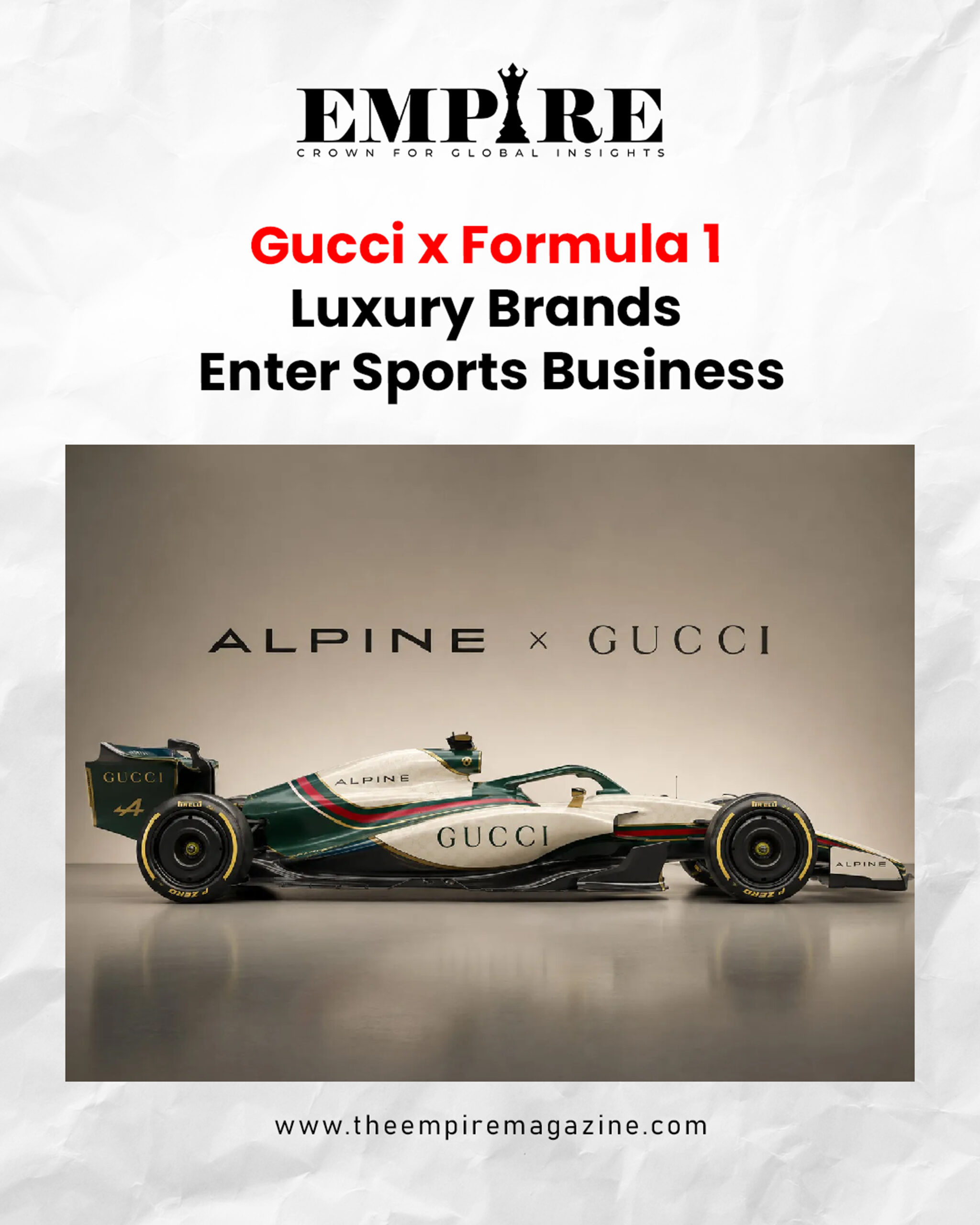
Gucci’s move into Formula 1 is connected to Alpine, the Renault-owned Formula 1 team. From the 2027 Formula One season, Gucci is set to become the title partner of Alpine, with the team expected to race under the name Gucci Racing Alpine Formula One Team. This is an important development because it marks a deeper link between high fashion and motorsport.
The partnership introduces Gucci Racing as a business and experiential platform connected with performance, precision, discipline, and excellence. These values are also central to Formula 1. For Gucci, Formula 1 provides access to a global audience and a high-energy environment that supports brand visibility beyond traditional fashion spaces.
Why Formula 1 Fits Luxury Branding
Formula 1 is not only a racing competition. It is also a global entertainment product. Each Grand Prix attracts fans, sponsors, media companies, celebrities, investors, and premium hospitality guests. The race weekend experience includes fashion, travel, private events, luxury experiences, and brand activations.
Luxury brands are drawn to this environment because Formula 1 customers and fans often connect with premium lifestyle categories such as watches, fashion, automobiles, travel, champagne, and exclusive events. This makes the sport a valuable space for luxury storytelling.
Luxury Brands Are Moving Beyond Traditional Advertising
Luxury brands once depended mainly on magazines, fashion weeks, flagship stores, celebrity endorsements, and selective retail experiences. These channels are still important, but the market has changed. Younger consumers discover brands through social media, sports content, streaming platforms, influencers, and live events.
Sports partnerships help luxury brands become part of cultural moments. Instead of only showing products, brands can build experiences. A luxury company can create limited-edition products, VIP hospitality, racing-inspired collections, digital campaigns, behind-the-scenes content, and global events connected to sport.
From Logo Placement to Brand Experience
Modern sports partnerships are not only about placing a logo on a car, jersey, stadium, or broadcast screen. Luxury brands now use sports as an experience platform. Formula 1 allows brands to combine product, emotion, speed, exclusivity, and storytelling.
For Gucci, the partnership with Alpine gives the brand a chance to connect fashion with motorsport culture. It can influence team identity, event experiences, merchandise, content, and global brand conversations.
LVMH and Formula 1 Show the Bigger Trend
Gucci is not the only luxury name entering Formula 1. LVMH, one of the world’s largest luxury groups, started a 10-year global partnership with Formula 1 in 2025. The agreement includes major LVMH Maisons such as Louis Vuitton, Moët Hennessy, and TAG Heuer.
This shows that Formula 1 has become a serious platform for luxury business. Louis Vuitton is connected with trophy trunks and premium presentation. TAG Heuer has strong historical links with motorsport and timing. Moët Hennessy fits the celebration and hospitality side of the sport.
Together, these partnerships show how luxury groups are using Formula 1 to reach global audiences through sport, culture, and lifestyle.
Why Sports Business Matters for Luxury Brands
Sports business gives luxury brands access to emotion and loyalty. Fans support teams and athletes with strong passion. When luxury brands enter this environment carefully, they can connect with audiences in a more memorable way.
Global Reach and Younger Audiences
Formula 1 has expanded its audience through digital media, race expansion, social content, and entertainment platforms. Younger fans have become more interested in the sport, and this is important for luxury companies that want future customers.
Luxury brands need long-term relevance. Sports can help them remain visible to younger generations without losing premium positioning. Motorsport, in particular, offers a mix of technology, design, performance, and exclusivity that works well for high-end brands.
Hospitality and Premium Experiences
Luxury brands also value Formula 1 because of hospitality. Grand Prix weekends attract business leaders, celebrities, investors, and wealthy consumers. This allows luxury companies to build private experiences, client events, product launches, and high-value networking opportunities.
For luxury companies, sports partnerships can support both brand image and customer relationship building.
The Business Impact of Gucci x Formula 1
Gucci x Formula 1 can support Gucci’s brand visibility, cultural relevance, and international positioning. The brand can reach audiences that may not follow traditional fashion campaigns but regularly engage with Formula 1 content.
For Alpine, the partnership brings luxury prestige, global recognition, and a stronger commercial identity. Formula 1 teams depend not only on race performance but also on sponsorships, branding, media value, and fan engagement. A luxury title partner can help strengthen the team’s market position.
Challenges of Luxury Entering Sports
Luxury brands must manage sports partnerships carefully. Sport is performance-driven, and fans value authenticity. A brand partnership must feel connected to the sport’s culture, not just attached for attention.
There is also a balance between exclusivity and mass visibility. Luxury brands must reach wider audiences while still protecting premium identity. Successful partnerships need strong creative direction, careful product strategy, and genuine connection with the sports audience.
Read more business and luxury insights on The Empire Magazine.
Follow The Empire Magazine on Instagram and Facebook.
– The Empire Magazine
Crown For Global Insights