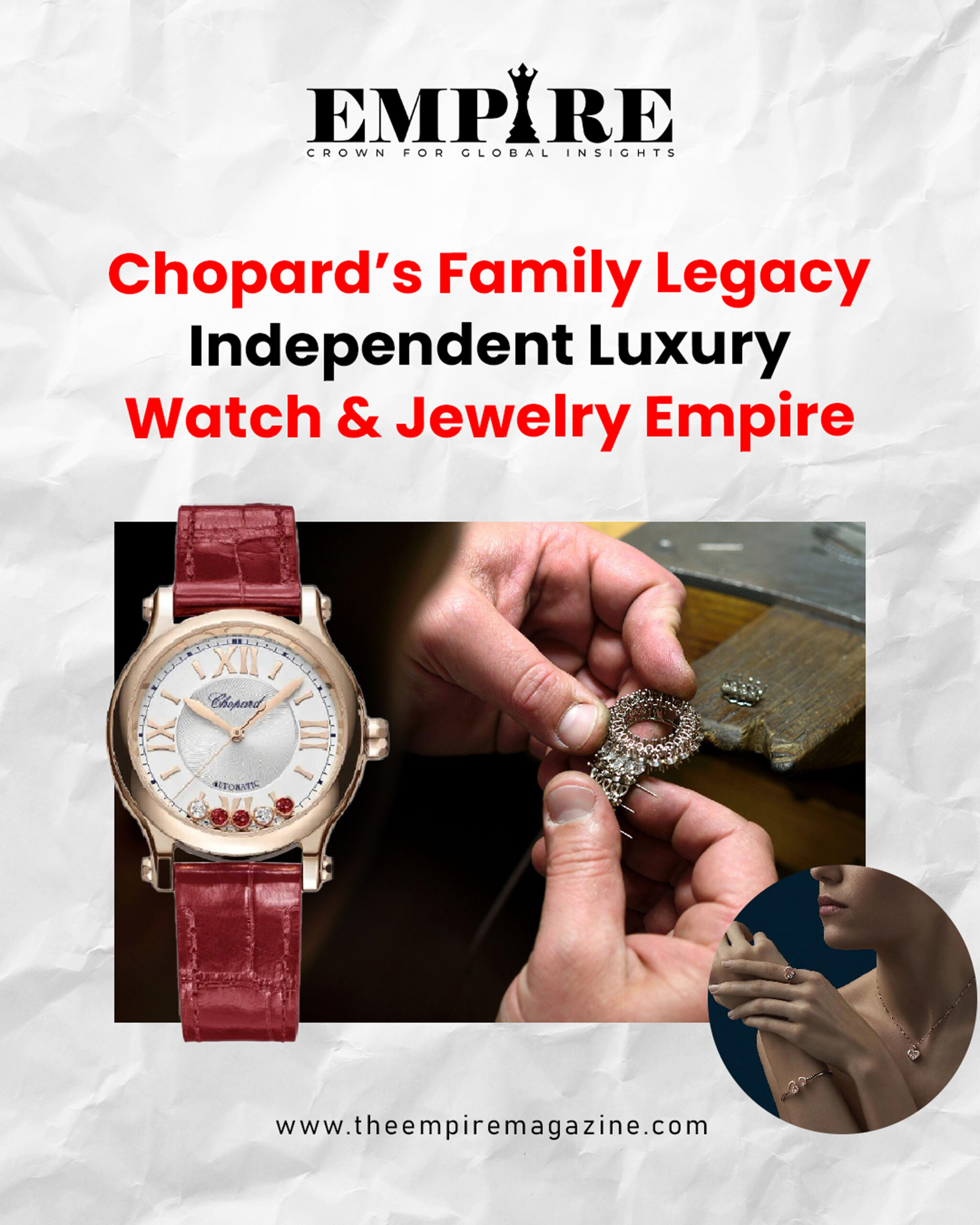
Chopard Family Legacy stands as one of the most respected independent luxury houses in the world. Unlike many global brands controlled by large conglomerates, Chopard remains proudly family-owned and operated by the Scheufele family. Its journey from a small Swiss watch workshop in 1860 to a global powerhouse in haute horlogerie and high jewelry showcases the power of vision, craftsmanship, and multi-generational commitment.
The Origins: Louis-Ulysse Chopard and Early Years
Chopard was founded in 1860 by Louis-Ulysse Chopard in the small village of Sonvilier, in Switzerland’s Jura Mountains. A master watchmaker, Louis-Ulysse specialized in high-precision pocket watches and chronometers. His focus on quality and reliability quickly earned the brand a strong reputation in an era when pocket watches were essential tools for accuracy.
After Louis-Ulysse’s death in 1915, the company passed to his son Paul-Louis and later to Paul-André Chopard. However, with no direct family successor interested in continuing the business, the brand faced an uncertain future by the early 1960s.
The Scheufele Family Takes Over (1963)
A turning point came in 1963 when Karl Scheufele III, a young German watchmaker and jeweler from Pforzheim, acquired Chopard. This acquisition marked the beginning of the modern Chopard era. Karl Scheufele III, along with his wife Karin, infused fresh energy into the brand and began expanding its presence internationally.
The Scheufele family transformed Chopard from a struggling watchmaker into a diversified luxury house. In 1976, Chopard introduced its iconic Happy Diamonds collection — featuring freely moving diamonds between two sapphire crystals. This playful yet elegant innovation became a signature of the brand and helped establish its strong position in the jewelry segment.
The Second Generation: Karl-Friedrich and Caroline Scheufele
Today, Chopard is led by the second generation of the Scheufele family. Siblings Karl-Friedrich Scheufele (Co-President, responsible for watches) and Caroline Scheufele (Co-President, responsible for jewelry and high jewelry) have been at the helm since the early 2000s.
Under their leadership, Chopard has achieved remarkable milestones:
- Establishment of its own Chopard Manufacture in Fleurier in 1996, marking 30 years of in-house watchmaking excellence by 2026.
- Acquisition and revival of the prestigious Ferdinand Berthoud brand for haute horlogerie.
- Strong focus on ethical and sustainable practices, becoming one of the first luxury brands to use 100% Fairmined ethical gold.
- Iconic partnerships, including its long-standing role as the official timekeeper of the Cannes Film Festival since 1998.
Chopard’s Dual Mastery: Watches and High Jewelry
What sets Chopard apart is its balanced excellence in both watchmaking and jewelry. The brand produces everything from elegant daily wear timepieces to highly complicated L.U.C. watches and spectacular high jewelry creations.
Key collections include:
- L.U.C — Named after the founder, representing fine watchmaking with in-house movements.
- Happy Diamonds — The joyful, signature jewelry line.
- Happy Sport — Sporty yet elegant watches with floating diamonds.
- Red Carpet Collection — Spectacular high jewelry pieces unveiled annually at the Cannes Film Festival.
In 2026, Chopard continues to celebrate 30 years of its integrated manufacture, showcasing new L.U.C. models that blend traditional craftsmanship with modern innovation.
Independence as a Core Strength
Unlike many competitors owned by large luxury groups, Chopard’s family ownership gives it unique advantages:
- Long-term decision making without quarterly pressure
- Ability to invest heavily in vertical integration and manufacturing capabilities
- Freedom to maintain high standards of craftsmanship
- Preservation of brand soul and creative vision
This independence has allowed the Scheufele family to focus on sustainable growth rather than aggressive expansion at the cost of quality.
Challenges and Resilience
Maintaining independence in an industry dominated by conglomerates has not been easy. Chopard has navigated economic crises, changing consumer preferences, and intense competition while staying true to its values. The family’s commitment to ethical sourcing and environmental responsibility has also required significant investment and courage.
Current Standing in 2026
As of 2026, Chopard operates a global network of boutiques and remains a major player in the luxury watch and jewelry sector. The brand continues to be admired for its creativity, technical excellence, and family-driven authenticity. The next generation, including Karl-Fritz Scheufele, is gradually taking on more responsibilities, ensuring the legacy continues.
Chopard’s success proves that family-owned businesses can not only survive but thrive in the competitive luxury industry by staying rooted in tradition while embracing innovation.
Lessons from Chopard’s Family Legacy
- Long-term vision beats short-term gains
- True independence requires courage and investment
- Excellence in craftsmanship creates lasting emotional connections
- Balancing heritage with contemporary relevance is key to longevity
- Ethical practices can become a powerful differentiator
Chopard’s story is more than just a business success — it is a testament to the enduring strength of family legacy in the world of luxury. In an era where many heritage brands have lost their soul to corporate ownership, Chopard shines as a beacon of independent excellence.
For more inspiring stories of leadership, innovation, and global business, read our detailed coverage here.
Follow The Empire Magazine for more updates on business, startups, technology, and global insights: Instagram | Facebook
– The Empire Magazine
Crown For Global Insights