Exosome Therapy has emerged as one of the most promising frontiers in regenerative medicine. Often described as the next evolution after stem cell treatments, exosome therapy offers a cell-free approach that delivers powerful therapeutic signals without the risks associated with live cell transplantation. As of 2026, this innovative field is generating significant excitement in anti-aging, tissue repair, inflammation reduction, and chronic disease management.
What Are Exosomes and How Does Exosome Therapy Work?
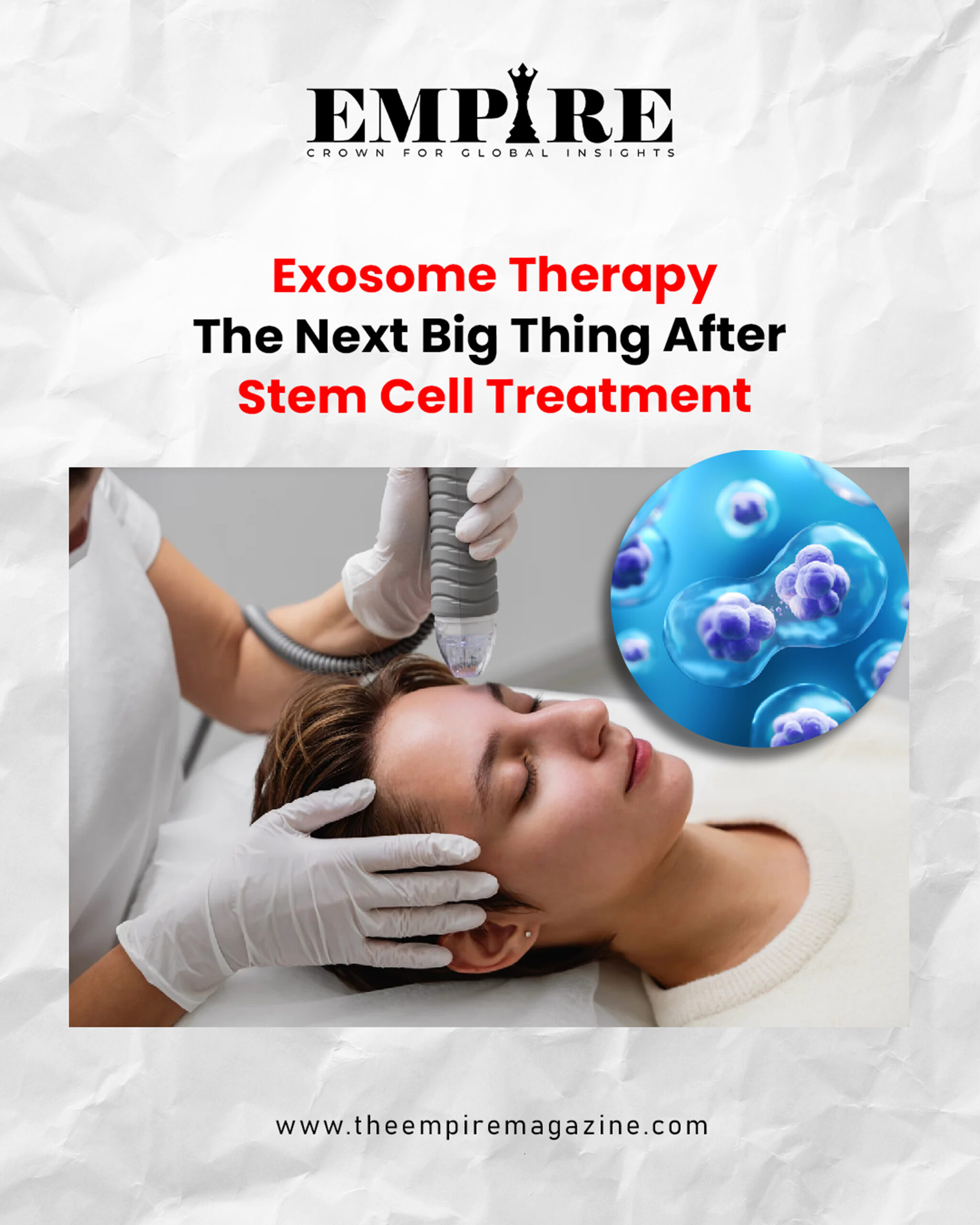
Exosomes are tiny extracellular vesicles (30–150 nm in size) naturally released by cells, particularly mesenchymal stem cells (MSCs). They act as messengers, carrying proteins, lipids, mRNA, microRNA, and growth factors that facilitate cell-to-cell communication and tissue repair.
In Exosome Therapy, these vesicles — typically derived from lab-cultured stem cells — are isolated, purified, and administered to patients. Once inside the body, exosomes deliver their regenerative cargo directly to target cells, promoting healing, modulating inflammation, and stimulating natural repair mechanisms without introducing new living cells.
This makes exosome therapy fundamentally different from traditional stem cell treatment, which relies on transplanting whole cells that must survive, integrate, and function in the patient’s body.
Exosome Therapy vs Stem Cell Treatment: Key Differences
| Aspect | Stem Cell Therapy | Exosome Therapy |
|---|---|---|
| Nature | Living cells | Cell-free vesicles |
| Risk of Immune Rejection | Higher (especially donor cells) | Significantly lower |
| Tumorigenicity Risk | Possible | Very low / None |
| Administration | Often invasive injections | Minimally invasive, easier storage |
| Mechanism | Cell replacement + paracrine effect | Primarily paracrine signaling |
| Shelf Life & Logistics | Complex, needs viable cells | More stable and easier to handle |
Exosomes are believed to capture most of the beneficial “paracrine effects” of stem cells — the healing signals they release — while avoiding many drawbacks like immune reactions, poor cell survival rates, and potential tumor formation.
Potential Applications of Exosome Therapy in 2026
Research and early clinical use of exosome therapy are expanding rapidly across multiple areas:
- Orthopedics & Joint Health: Promoting cartilage repair and reducing inflammation in osteoarthritis.
- Anti-Aging & Skin Rejuvenation: Stimulating collagen production, improving skin texture, and accelerating wound healing.
- Neurological Conditions: Potential for crossing the blood-brain barrier to support recovery from stroke, traumatic brain injury, and neurodegenerative diseases.
- Cardiovascular Repair: Supporting heart tissue recovery after myocardial infarction.
- Hair Restoration: Emerging as a powerful alternative or complement to PRP for hair regrowth.
- Chronic Inflammation & Autoimmune Disorders: Modulating immune responses effectively.
- Post-COVID Recovery & Lung Health: Showing promise in reducing long-term inflammation.
Advantages That Position Exosome Therapy as the Next Big Thing
- Superior Safety Profile: Being acellular, exosomes carry minimal risk of immune rejection or tumor formation.
- Better Scalability: Easier to produce, store, and standardize compared to live stem cells.
- Targeted Delivery: Can be engineered to carry specific therapeutic molecules.
- Lower Regulatory & Logistical Hurdles (in theory): Though still heavily regulated.
- Faster Results: Many patients report quicker visible improvements in aesthetic and orthopedic applications.
Current Status and Challenges in 2026
Despite tremendous promise, Exosome Therapy remains largely investigational. As of May 2026, no exosome products have received full FDA approval for therapeutic use. Several candidates are advancing through clinical trials, with notable developments including Capricor Therapeutics’ Deramiocel (CAP-1002) for Duchenne muscular dystrophy, which has a key PDUFA target date in August 2026.
Major challenges include:
- Lack of standardization in isolation, purification, and dosing
- Need for larger Phase III clinical trials to prove long-term safety and efficacy
- Regulatory uncertainty across different countries
- High treatment costs in private clinics offering off-label or experimental applications
The Future Outlook
Experts believe that successful regulatory approvals in the coming years could accelerate adoption of exosome therapy. Advances in engineering exosomes for precision delivery and combining them with other technologies (such as AI-driven personalization) are expected to drive the next wave of innovation.
While it may not completely replace stem cell therapy, exosome therapy is positioned as a safer, more practical complement or alternative in many regenerative applications. Its cell-free nature addresses many ethical and safety concerns that have limited broader stem cell use.
As research matures, Exosome Therapy could become a cornerstone of personalized regenerative medicine, offering hope to millions suffering from degenerative conditions, aging-related issues, and chronic diseases.
For more inspiring stories of leadership, technology, and global innovation, read our detailed coverage here.
Follow The Empire Magazine for more updates on business, startups, technology, and global insights: Instagram | Facebook
– The Empire Magazine
Crown For Global Insights