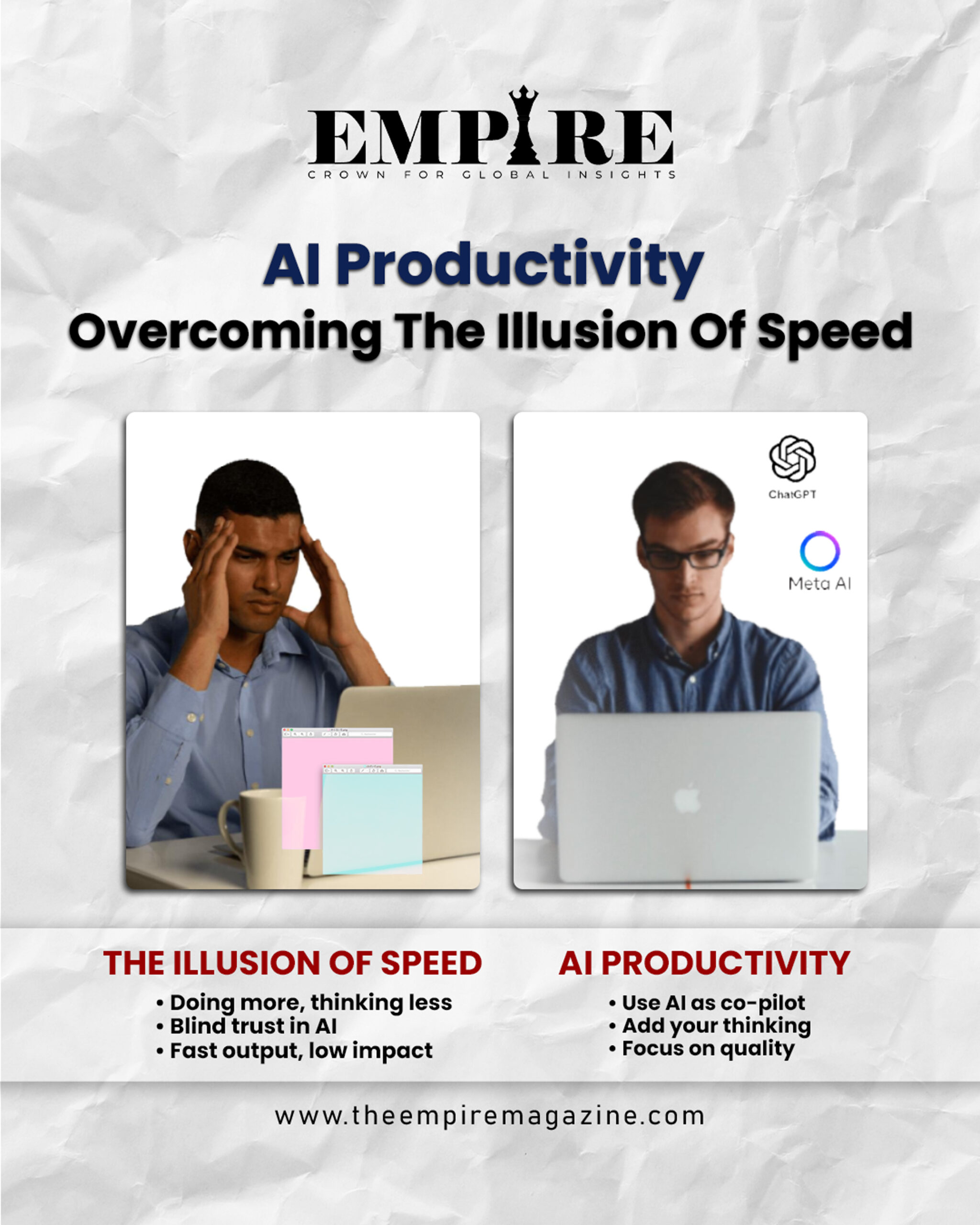
AI productivity is rapidly becoming the core measure of success for technology and business leaders who are investing heavily in automated software development. Across the financial and technology sectors, forward-thinking organizations are eagerly adopting artificial intelligence tools to accelerate their digital delivery pipelines. Early outcomes frequently validate these massive financial investments, with industry reports indicating an average 20% increase in overall software development output, alongside coding efficiency gains soaring anywhere between 30% to 55%. Looking ahead, these significant improvements are projected to yield massive cost savings per engineer, driving an industry-wide reduction in total software development expenditures.
However, beneath these impressive and highly publicized statistics lies a structural paradox that many leaders are ignoring. Developers are generating code faster than ever before, logging shorter velocities in their sprint iterations. Yet, this sudden acceleration has created a dangerous illusion of progress. In most organizational environments, the actual release cadence and ultimate business performance metrics show minimal, if any, improvement. The critical question emerges for every tech executive: are we simply building code faster just to wait longer in the deployment queue?
The Mirage of Modest Gains and Fragmented Work
To truly understand the illusion of AI productivity, one must take a closer look at how a software developer’s day is actually structured. At first glance, automated coding assistants appear incredibly powerful and transformative. They reduce tedious boilerplate text, accelerate syntax fixes, and generate complex algorithms in mere seconds. But there is a significant catch to this technological magic: these efficiency improvements apply exclusively to active coding time.
In the vast majority of enterprise organizations, software engineers spend only 15% to 20% of their workday actively writing code. Therefore, a staggering 20% efficiency gain during that very narrow slice of time equates to a mere 3% to 4% improvement in total working output.
Furthermore, modern developer workflows are highly fragmented. Software development is not a predictable, repetitive manufacturing line; it is a creative, collaborative, and deeply nonlinear endeavor. The typical workday is punctuated by endless meetings, severe context switching, complex architectural decisions, coordination overhead, and operational support tickets. Because these productivity gains rarely occur in contiguous, uninterrupted blocks of deep focus, the micro-efficiencies provided by artificial intelligence are easily diluted by the surrounding organizational noise.
Moving Beyond the Locus of Inefficiency
The core problem preventing true AI productivity does not reside in the coding process itself. Instead, the locus of inefficiency has simply shifted downstream to the validation and delivery phases of the lifecycle. The acceleration of code generation has led to a phenomenon known as “idle productivity”—where rapid outputs hit a massive wall of manual interventions.
The most prominent bottlenecks in the modern enterprise include:
- Manual Security and Compliance: Dependence on manual security reviews, rigorous penetration testing cycles, and strict compliance checks dramatically delay deployment.
- Inconsistent Peer Reviews: Review cycles remain heavily manual, wildly inconsistent, and severely lack intelligent automation.
- Rigid Change Management: Cumbersome and outdated approval gates for quality and security extend the product lifecycle unnecessarily.
- Siloed Testing and Deployment: Performance testing is frequently isolated from the main pipeline, and database deployments remain a heavily manual, error-prone endeavor.
To truly harness the power of automation, modern delivery processes must evolve from solitary execution engines into intelligent, self-validating streams. For further reading on optimizing your business frameworks and building resilient systems, explore this exclusive resource: Read our detailed internal guide.
Stacking the Levers of Automation
Real, sustained improvements in enterprise output come from stacking multiple automation levers together. Rather than viewing AI productivity as merely the result of a fast-typing virtual assistant, it must be integrated holistically across the entire Software Development Lifecycle (SDLC).
Organizations can achieve true systemic velocity by implementing:
- AI-Driven Policy Engines: Tools that automatically enforce compliance, governance, and policy-as-code before a single line of code is ever merged.
- Automated Remediation: AI agents deployed directly within continuous integration pipelines to automatically detect and fix vulnerabilities and code issues in real-time.
- Adaptive Pipelines: Frameworks that dynamically optimize test coverage and resource utilization based on historical failure rates and risk analysis.
- Continuous Verification: Systems that track risk signals in real-time to trigger automated rollbacks if an anomaly is detected immediately post-deployment.
Redefining Performance Metrics for the AI Era
As intelligent automation reshapes how software is built and delivered, traditional key performance indicators—such as lines of code written or basic sprint velocity—have become entirely obsolete. To measure true transformational efficiency, organizations must track metrics that correlate directly with business agility, throughput, and system stability.
The new standard of measurement should focus intensely on:
- Lead Time for Change: The total time it takes from a code commit to a live, functioning production deployment.
- Deployment Frequency: How often validated, secure features reach the end-user.
- Change Failure Rate: The percentage of deployments that cause production incidents or require immediate rollbacks.
- Mean Time to Recovery (MTTR): The speed at which an organization can resolve an incident after a failed deployment.
- Rework Rate: The ratio of unplanned deployments that occur specifically as a result of fixing a production error.
These interconnected metrics reveal whether intelligent tools are actually improving flow efficiency or if they are simply amplifying local output without providing any systemic business benefit.
The Personal Productivity Parallel
Interestingly, the illusion of output extends far beyond organizational metrics and directly into the daily habits of the professionals doing the work. Many individuals fall into the trap of over-optimizing their personal workflows with complex task managers and habit trackers, creating what many industry experts call “glorified procrastination.”
True daily efficiency relies on identifying and removing friction. Tactics such as the “Two-Minute Rule” (immediately executing any task that takes less than two minutes), breaking tasks into the smallest possible first steps to overcome mental resistance, and performing a weekly “friction audit” to eliminate repetitive manual actions often yield much higher returns than relying on complex software to manage time. Just as enterprise systems require streamlined downstream pipelines to achieve AI productivity, the individual requires a distraction-free environment and a relentless focus on core tasks rather than an over-reliance on the mere perception of being busy.
Ultimately, AI productivity is not a standalone, magical solution; it is a powerful amplifier. Intelligent coding tools can dramatically enhance a well-designed, interconnected system, but they cannot fix a fundamentally broken one. Stop optimizing for the illusion of speed, and start building for true systemic velocity.
Stay connected and join our growing community for more insights on technology, business, and modern efficiency:
- Instagram: Follow us on Instagram
- Facebook: Connect with us on Facebook
- Website: www.theempiremagazine.com
– The Empire Magazine
Crown For Global Insights