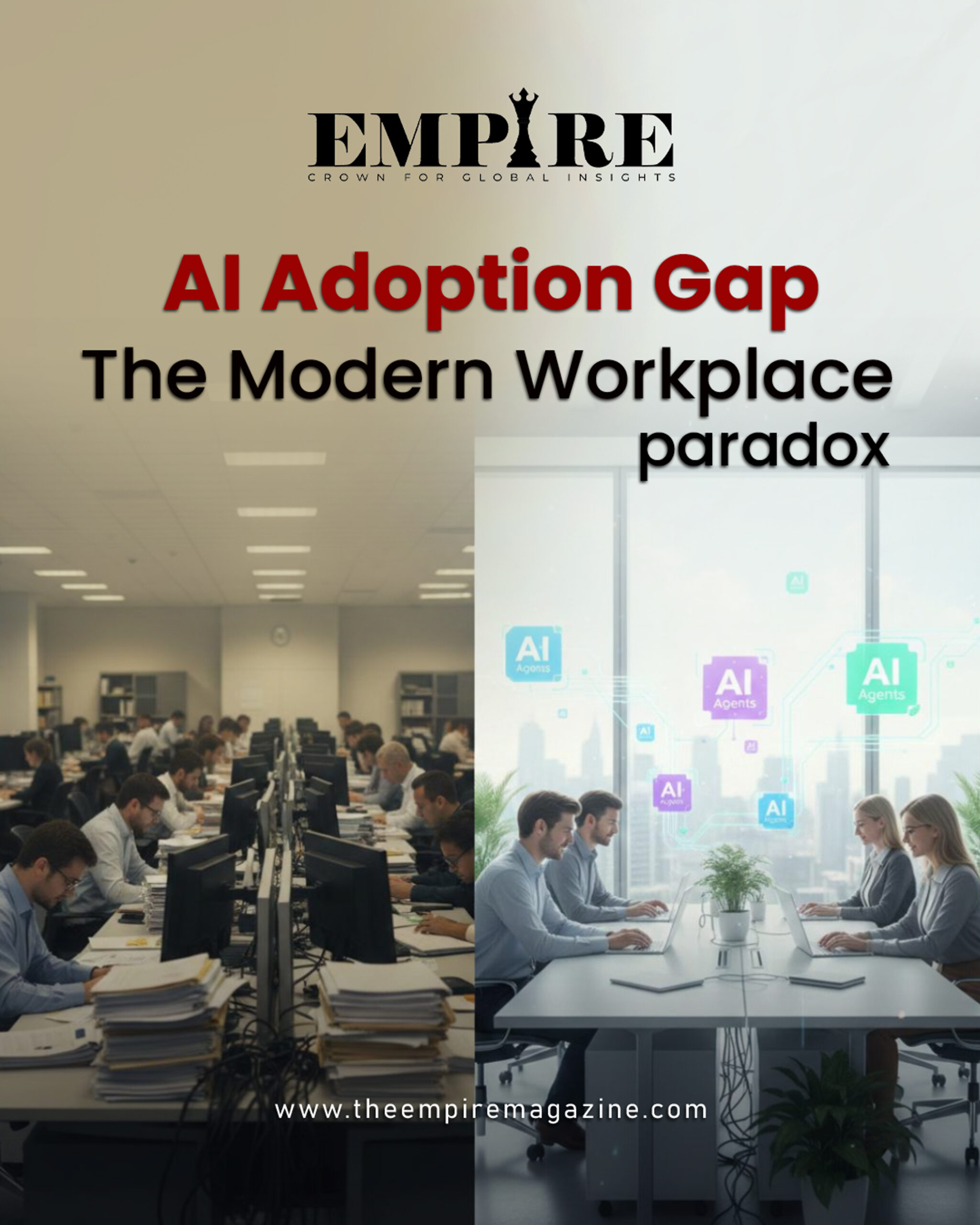
The AI adoption gap is the silent barrier keeping companies from unlocking the true potential of artificial intelligence. While organizations worldwide have crossed the threshold of initial implementation—with an astounding 90% of professionals reporting they use artificial intelligence tools on the job—the promised explosion in value creation remains elusive.
We are facing a modern workplace paradox. Budgets are approved, tools are rolled out, and usage rates are skyrocketing, yet 60% of companies globally report that they are not generating any material value from their AI investments. To understand why deals, productivity, and innovation stall despite high tech usage, we must look beyond basic login metrics and examine the deeply rooted behavioral, cultural, and leadership disconnects shaping this new era of work.
The Leadership Credibility Problem
The most glaring driver of the AI adoption gap is a lack of executive participation. In many organizations, leaders mandate artificial intelligence integration but rarely use the tools themselves.
Recent data reveals that 69% of firms are actively using artificial intelligence, yet the average senior executive spends a mere 1.5 hours a week utilizing these tools. Even more concerning, nearly 28% of senior executives do not use artificial intelligence at all during a typical workweek.
When leadership does not use the tools they champion, it sends a clear signal to teams: “This is for you to figure out, not me.” This creates a massive credibility gap. If leaders are not intimately familiar with the capabilities and limitations of these systems, it becomes nearly impossible to move past surface-level implementation and achieve genuine workflow reinvention.
The Trust Deficit: High Usage, Low Confidence
On the front lines, the workforce is actively experimenting, but they do not fully trust the technology. Three out of four workers frequently abandon artificial intelligence tools mid-task, citing concerns about accuracy, poor workflow fit, and the immense time spent refining subpar outputs.
Furthermore, 45% of employees admit they do not trust the quality of a colleague’s deliverable if they know it was created with machine assistance. This highlights a pressing need for advanced skills in prompt engineering, context setting, and critical evaluation. Moving from casual experimentation to tangible productivity gains requires a workforce that knows how to refine and validate outputs quickly.
The Gen Z Paradox and Gender Divides
Demographic differences also complicate the AI adoption gap. Generation Z, for instance, feels the most comfortable with how automation will impact their careers, yet they are the most critical of its use in the workplace. Nearly half of Gen Z workers prefer their colleagues avoid using artificial intelligence altogether. This is not a contradiction; it reflects a higher standard. Gen Z’s digital fluency makes them acutely aware of the difference between simply using a tool and using it well.
Similarly, a notable gender gap exists. Women are generally more open and trusting toward artificial intelligence use in the workplace, yet they are significantly less comfortable admitting their own use to management (55% compared to 66% of men). This hesitation is often rooted in a cultural double standard, where women fear their work will be perceived as less authentic or less their own—a stigma organizations must actively dismantle.
Institutional Lag and The Rise of Shadow IT
Despite the rapid influx of new technologies, corporate support is severely lacking. Almost half of all workers report that their company does not pay for any premium artificial intelligence tools. This vacuum of institutional support forces employees to bridge the gap themselves, with many paying out of pocket.
This environment has birthed a massive “shadow IT” phenomenon. Nearly a third of workers resort to using unauthorized, unvetted applications to get their work done. This not only presents significant security and compliance risks but also highlights a profound failure in change management and leadership provisioning.
Closing the AI Adoption Gap: Strategic Steps for Leaders
To move beyond the illusion of progress and foster a culture of meaningful technological integration, organizations must rethink their approach. Here is how leaders can bridge the divide:
- Lead by Example: The fix is not another corporate policy; it is leaders going first. Executives must use the technology visibly. Block out 20 minutes a week to use automation for strategic tasks, such as scenario planning or risk assessment. When leaders model the behavior, it normalizes adoption across the entire company.
- Bridge the Tool and Training Deficit: Companies must evaluate and invest in secure, paid solutions for their teams. Furthermore, comprehensive training programs must be implemented—focusing not just on how to log in, but on effective prompting, understanding technical limitations, and strict quality control.
- Empower the Personas: Recognize that your workforce consists of diverse adopters—from enthusiastic Champions and independent Explorers to cautious Skeptics. Tailor your internal enablement to these groups. Reward collective team performance rather than isolating individual “tech superstars.”
- Focus on Workflow Reinvention: Stop using advanced technology merely for peripheral administrative tasks. Aim for semiautonomous collaboration, where human judgment and automated agents work in tandem to redesign core business processes.
For more comprehensive strategies on refining your operational focus and building resilient organizational systems, explore our guide on mastering sustainable growth.
The Path to True Maturity
The organizations that successfully navigate the AI adoption gap will not just be the ones that purchase the most software. The true winners will be the companies that create psychologically safe environments for experimentation, establish clear and secure governance, and ensure that their leaders are active participants in the technological revolution. It is time to stop mandating change from the boardroom and start leading it from the keyboard.
Connect with us to stay updated:
- Instagram: Follow us on Instagram
- Facebook: Join our Facebook Community
- Website: www.theempiremagazine.com
– The Empire Magazine
Crown For Global Insights