Introduction
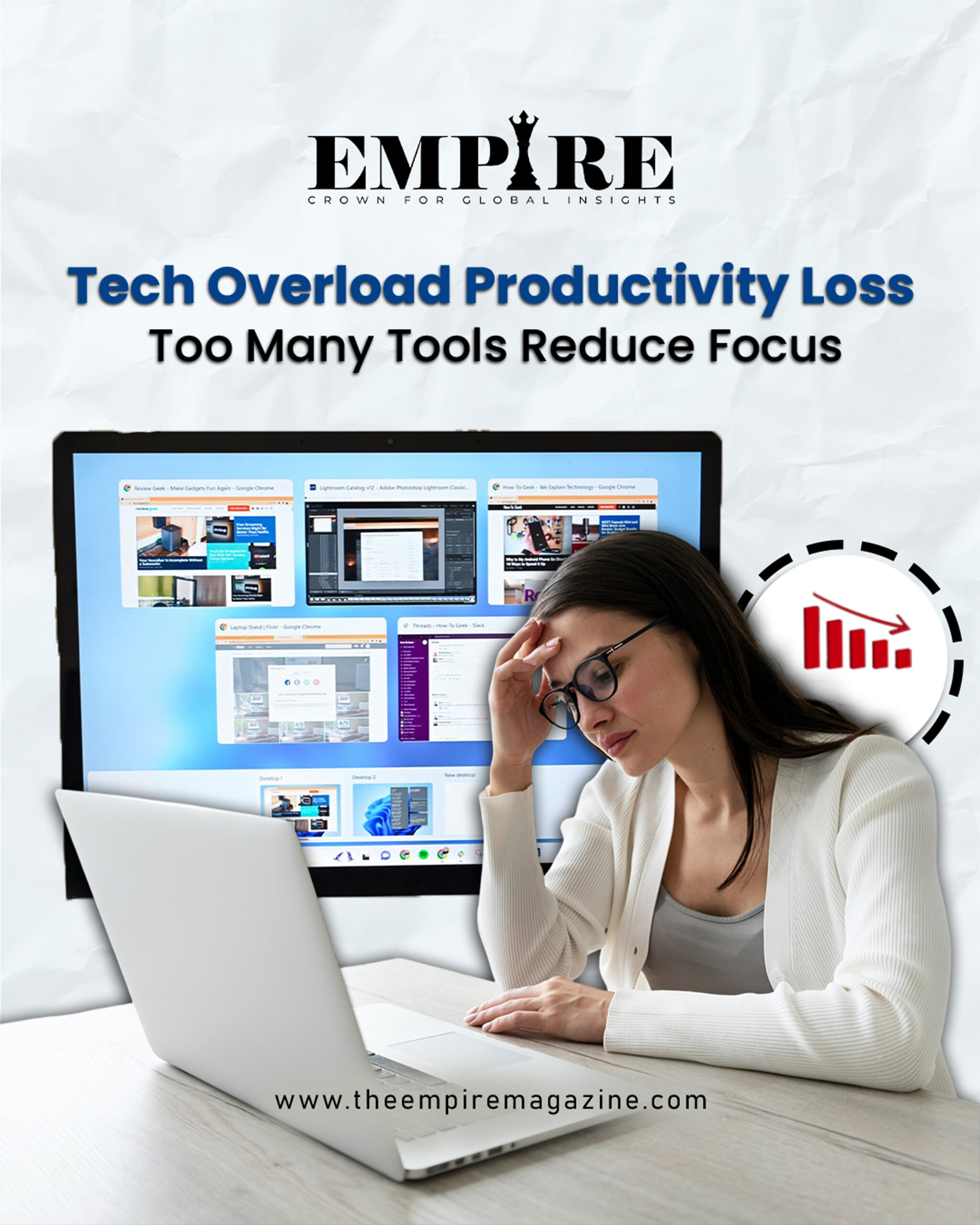
Tech overload productivity loss has become a growing concern in modern workplaces where digital tools dominate daily operations. Organizations initially adopted technology to streamline workflows, enhance communication, and improve efficiency. However, the increasing number of tools has created an unexpected problem—employees are now overwhelmed rather than empowered.
Instead of simplifying work, excessive technology is leading to fragmented processes, constant distractions, and reduced focus. Employees are juggling multiple platforms, switching between applications, and dealing with endless notifications. As a result, productivity is declining, and stress levels are rising. Pasted text
The Rise of Tech Overload
The modern workplace is filled with specialized tools designed for different tasks—project management systems, communication apps, document-sharing platforms, and automation tools. While each serves a purpose, the combined effect often creates complexity instead of clarity.
Employees spend a significant portion of their time navigating between systems rather than completing meaningful work. This fragmentation leads to confusion about where information is stored, how tasks should be managed, and which tools should be used for specific activities.
Over time, this environment reduces efficiency and increases frustration, making it difficult for teams to stay focused and productive.
How Tech Overload Impacts Productivity
1. Information Fragmentation
When data is spread across multiple platforms, finding the right information becomes time-consuming. Employees often waste valuable time searching through different systems, leading to delays in decision-making and execution.
2. Constant Context Switching
Switching between tools may seem like a small task, but it significantly affects concentration. Each switch requires mental adjustment, breaking focus and reducing overall efficiency.
Frequent interruptions from notifications further disrupt workflow, making it difficult to maintain deep focus.
3. Duplicate Work and Inefficiency
Many tools offer similar functionalities. When teams use multiple platforms for the same purpose, it leads to duplication of work. Employees may update information in several systems, increasing workload without adding value.
4. Increased Stress and Burnout
Tech overload is not just a productivity issue—it directly impacts employee well-being. Constant notifications, multiple deadlines, and the pressure to stay connected create mental fatigue.
Over time, this leads to burnout, reduced motivation, and lower job satisfaction.
5. Lack of Clear Processes
Without defined workflows, tools create chaos. Employees are unsure where to communicate, where to store files, and how to collaborate effectively, leading to inefficiencies across the organization. Pasted text
The Hidden Costs of Tech Overload
The impact of tech overload productivity loss extends beyond individual performance. It affects overall business outcomes in several ways:
- Reduced employee engagement and morale
- Slower project completion timelines
- Increased operational costs due to inefficiencies
- Lower quality of work
- Higher employee turnover rates
Organizations often focus on the benefits of adopting new tools while overlooking these hidden costs, which can significantly impact long-term success.
Why More Tools Don’t Mean Better Results
There is a common misconception that adding more tools will automatically improve productivity. In reality, excessive tools often create confusion and inefficiency.
When organizations adopt tools without a clear strategy:
- Workflows become fragmented
- Communication becomes inconsistent
- Employees feel overwhelmed
- Productivity declines
The key is not the quantity of tools but the quality of their implementation and integration.
Can Artificial Intelligence Solve Tech Overload?
Artificial Intelligence (AI) is often seen as a solution to tech overload productivity loss. When implemented correctly, AI can help streamline workflows and reduce manual effort.
AI can:
- Automate repetitive tasks
- Organize and analyze data efficiently
- Provide actionable insights
- Reduce dependency on multiple tools
By integrating processes, AI can create a more cohesive and efficient work environment.
When AI Becomes Part of the Problem
While AI offers significant benefits, it can also contribute to tech overload if not implemented properly.
AI becomes a problem when:
- It is introduced without proper training
- It operates as a separate system instead of integrating with existing tools
- Employees are not prepared to use it effectively
Instead of simplifying work, poorly implemented AI can add another layer of complexity.
How to Reduce Tech Overload and Improve Productivity
Audit Existing Tools
Organizations should evaluate all tools currently in use. Identify their purpose, effectiveness, and relevance to business goals.
Eliminate Redundant Platforms
Remove tools that duplicate functions. Focus on fewer platforms that deliver better results.
Create a Centralized System
Ensure that all critical information is stored in one accessible location. This improves collaboration and reduces confusion.
Define Clear Workflows
Establish clear guidelines for communication, task management, and data storage. Employees should know exactly where to go for specific tasks.
Use AI Strategically
Adopt AI solutions that integrate with existing systems and enhance workflows rather than complicating them.
Prioritize Employee Well-Being
Encourage employees to manage notifications, take breaks, and maintain a healthy balance between work and digital engagement.
The Future of Workplace Productivity
The future of productivity lies in simplicity and clarity. Organizations must shift their focus from adding more tools to optimizing the ones they already use.
Key priorities include:
- Integration over expansion
- User-friendly systems
- Alignment between technology and business goals
- Empowering employees with the right tools, not more tools
When technology is used effectively, it becomes a powerful enabler of productivity rather than a barrier.
To explore more insights, visit:
👉 https://theempiremagazine.com/?p=6088
Stay connected with us:
📸 Instagram: https://www.instagram.com/the_empire_magazine/
📘 Facebook: https://www.facebook.com/profile.php?id=61573749076160
– The Empire Magazine
Crown For Global Insights