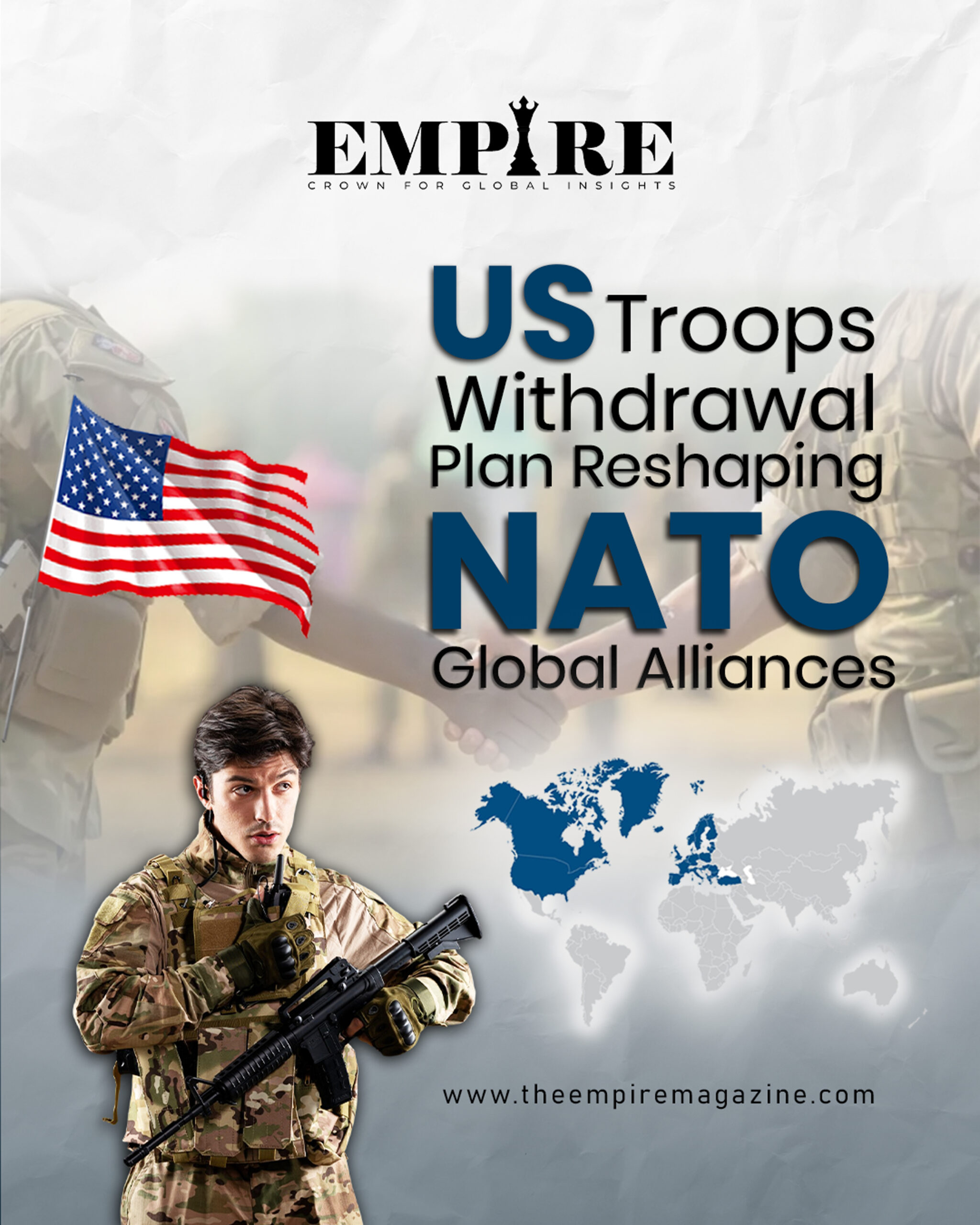
The emerging US troops withdrawal plan is signaling a major shift in global military strategy and international alliances. As geopolitical tensions continue to evolve, especially following the recent conflict involving Iran, the United States is reassessing its long-standing military presence in Europe. This move could significantly reshape NATO dynamics and redefine how global security partnerships function in the coming years.
The proposal, reportedly being considered at the highest levels of leadership, suggests withdrawing American troops from certain European countries that are perceived as “unhelpful” and relocating them to nations seen as more supportive. This strategy represents not just a tactical adjustment, but a broader rethinking of alliance commitments and military priorities.
Background of the US Troops Withdrawal Plan
The US troops withdrawal plan comes in the wake of growing disagreements between the United States and several NATO allies. These tensions have been fueled by differing views on military operations and strategic priorities, particularly during recent global conflicts.
Certain European countries have expressed hesitation or opposition to specific military actions, leading to friction within the alliance. This lack of alignment has prompted the US administration to reconsider how and where its forces should be deployed.
The idea behind the plan is straightforward: reward cooperation and reassess commitments where support is lacking. This marks a shift from traditional alliance structures, where long-term partnerships were often maintained regardless of short-term disagreements.
Potential Withdrawal from Key European Nations
Under the proposed US troops withdrawal plan, countries such as Germany and Spain are reportedly being considered for troop reductions. These nations have historically hosted significant US military bases and have played important roles in NATO operations.
However, recent disagreements over military strategy and operational support have placed them under scrutiny. Decisions such as restricting access to airspace or openly criticizing military actions have contributed to tensions.
If implemented, the withdrawal of troops from these countries would represent a major change in Europe’s security landscape. It would also signal a shift in how the United States evaluates its alliances.
Strengthening Ties with Supportive Nations
While some countries may see a reduction in US military presence, others could benefit from increased cooperation. The US troops withdrawal plan includes the possibility of relocating forces to nations that have demonstrated strong support.
Countries in Eastern and Central Europe, such as Poland, Romania, Lithuania, and Greece, are being considered as potential hosts for additional US troops. These nations have shown willingness to align closely with US strategic objectives.
This redistribution of forces reflects a broader effort to strengthen partnerships with allies who actively support military initiatives. It also highlights the importance of alignment in modern defense strategies.
Impact on NATO Alliances
The US troops withdrawal plan could have far-reaching implications for NATO. The alliance, which has been a cornerstone of global security for decades, relies on cooperation and mutual support among its members.
A shift toward conditional military presence may challenge the traditional principles of the alliance. It raises questions about the future of collective defense and the extent to which member countries are expected to align with specific strategies.
At the same time, the plan may encourage NATO members to reassess their own commitments and contributions. Increased defense spending and stronger coordination could become necessary to maintain stability within the alliance.
A Changing Global Security Strategy
The proposed US troops withdrawal plan reflects a broader transformation in global security strategy. Instead of maintaining a fixed military presence, the focus is shifting toward flexibility and strategic alignment.
This approach allows the United States to adapt to changing geopolitical conditions and allocate resources more effectively. It also emphasizes the importance of partnerships that are based on shared goals and active cooperation.
As global challenges become more complex, such adaptability may become essential for maintaining security and stability.
Challenges and Risks
While the US troops withdrawal plan offers potential benefits, it also comes with significant challenges and risks.
Strained Diplomatic Relations
Reducing military presence in certain countries could strain diplomatic relationships. Long-standing alliances may be tested, and trust between partners could be affected.
Regional Security Concerns
The withdrawal of troops from key locations may create security gaps. European nations may need to increase their own defense capabilities to compensate for reduced US presence.
Uncertainty and Instability
Changes in military deployment can create uncertainty in global markets and political environments. This uncertainty may impact not only defense strategies but also economic and diplomatic relations.
Strategic Message to Allies
The US troops withdrawal plan sends a clear message: alliances are evolving, and support is increasingly being measured by action rather than tradition.
Countries that actively participate in strategic initiatives are likely to receive greater cooperation and investment. Those that do not may see a reduction in support.
This shift emphasizes accountability and shared responsibility within international alliances.
The Future of Transatlantic Relations
The future of transatlantic relations will largely depend on how the US troops withdrawal plan is implemented and received by European nations.
If managed carefully, it could lead to stronger, more balanced partnerships. However, if tensions escalate, it could weaken long-standing alliances and create divisions within NATO.
The outcome will depend on continued dialogue, cooperation, and a willingness to adapt to changing global realities.
For more insights on global politics and strategic developments, visit:
👉 https://theempiremagazine.com/?p=5922
Stay connected with us:
Instagram: https://www.instagram.com/the_empire_magazine/
Facebook: https://www.facebook.com/profile.php?id=61573749076160
– The Empire Magazine
Crown For Global Insights