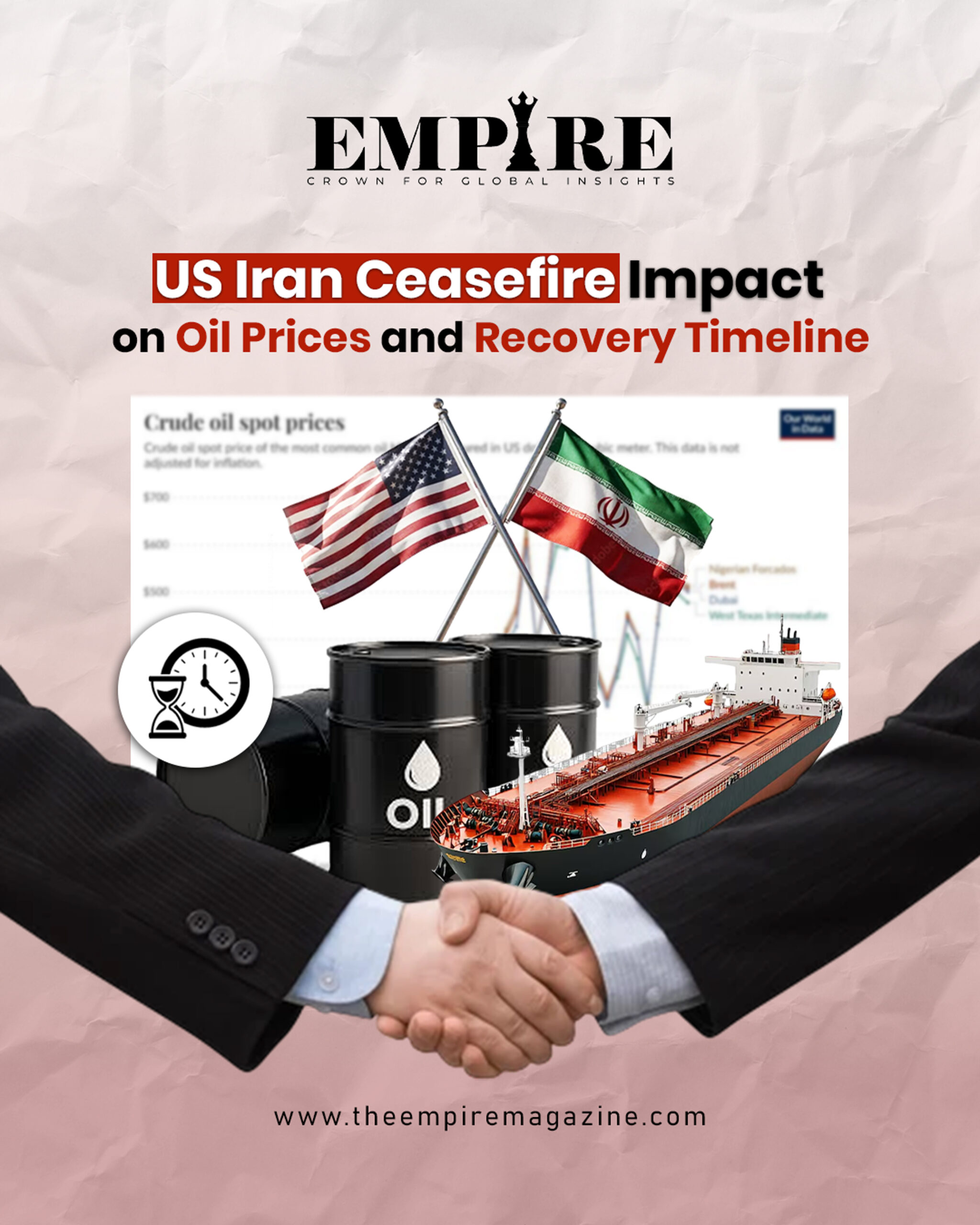
The US Iran ceasefire impact on oil prices has brought temporary relief to global energy markets, but the bigger question remains: when will oil prices truly return to normal? While the ceasefire has reduced immediate geopolitical tensions, the path to stability is far more complex than a simple agreement between two nations.
Oil markets are highly sensitive to global events, and even a short disruption can create long-lasting ripple effects. Although prices have begun to fall after the ceasefire, multiple structural challenges continue to delay full recovery.
Immediate Impact of the Ceasefire on Oil Prices
The most visible effect of the US Iran ceasefire impact on oil prices has been a sharp drop in crude oil rates. During the peak of the conflict, oil prices surged dramatically due to fears of supply disruptions. However, once the ceasefire was announced, prices quickly corrected.
Benchmark crude prices dropped significantly, reflecting reduced panic in global markets. This decline shows how strongly geopolitical stability influences energy pricing.
However, this immediate drop does not mean the market has stabilized. It only indicates that the worst-case fears have temporarily eased.
Why Oil Prices Won’t Normalize Quickly
Despite the ceasefire, oil prices are unlikely to return to pre-conflict levels immediately. Several factors are contributing to the slow recovery process.
1. Disruptions in the Strait of Hormuz
One of the most critical issues is the continued disruption in the Strait of Hormuz. This narrow waterway is one of the world’s most important oil transit routes, handling a significant portion of global oil shipments.
During the conflict, the strait was effectively blocked, leading to a major supply bottleneck. Even after the ceasefire, shipping activity has not fully resumed, and uncertainty continues to affect trade flows.
This disruption alone is enough to keep oil prices volatile.
2. Damaged Energy Infrastructure
Another major challenge is the damage caused to oil and gas infrastructure in key producing regions. Facilities across multiple Gulf countries have been affected, reducing production capacity.
Repairing this infrastructure is not a quick process. It requires time, resources, and stable conditions. Experts suggest that it may take weeks or even months before production returns to normal levels.
In some cases, recovery could take years, especially where damage is extensive.
3. Shipping and Insurance Challenges
Even if infrastructure is repaired and shipping routes reopen, logistical challenges remain. Shipping companies are hesitant to send vessels into potentially unstable regions.
Insurance costs have also increased significantly, making it more expensive to transport oil. Many insurers are unwilling to cover shipments through high-risk zones, which further limits supply.
This combination of risk and cost continues to delay the normalization of oil markets.
4. Backlog of Supply
Another important factor is the backlog of oil shipments. Large quantities of crude oil and liquefied natural gas remain stranded due to earlier disruptions.
Clearing this backlog will take time. Even if shipping resumes, it will not happen instantly. The market needs time to absorb and redistribute these supplies.
This delay contributes to continued price instability.
Global Market Uncertainty
The US Iran ceasefire impact on oil prices is also influenced by uncertainty around the ceasefire itself. While the agreement has reduced tensions, there are concerns about its long-term stability.
Any signs of renewed conflict can quickly push prices back up. This uncertainty makes traders cautious and keeps markets volatile.
As a result, oil prices are likely to fluctuate in the short term rather than stabilize immediately.
Impact on Different Countries
The effects of oil price fluctuations are not the same for every country. Some nations are more vulnerable due to their dependence on imports.
Developing Nations
Countries with limited resources are already facing challenges such as fuel shortages and rising costs. These economies are more sensitive to price changes and supply disruptions.
Developed Nations
Wealthier nations are better equipped to manage these challenges. They often have strategic reserves and diversified supply sources, allowing them to maintain stability.
India’s Position
India has managed the situation relatively well. Despite global fluctuations, fuel prices have remained stable due to government interventions and strategic planning.
The country has taken steps such as reducing taxes on fuel and securing alternative supply sources. These measures have helped maintain energy security and protect consumers from price shocks.
When Will Oil Prices Return to Normal?
The timeline for normalization depends on several key factors:
- Full reopening of the Strait of Hormuz
- Repair of damaged infrastructure
- Stabilization of shipping and insurance conditions
- Reduction of geopolitical tensions
Based on current conditions, it is likely that oil prices will take several months to stabilize. In some cases, full recovery to pre-conflict levels may take longer.
The process is gradual and depends on how quickly these challenges are resolved.
Long-Term Implications
The US Iran ceasefire impact on oil prices also highlights broader trends in global energy markets. It shows how vulnerable supply chains are to geopolitical events.
This situation may encourage countries to diversify energy sources and invest in alternative energy solutions. It also emphasizes the importance of strategic reserves and supply chain resilience.
In the long term, these changes could reshape how the global energy market operates.
For more insights on global economy and market trends, visit:
👉 https://theempiremagazine.com/?p=5920
Stay connected with us:
Instagram: https://www.instagram.com/the_empire_magazine/
Facebook: https://www.facebook.com/profile.php?id=61573749076160
– The Empire Magazine
Crown For Global Insights