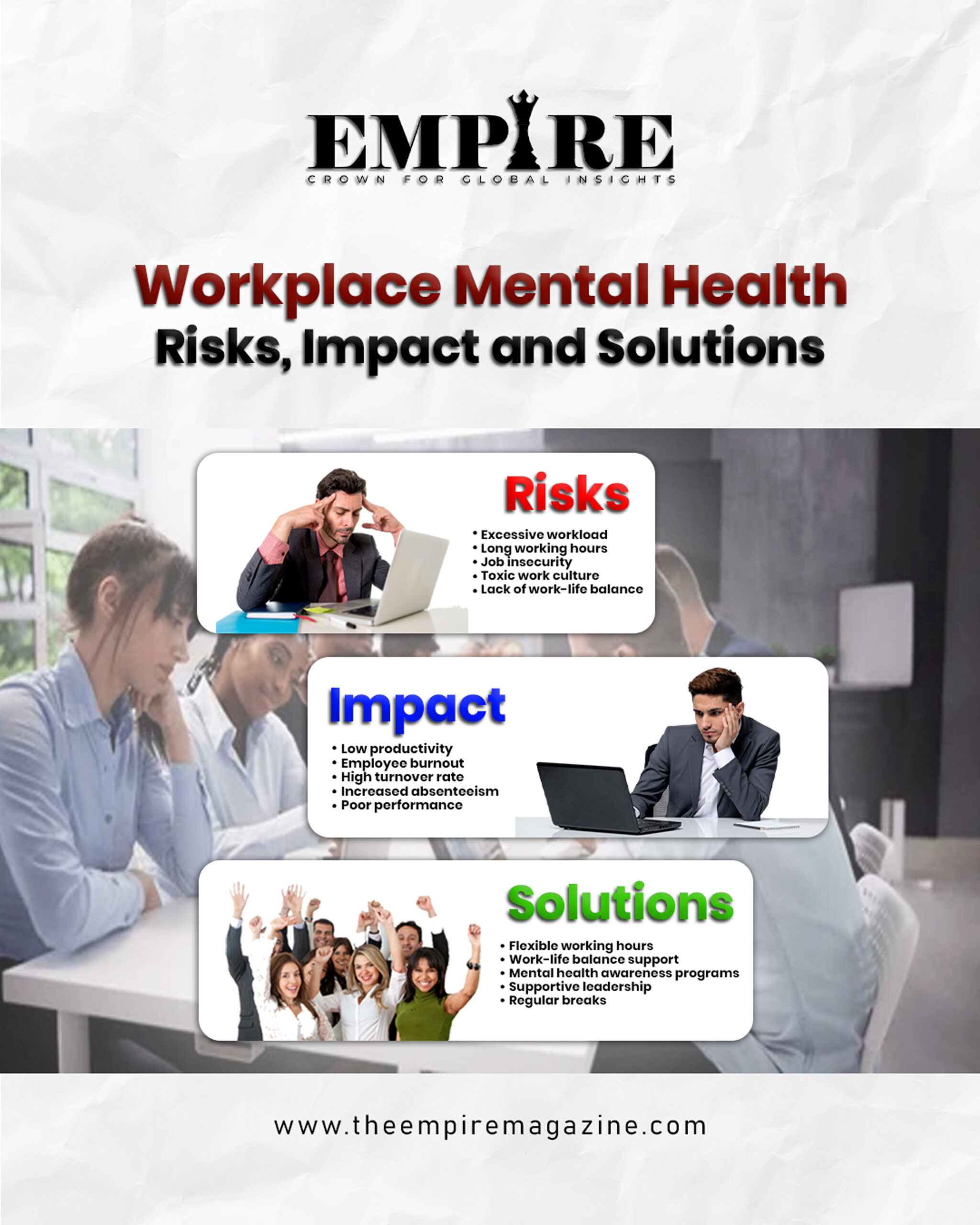
Workplace Mental Health is becoming one of the most critical issues for organizations worldwide. As businesses evolve and demands increase, the pressure on employees has also intensified. A healthy work environment is no longer just about physical safety—it must also support mental well-being.
In today’s fast-paced world, companies that ignore mental health risks face serious consequences, including reduced productivity, higher employee turnover, and long-term organizational instability. Understanding the importance of workplace mental health is essential for building sustainable and successful businesses.
Why Workplace Mental Health Matters
A positive work environment can significantly improve mental well-being. Work provides structure, purpose, and opportunities for social interaction, all of which contribute to overall mental health. Pasted text
When employees feel supported, they are more engaged, productive, and motivated. On the other hand, poor working conditions can lead to stress, anxiety, and burnout.
Mental health challenges are not rare. A significant portion of the global workforce experiences mental health issues, and the impact on productivity is substantial. Businesses that prioritize mental well-being can reduce absenteeism and improve overall performance.
Common Risks to Workplace Mental Health
Several factors contribute to poor Workplace Mental Health. These risks, often referred to as psychosocial risks, can affect employees across all industries.
1. Excessive Workload and Pressure
Heavy workloads and unrealistic deadlines create constant stress. Over time, this can lead to burnout and decreased job satisfaction.
2. Lack of Control and Flexibility
Employees who have little control over their tasks or schedules often feel powerless, which can negatively impact their mental well-being.
3. Poor Work Environment
Unsafe or uncomfortable working conditions can increase stress levels and reduce productivity.
4. Workplace Conflict and Harassment
Bullying, discrimination, and lack of support from colleagues or supervisors can create a toxic work environment.
5. Job Insecurity and Financial Stress
Uncertainty about job stability or inadequate compensation can cause anxiety and reduce employee confidence.
6. Work-Life Imbalance
Long hours and inflexible schedules make it difficult for employees to maintain a healthy balance between personal and professional life.
These risks highlight the need for organizations to actively manage and improve workplace conditions. Pasted text
The Impact on Businesses
Ignoring Workplace Mental Health can have serious consequences for organizations. Poor mental health not only affects individuals but also impacts overall business performance.
Reduced Productivity
Employees experiencing stress or burnout are less efficient and more likely to make mistakes.
Increased Absenteeism
Mental health issues often lead to frequent absences, disrupting workflow and team dynamics.
Higher Employee Turnover
A negative work environment drives employees to seek better opportunities elsewhere.
Financial Losses
Lost productivity and high turnover can result in significant financial costs for businesses.
By addressing mental health proactively, companies can avoid these challenges and create a more stable workforce.
Strategies to Improve Workplace Mental Health
Organizations can take several steps to improve Workplace Mental Health and create a supportive environment.
1. Promote a Healthy Work Culture
Encourage open communication and create a culture where employees feel safe discussing mental health concerns.
2. Provide Flexible Work Options
Flexible schedules and remote work options help employees manage stress and maintain work-life balance.
3. Train Managers and Leaders
Managers play a key role in supporting employees. Training them to recognize and respond to mental health issues can make a significant difference.
4. Offer Mental Health Resources
Provide access to counseling services, wellness programs, and stress management tools.
5. Encourage Work-Life Balance
Promote reasonable working hours and encourage employees to take breaks and vacations.
6. Address Workplace Risks
Identify and reduce factors that contribute to stress, such as excessive workloads or unclear job roles.
These strategies help create an environment where employees can thrive both personally and professionally.
Supporting Employees with Mental Health Conditions
It is important to ensure that employees with mental health conditions receive the support they need. This includes:
- Flexible working arrangements
- Adjusted workloads or responsibilities
- Regular check-ins and support from managers
- Access to healthcare and counseling services
Providing these accommodations helps employees remain productive and engaged while managing their mental health.
The Role of Leadership in Mental Health
Leadership plays a crucial role in shaping workplace culture. Leaders must prioritize mental health by:
- Demonstrating empathy and understanding
- Encouraging open communication
- Allocating resources for mental health initiatives
- Setting realistic expectations for employees
When leadership takes mental health seriously, it sets the tone for the entire organization.
The Future of Workplace Mental Health
As awareness grows, Workplace Mental Health will continue to be a key focus for organizations. Businesses are increasingly recognizing that employee well-being is directly linked to success.
Future trends may include:
- Greater use of technology for mental health support
- Increased investment in employee wellness programs
- Stronger policies to protect employee rights
- More inclusive and supportive work environments
Organizations that adapt to these trends will be better positioned for long-term success.
To explore more insights on business and workplace trends, visit:
👉 https://theempiremagazine.com/?p=5705&preview=true
Stay connected for more insights:
📸 Instagram: https://www.instagram.com/the_empire_magazine/
📘 Facebook: https://www.facebook.com/profile.php?id=61573749076160
– The Empire Magazine
Crown For Global Insights