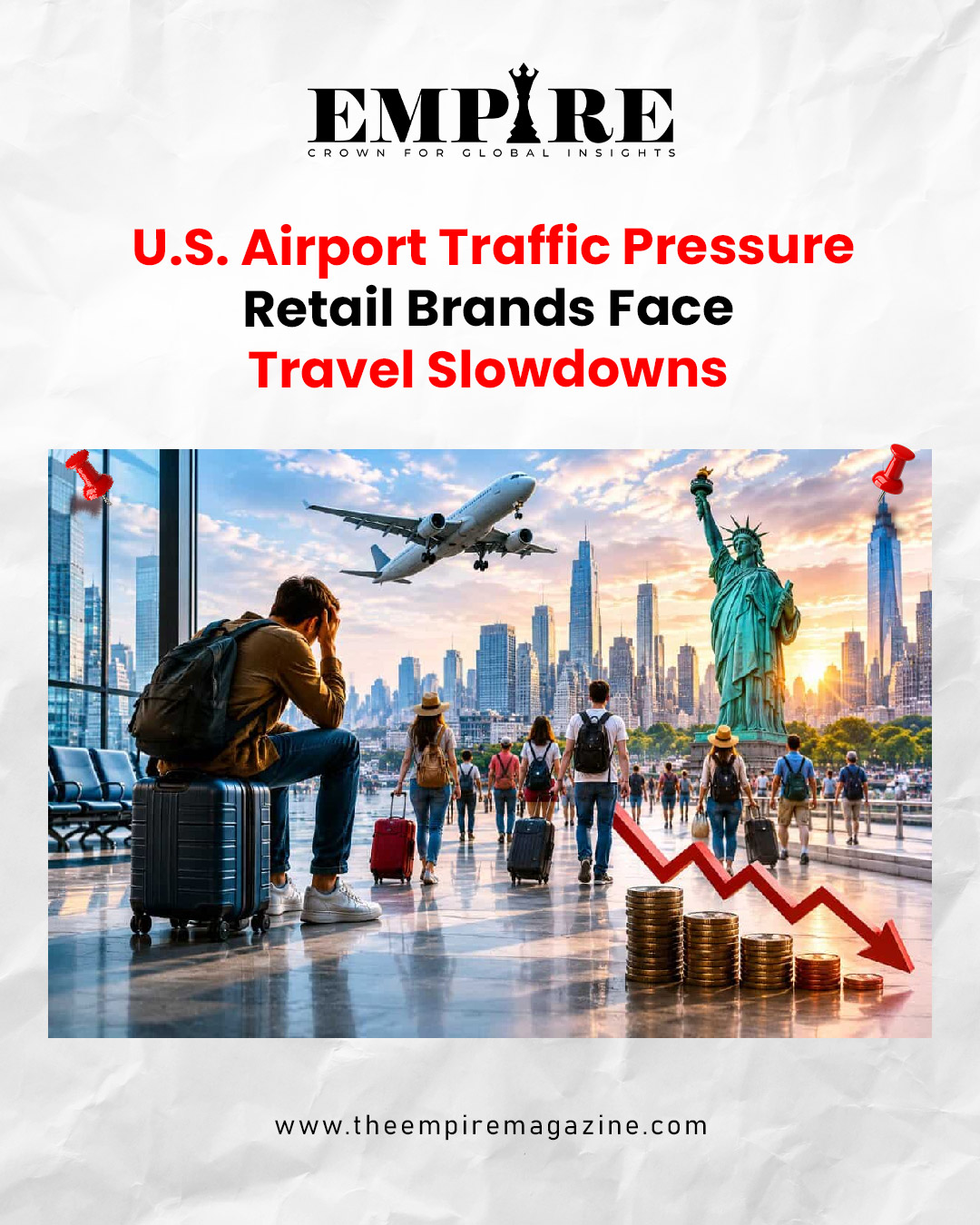
U.S. Airport Traffic Pressure is becoming an important business issue for retail brands that depend on travelers. Airports are not only transportation hubs. They are shopping corridors, food courts, advertising spaces, luxury retail points, convenience centers, and brand discovery zones. When passenger movement slows, airport retail can feel the impact quickly.
Airport retail depends on foot traffic. More passengers usually mean more chances to sell coffee, snacks, beauty products, electronics, books, travel accessories, fashion, duty-free goods, and premium experiences. When travel demand weakens, security lines become unpredictable, flight delays rise, or passengers reduce discretionary spending, retail brands inside airports face direct pressure.
The U.S. airport retail market is closely connected to domestic travel, international tourism, business travel, and consumer confidence. Even small changes in passenger numbers can affect retail sales because airport stores operate in high-rent, high-demand locations. Brands pay for access to captive travelers, but that business model works best when terminals are busy and shoppers have time and confidence to spend.
U.S. Airport Traffic Pressure and the Passenger Traffic Signal
U.S. Airport Traffic Pressure is visible in passenger data. The Bureau of Transportation Statistics reported that U.S. airlines carried 69.5 million scheduled-service passengers in January 2026, down 1.8% from January 2025. Seasonally adjusted enplanements were also below the all-time high reached in June 2024.
This does not mean U.S. air travel has collapsed. The Transportation Security Administration still screens millions of travelers on many days, showing that airport traffic remains large. However, the market is more sensitive than before. Airlines, airports, restaurants, retailers, and luxury brands now watch passenger traffic closely because growth is no longer guaranteed in every period.
For retail brands, the issue is not only total passenger volume. It is also who is traveling, why they are traveling, how long they spend in terminals, and how much money they are willing to spend before boarding.
U.S. Airport Traffic Pressure and Domestic Travel
U.S. Airport Traffic Pressure can affect domestic airport retail because domestic passengers make up a large share of U.S. airport traffic. Domestic travelers often buy food, coffee, water, books, electronics accessories, pharmacy items, and convenience products.
If domestic travel slows, these everyday airport purchases can decline. A fewer number of passengers moving through terminals means fewer impulse buys. Even if a traveler still flies, rising airfare, higher hotel costs, and household budget pressure may make them more cautious inside the airport.
Domestic travel is also important for airport restaurants and quick-service brands. A traveler facing a morning flight may buy breakfast, coffee, or snacks. A business traveler may buy lunch between connections. A family may buy essentials before boarding. Lower foot traffic can reduce these sales opportunities.
U.S. Airport Traffic Pressure and International Retail Spending
U.S. Airport Traffic Pressure matters even more for international travel retail. International passengers often spend more at airports, especially on duty-free products, beauty, fragrance, luxury accessories, alcohol, chocolates, and premium gifts.
International travelers may shop because airport retail offers convenience, brand access, tax-free or duty-free pricing in some categories, and last-minute gifting opportunities. Luxury and beauty brands often see travel retail as a global brand-building channel because international terminals attract high-value customers.
If international travel slows or becomes uncertain, airport retail brands can lose some of their most profitable shoppers. This is especially important for global beauty groups, luxury fashion houses, watch brands, electronics sellers, and premium food retailers.
U.S. Airport Traffic Pressure and Duty-Free Sales
U.S. Airport Traffic Pressure can reduce duty-free sales when fewer international travelers pass through terminals. Duty-free shopping depends on international passenger movement. If travel patterns weaken, retailers may see slower sales in fragrance, cosmetics, spirits, tobacco, confectionery, and luxury gifts.
Duty-free is also sensitive to currency movements and tourist confidence. A strong dollar can make U.S. shopping more expensive for some international visitors. Economic weakness in key tourist markets can also reduce spending per passenger.
Airport retail brands must therefore watch both passenger numbers and traveler spending power. A busy terminal is helpful, but the value depends on whether passengers are actually buying.
U.S. Airport Traffic Pressure and Travel Delays
U.S. Airport Traffic Pressure is not only about fewer passengers. Delays, cancellations, long security lines, and operational disruption can also affect retail behavior. The effect can be mixed.
Sometimes delays increase dwell time, giving passengers more time to eat or shop. A delayed traveler may buy another coffee, meal, charger, book, or travel item. But severe disruption can have the opposite effect. Stressed passengers may focus only on rebooking, customer service lines, gate changes, or finding information.
Long security lines can also reduce shopping time. If passengers spend more time getting through checkpoints, they may go straight to the gate instead of browsing stores. For airport retailers, dwell time after security is extremely important. More relaxed time means more shopping opportunities.
U.S. Airport Traffic Pressure and Dwell Time
U.S. Airport Traffic Pressure makes dwell time one of the most important metrics for airport retail. Dwell time is the amount of time passengers spend in the terminal after security and before boarding.
Retail brands want passengers to have enough time to browse. Restaurants want enough time for orders. Luxury stores want customers to feel calm enough to explore products. Beauty brands want time for testing, sampling, and staff interaction.
If airport operations reduce dwell time, retail performance can suffer even when passenger numbers remain high. This is why airport retail success depends on smooth operations as much as traffic volume.
U.S. Airport Traffic Pressure and Consumer Confidence
U.S. Airport Traffic Pressure is closely tied to consumer confidence. Travel is discretionary for many households. When inflation, higher fuel costs, interest rates, or job uncertainty affect budgets, consumers may reduce travel or spend less during trips.
Retail brands inside airports can feel this shift quickly. A traveler who once bought premium headphones, skincare, luxury accessories, or gifts may now limit spending to essentials. Families may bring snacks instead of buying airport food. Business travelers may reduce discretionary purchases if corporate travel budgets tighten.
Consumer confidence also affects travel categories differently. Essentials such as water, snacks, medicine, chargers, and convenience items may remain resilient. Premium categories such as luxury goods, beauty upgrades, watches, and fashion may become more sensitive.
U.S. Airport Traffic Pressure and Premium Retail
U.S. Airport Traffic Pressure can be especially important for premium retail brands. Airports have become important spaces for luxury and beauty because they attract travelers with disposable income, global exposure, and limited time.
Premium brands use airports to reach international shoppers, business travelers, and affluent tourists. But premium retail depends on confidence. If travelers feel financially cautious, they may delay expensive purchases.
Luxury airport retail works best when passengers are relaxed, optimistic, and willing to spend. Travel slowdowns, economic uncertainty, or operational stress can weaken that mindset.
U.S. Airport Traffic Pressure and Food and Beverage Brands
U.S. Airport Traffic Pressure affects food and beverage brands because airport dining is heavily linked to passenger volume. Coffee chains, quick-service restaurants, bars, casual dining brands, and grab-and-go retailers depend on steady traffic throughout the day.
If travel slows, fewer passengers pass through the terminal. If flights are delayed, demand may spike at certain times but become unpredictable. If travelers are cost-conscious, they may buy fewer items or choose lower-priced options.
Airport food and beverage operators also face high costs. Rent, labor, logistics, airport security requirements, and limited operating space can make airport restaurants expensive to run. Lower traffic can quickly pressure margins.
U.S. Airport Traffic Pressure and Grab-and-Go Retail
U.S. Airport Traffic Pressure can shift demand toward grab-and-go retail. When passengers are rushed, they may choose packaged meals, bottled drinks, snacks, and quick checkout formats instead of sit-down dining.
This creates opportunities for convenience brands. Automated checkout, mobile ordering, self-service kiosks, and compact retail formats can help airport retailers serve travelers faster.
However, grab-and-go success still depends on passenger volume and placement. Stores near gates, security exits, and high-traffic corridors may perform better than locations that require travelers to walk out of their way.
U.S. Airport Traffic Pressure and Beauty Brands
U.S. Airport Traffic Pressure matters for beauty brands because airports are major retail spaces for fragrance, skincare, makeup, and travel-size products. Beauty has historically been one of the strongest categories in travel retail.
Airport beauty retail benefits from sampling, gifting, impulse purchases, and international travel. A passenger may buy fragrance before a trip, skincare during a layover, or travel-size products because they are convenient.
If passenger growth slows, beauty brands may need stronger in-store experiences to protect sales. Personalized recommendations, travel-exclusive bundles, quick consultations, and digital tools can help convert fewer shoppers into buyers.
U.S. Airport Traffic Pressure and Travel-Exclusive Products
U.S. Airport Traffic Pressure can make travel-exclusive products more important. Limited-edition sets, airport-only bundles, and value packs give shoppers a reason to buy during the trip instead of waiting.
This is especially useful when shoppers become more selective. A traveler may skip a regular product but buy a special airport-exclusive offer if it feels valuable or convenient.
Brands must balance discounting with premium image. Airport retail should not feel like clearance shopping. The best travel-exclusive products combine value, convenience, and brand storytelling.
U.S. Airport Traffic Pressure and Luxury Brands
U.S. Airport Traffic Pressure can influence luxury brands that operate airport boutiques or travel retail counters. Luxury airport retail is often located in international terminals, where wealthy travelers and tourists may spend on handbags, watches, jewelry, fashion, and accessories.
Luxury brands care about airport traffic because airport shoppers can be different from local store shoppers. A traveler may buy as part of a vacation, business trip, or gifting occasion. Airports also expose brands to customers from many countries in one place.
If travel slows, luxury airport boutiques may see lower footfall. If travelers are stressed or rushing, they may not spend time exploring high-value purchases. Luxury shopping requires attention, service, and emotional confidence.
U.S. Airport Traffic Pressure and Clienteling
U.S. Airport Traffic Pressure makes clienteling more important for luxury brands. Instead of depending only on walk-in traffic, brands can build relationships with frequent travelers, VIP customers, and international shoppers.
Airport luxury staff can support reservations, product previews, private shopping appointments, and follow-up communication. Digital clienteling can help brands connect airport browsing with later purchases online or in city stores.
This is important because not every airport interaction ends in an immediate sale. A traveler may discover a product at the airport and buy later. Brands need systems to capture that interest.
U.S. Airport Traffic Pressure and Retail Technology
U.S. Airport Traffic Pressure is pushing airport retailers to use technology more effectively. Self-checkout, mobile ordering, digital menus, inventory tracking, smart vending, QR payments, and cashierless stores can improve speed and efficiency.
Technology matters because airport passengers are time-sensitive. A long queue can kill a sale. If a traveler believes checkout will take too long, they may walk away. Faster service can protect revenue even when traffic is uneven.
Retail technology also helps manage labor challenges. Airports often have staffing constraints because workers must meet security requirements and operate across unusual schedules. Automation can support service during peak periods.
U.S. Airport Traffic Pressure and Data-Driven Merchandising
U.S. Airport Traffic Pressure makes data-driven merchandising essential. Airport retailers need to understand which products sell by time of day, route, terminal, passenger mix, airline, and season.
A terminal with many business travelers may need different products than a terminal with leisure families. International terminals may need more beauty, gifting, luxury, and duty-free products. Domestic terminals may need more food, tech accessories, and convenience items.
Better data can help brands reduce waste, improve inventory, and match products to travelers more accurately.
U.S. Airport Traffic Pressure and Brand Strategy
U.S. Airport Traffic Pressure means retail brands need stronger airport strategy. They cannot assume that passenger growth will automatically drive revenue. Brands must improve conversion, product relevance, speed, pricing, and customer experience.
For airport retail, location remains critical. Stores near security exits, gates, lounges, and high-traffic paths often have advantages. But location alone is not enough. Brands also need clear signage, fast checkout, travel-ready packaging, and products suited to passengers.
Retail brands should also prepare for volatility. Travel demand can be affected by weather, strikes, airline schedules, fuel prices, economic uncertainty, government shutdowns, and geopolitical risk. Flexible staffing and inventory planning can help reduce losses during disruptions.
U.S. Airport Traffic Pressure and Omnichannel Retail
U.S. Airport Traffic Pressure can be managed through omnichannel retail. Brands can let travelers browse before arriving, reserve products online, pick up in airport stores, or continue shopping after the trip.
This helps solve the time problem. A passenger may not have time to browse in the terminal, but they may reserve a product before reaching the airport. Another passenger may discover a product at the airport and buy later through a digital channel.
Omnichannel retail turns the airport into both a sales point and a marketing point. Even when immediate sales slow, airport visibility can support long-term brand value.
U.S. Airport Traffic Pressure and the Future of Travel Retail
U.S. Airport Traffic Pressure shows that travel retail is entering a more disciplined phase. Airport traffic remains huge, but growth can be uneven. Retail brands must compete for attention in terminals where passengers are rushed, distracted, or financially cautious.
The strongest airport retailers will focus on essentials, speed, experience, and premium storytelling. Food and beverage brands must serve quickly and manage costs. Beauty brands must create travel-relevant offers. Luxury brands must protect service quality and build client relationships. Convenience retailers must make shopping frictionless.
Airport retail still has strong long-term potential because travel remains a major consumer behavior. But brands cannot depend only on passenger volume. They must understand travel patterns, dwell time, consumer confidence, and category-specific demand.
For more business and retail insights, read more on The Empire Magazine.
Follow The Empire Magazine on Facebook and Instagram.
– The Empire Magazine
Crown For Global Insights