The global tourism and hospitality industry is entering a transformative era, and Travel Trends 2026 reveal how rapidly traveler behavior is evolving. Economic uncertainty, changing lifestyles, artificial intelligence, sustainability, and digital innovation are reshaping how people travel, book experiences, and choose destinations.
Modern travelers are no longer focused only on luxury or convenience. Instead, they prioritize personalization, flexibility, affordability, wellness, and meaningful experiences. As a result, businesses across tourism and hospitality must adapt quickly to remain competitive in an increasingly dynamic market.
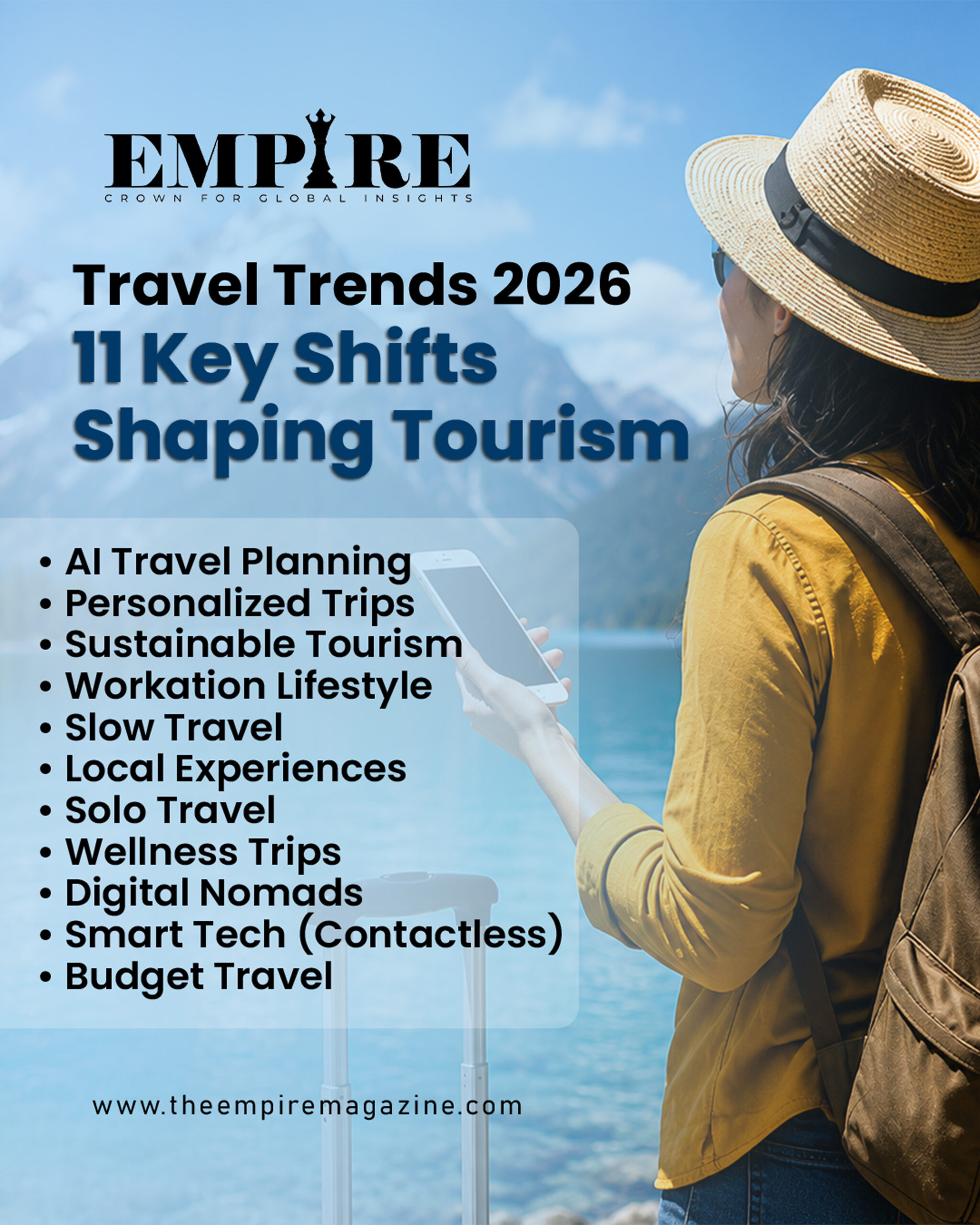
Here are the 11 key shifts shaping tourism in 2026 and what they mean for the future of travel.
1. AI Travel Planning Becomes Mainstream
One of the biggest developments in Travel Trends 2026 is the rise of AI-powered travel planning.
Travelers are increasingly using artificial intelligence tools to compare destinations, build itineraries, discover hidden attractions, and find personalized recommendations instantly. AI simplifies the booking process while helping travelers save time and money.
Hotels, airlines, and travel companies are also integrating AI chat support, predictive pricing, and virtual travel assistants to improve customer experiences and streamline operations.
2. Personalized Trips Drive Modern Tourism
Personalization is becoming a major expectation for travelers in 2026.
Consumers want travel experiences tailored specifically to their interests, preferences, budgets, and lifestyles. Whether it’s customized hotel amenities, curated adventure packages, or flexible itineraries, personalization is influencing purchasing decisions.
Data-driven insights now allow travel businesses to create hyper-personalized experiences that improve customer satisfaction and loyalty.
3. Sustainable Tourism Continues to Grow
Sustainability remains one of the most important themes within Travel Trends 2026.
Travelers are becoming more environmentally conscious and actively seeking eco-friendly hotels, responsible tourism operators, and sustainable transportation options.
Many hospitality brands are reducing carbon emissions, eliminating waste, and promoting local communities as part of their sustainability strategies. Ethical travel is no longer a niche market—it is becoming mainstream.
4. The Workation Lifestyle Expands Globally
Remote work has permanently changed travel habits.
The workation lifestyle allows professionals to combine work and leisure by traveling while working remotely. Destinations with reliable internet, coworking spaces, and affordable long-term stays are seeing increased demand.
This shift is creating new opportunities for hotels, resorts, and tourism businesses to attract digital workers seeking flexibility and lifestyle balance.
5. Slow Travel Gains Popularity
Another major shift in Travel Trends 2026 is the growth of slow travel.
Instead of rushing through multiple destinations, travelers are choosing longer stays and deeper cultural experiences. They prefer exploring local communities, traditions, food, and hidden gems rather than crowded tourist attractions.
Slow travel promotes relaxation, sustainability, and more meaningful experiences while reducing travel stress.
6. Local Experiences Become More Valuable
Travelers are increasingly prioritizing authentic local experiences over traditional sightseeing.
Food tours, cultural workshops, local festivals, and community-based tourism are becoming more attractive to modern tourists who want immersive experiences.
This trend benefits smaller destinations and local businesses by distributing tourism beyond major hotspots.
7. Solo Travel Continues Rising
Solo travel remains one of the fastest-growing segments in global tourism.
More travelers are exploring destinations independently for personal growth, freedom, and self-discovery. Safety, affordability, and flexible experiences are major priorities for solo travelers.
Hotels and travel companies are responding by offering solo-friendly packages, community activities, and personalized services designed for independent travelers.
8. Wellness Trips Redefine Luxury Travel
Wellness tourism is becoming a major focus in Travel Trends 2026.
Travelers now prioritize physical health, mental well-being, relaxation, and mindfulness when planning vacations. Wellness retreats, spa resorts, yoga escapes, and nature-focused experiences are seeing significant growth.
Luxury is increasingly defined by wellness, comfort, and emotional well-being rather than material experiences alone.
9. Digital Nomads Influence Global Tourism
The rise of digital nomads continues reshaping the hospitality industry.
Countries worldwide are introducing digital nomad visas and long-term stay programs to attract remote professionals. Affordable living costs, strong internet infrastructure, and lifestyle quality are major factors influencing destination choices.
Hotels and rental properties are adapting by offering work-friendly environments and long-term accommodation solutions.
10. Smart Technology and Contactless Travel Expand
Technology is becoming central to the modern travel experience.
Smart hotels, digital check-ins, mobile room keys, biometric verification, and contactless payments are improving convenience and efficiency across tourism.
Travelers increasingly expect seamless digital experiences throughout their journey. Businesses investing in connected technology systems are better positioned to meet these expectations.
11. Budget Travel and Value-Based Decisions Increase
Economic uncertainty is influencing travel decisions worldwide.
Many travelers are becoming more budget-conscious while still seeking quality experiences. Affordable destinations, value-driven packages, and flexible pricing strategies are becoming increasingly important.
This has also fueled the rise of “destination dupes,” where travelers choose affordable alternatives to expensive tourist hotspots while enjoying similar experiences.
The Future of Tourism in 2026
The future of travel will be shaped by technology, personalization, sustainability, and evolving consumer expectations.
Businesses that embrace these changes will be better equipped to succeed in the competitive tourism landscape. The strongest brands in 2026 will focus on delivering flexible, meaningful, and customer-centered experiences powered by innovation and human connection.
As Travel Trends 2026 continue to evolve, adaptability will remain the key to long-term growth and success in the global travel industry.
Suggested Image Alt Text
Travel Trends 2026: 11 Key Shifts Shaping Tourism
🔗 Read more insights: https://theempiremagazine.com/?p=6232
🌐 Website: www.theempiremagazine.com
📸 Instagram: https://www.instagram.com/the_empire_magazine/
📘 Facebook: https://www.facebook.com/profile.php?id=61573749076160
– The Empire Magazine
Crown For Global Insights