Trade Deal Between the US and India Reshapes Global Trade in 2026
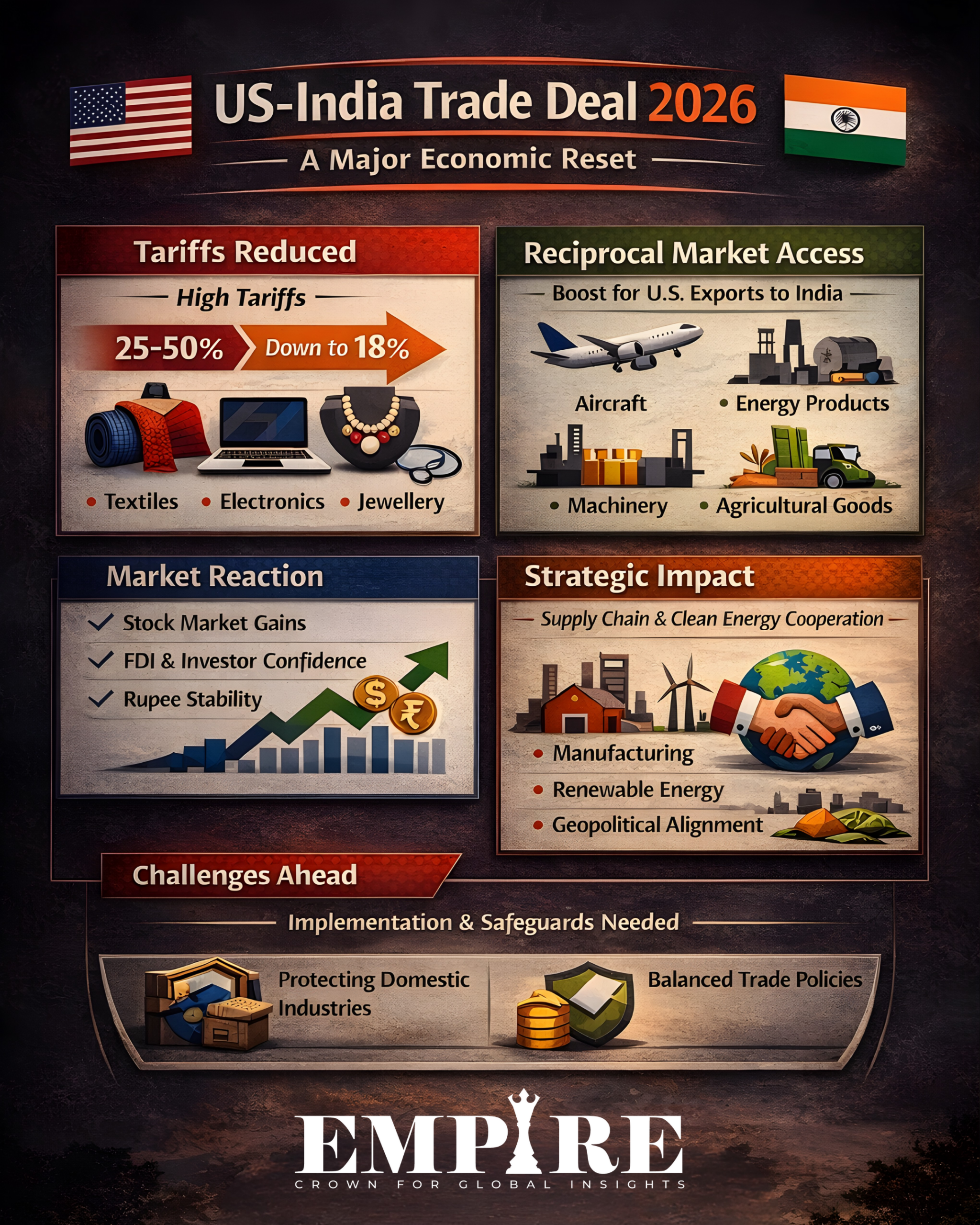
The trade deal announced between the United States and India in early 2026 marks a major turning point in bilateral economic relations. This landmark agreement significantly reduces tariffs on Indian-made goods entering the U.S. market and is being viewed as a strategic reset after months of trade tensions. Policymakers, exporters, and global investors have welcomed the move as a step toward stronger economic cooperation.
Under the trade deal, average tariffs on Indian exports have been reduced from 25–50% to nearly 18%, improving cost competitiveness and reviving export momentum across key sectors.
Trade Deal Brings Major Tariff Reductions
A central feature of the trade deal is the rollback of punitive tariffs that had affected multiple Indian industries. Export-oriented sectors such as textiles, engineering goods, electronics, gems and jewellery, and medical devices are expected to see immediate benefits.
Higher tariffs had previously made Indian products more expensive in the U.S., limiting demand and impacting export volumes. With the new trade deal in place, Indian manufacturers can price their products more competitively, strengthening their position in the American market.
This shift is also expected to benefit small and medium-sized enterprises, helping them scale production and generate employment.
Trade Deal Supports Reciprocal Market Access
The trade deal is designed as a two-way agreement. In return for tariff reductions, India has agreed to ease trade barriers for U.S. products. This includes increased imports of American aircraft, energy resources, industrial machinery, medical technology, and advanced equipment.
India has also committed to gradually lowering tariffs on select U.S. goods, creating fresh opportunities for American exporters. These reciprocal measures aim to ensure long-term sustainability of the trade deal and balanced trade growth.
Trade Deal Boosts Markets and Investor Confidence
Financial markets responded positively following the announcement of the trade deal. Indian stock indices strengthened, export-focused companies gained momentum, and investor sentiment improved across emerging markets.
Global investors see the trade deal as a sign of reduced geopolitical risk and improved trade stability. Analysts believe that lower trade friction will encourage foreign direct investment, particularly in manufacturing, infrastructure, clean energy, and technology sectors.
Strategic Importance of the Trade Deal
Beyond tariffs, the trade deal carries broader strategic importance. As global supply chains continue to diversify, India’s enhanced access to the U.S. positions it as a reliable manufacturing and sourcing hub.
The trade deal also strengthens cooperation in areas such as innovation, energy security, and supply-chain resilience, aligning economic goals with geopolitical priorities.
Challenges in Implementing the Trade Deal
Despite widespread optimism, experts caution that effective implementation of the trade deal will be critical. Clear timelines, transparent regulations, and sector-specific safeguards are needed to ensure smooth execution.
There are also concerns regarding the impact of increased imports on sensitive domestic sectors, particularly agriculture. Policymakers must balance trade liberalization with domestic economic stability.