Singapore Launches National Space Agency in 2026
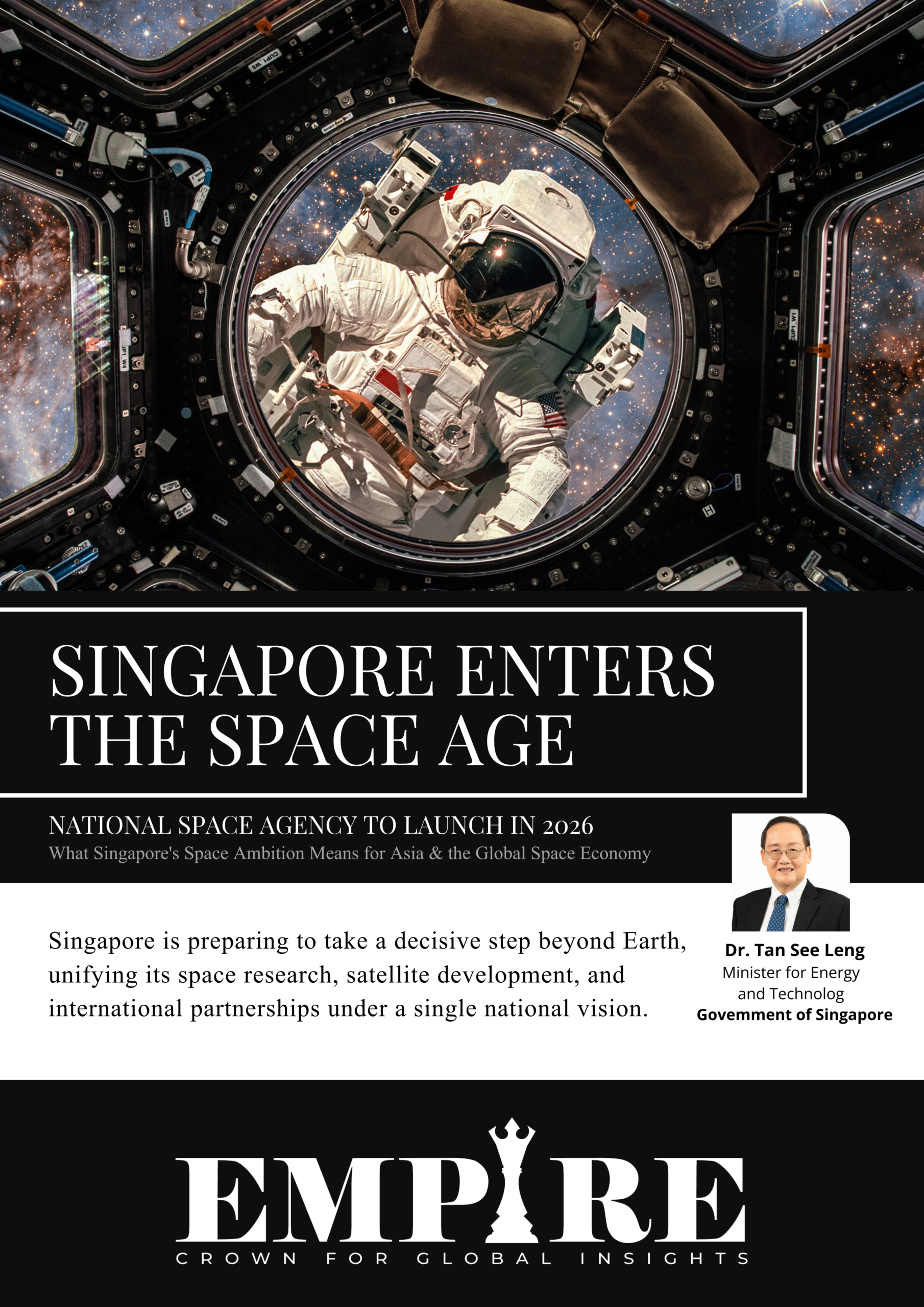
In a decisive move to strengthen its position in the global space economy, Singapore announced the launch of its National Space Agency in 2026, signaling a new chapter in the country’s technological and innovation-driven growth. The announcement comes amid a worldwide surge in public and private investment in space technology, satellite systems, and advanced aerospace engineering.
According to Reuters, the newly established agency will serve as a central body to coordinate Singapore’s space-related ambitions, focusing on research, commercial partnerships, and international collaboration. The initiative reflects Singapore’s long-term strategy to remain competitive in high-value, future-oriented industries.
A Strategic Step into the Global Space Economy
The creation of a National Space Agency positions Singapore among a growing group of nations investing in space as a critical economic and strategic domain. While the country has long been active in satellite development and space-related research, the new agency provides a unified framework to accelerate progress and scale innovation.
The agency is expected to play a key role in shaping policies, supporting startups, and aligning academic research with commercial and defense-related space applications. This structured approach allows Singapore to move from participation to leadership in select space technology niches.
Focus on Space Tech, Micro-Electronics, and Advanced Engineering
Singapore’s National Space Agency will concentrate on high-impact sectors where the country already has strong capabilities. These include space technology, micro-electronics, advanced manufacturing, and aerospace engineering. By integrating these domains, the agency aims to develop next-generation satellite components, data systems, and precision-engineered technologies.
Micro-electronics, in particular, is expected to be a cornerstone of the agency’s work, as satellites and space systems increasingly rely on compact, high-performance chips and sensors. Singapore’s expertise in semiconductor manufacturing gives it a competitive advantage in this area.
Boosting Innovation and Startup Growth
One of the major goals of the new space agency is to foster innovation within Singapore’s startup ecosystem. By offering funding pathways, research support, and access to global partners, the agency is expected to encourage the growth of space-tech startups and spin-offs from universities and research institutes.
This move aligns with Singapore’s broader innovation strategy, which emphasizes public–private collaboration and commercialization of research. Space-related startups in areas such as Earth observation, satellite communications, and data analytics are likely to benefit from the agency’s support.
International Collaboration and Investment
Singapore’s space ambitions are not limited to domestic development. The National Space Agency will actively pursue partnerships with established space agencies, global aerospace firms, and international research institutions. Such collaborations are expected to enhance knowledge transfer, attract foreign investment, and integrate Singapore into global space missions and supply chains.
As reported by Reuters, the agency’s launch responds to intensifying global competition in space, where countries are racing to secure technological leadership and economic returns from satellite-based services and space infrastructure .
Why This Matters
The launch of Singapore’s National Space Agency highlights how space is no longer the exclusive domain of superpowers. Smaller, innovation-driven economies are increasingly viewing space as a platform for economic diversification, national resilience, and technological leadership.
For Singapore, the agency represents an opportunity to create high-skilled jobs, attract global talent, and reinforce its reputation as a hub for advanced engineering and deep-tech innovation.
Looking Ahead
As global investment in space technology accelerates, Singapore’s entry into the sector through a dedicated National Space Agency marks a timely and strategic move. With a strong foundation in engineering, electronics, and innovation policy, the country is well positioned to carve out a meaningful role in the evolving space economy.
For The Empire Magazine, this development underscores a broader global trend: space is rapidly becoming a key frontier for innovation, economic growth, and international collaboration in the years ahead.