Saudi Vision 2030 Is Building a Non-Oil Economy
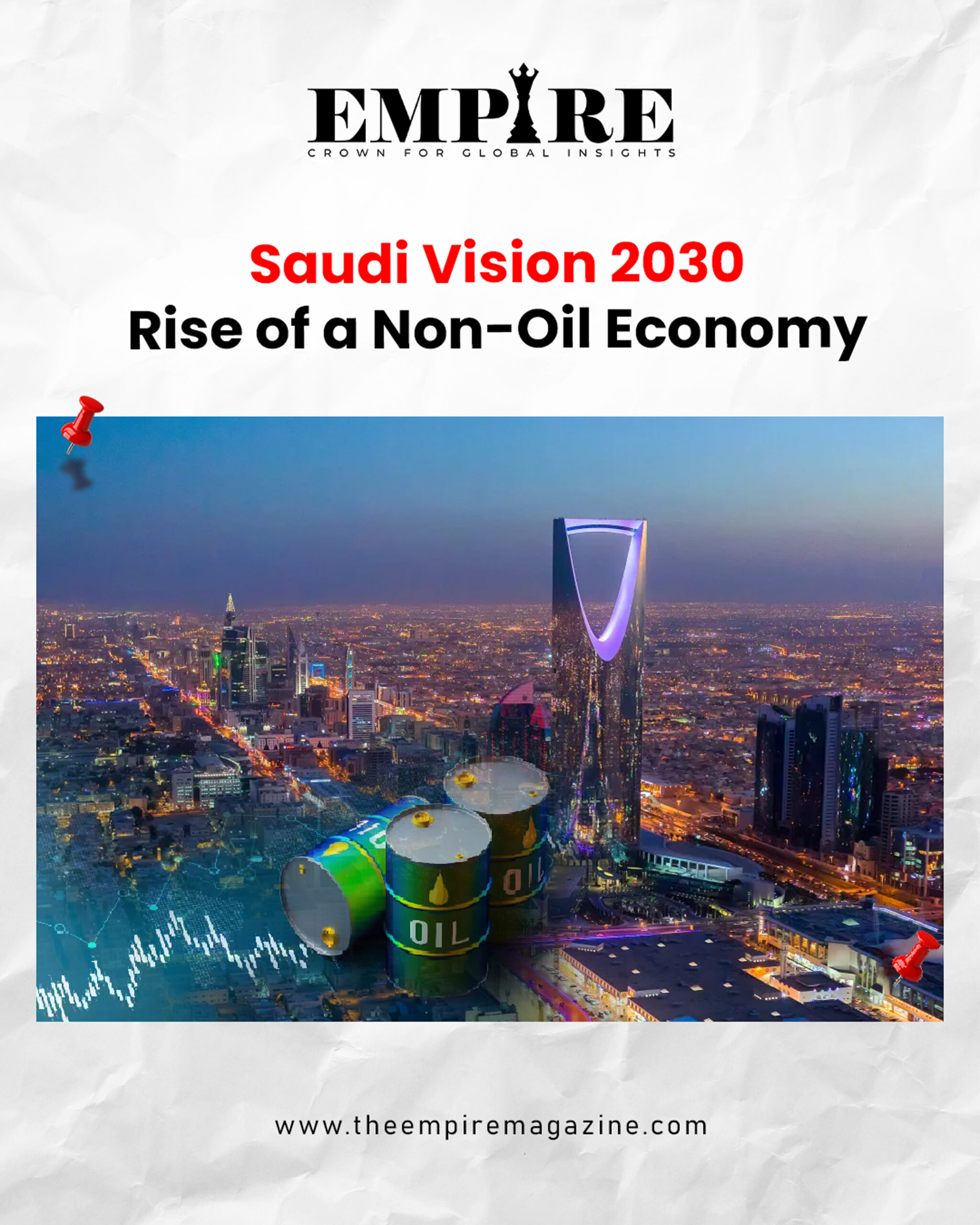
Saudi Vision 2030 is one of the most ambitious economic transformation programs in the Middle East. Launched in 2016 under Crown Prince Mohammed bin Salman, the strategy aims to reduce Saudi Arabia’s long-term dependence on oil, diversify national income, grow the private sector, attract foreign investment, and create new opportunities for citizens.
For decades, Saudi Arabia’s economy was strongly connected to oil exports and government spending funded by energy revenue. Vision 2030 is changing that structure by developing non-oil sectors such as tourism, logistics, entertainment, mining, finance, technology, manufacturing, sports, renewable energy, and digital services.
The rise of Saudi Arabia’s non-oil economy shows how the Kingdom is using oil wealth as a foundation for future industries. Instead of depending only on crude exports, the country is investing in infrastructure, talent, tourism destinations, business reforms, and global partnerships.
Why Saudi Arabia Needed Economic Diversification
Saudi Arabia is one of the world’s largest oil exporters, but oil markets can be affected by price changes, production decisions, global demand, and geopolitical events. Dependence on oil creates risk because government revenue and national growth can shift with energy cycles.
Vision 2030 was created to build a more stable and diversified economy. The program focuses on increasing non-oil revenue, improving public-sector efficiency, expanding private-sector participation, and creating jobs for a young population.
Oil Wealth as a Transformation Tool
Saudi Arabia is not moving away from oil because oil is no longer important. Oil remains a major part of the economy and global energy system. However, the Kingdom is using oil wealth to fund new industries and prepare for a future where growth comes from many sectors.
This approach allows Saudi Arabia to invest in long-term projects while building new sources of income.
Non-Oil Growth Is Becoming a Key Economic Driver
Saudi Arabia’s non-oil economy has become an increasingly important part of national growth. The finance ministry said non-oil growth outperformed overall real GDP growth in the first half of 2025, with non-oil activities contributing more than half of total GDP.
This shift shows that sectors outside oil are gaining strength. Construction, tourism, trade, transport, finance, real estate, technology, and entertainment are all contributing to economic activity.
Private Sector Expansion
Vision 2030 places strong emphasis on the private sector. The goal is to make private businesses a larger part of the economy by supporting entrepreneurship, investment, privatization, and business-friendly reforms.
Saudi Arabia has introduced measures to improve the business environment, attract foreign companies, support small and medium enterprises, and encourage more private investment in priority sectors.
Tourism as a Major Non-Oil Sector
Tourism is one of the most visible parts of Saudi Arabia’s non-oil transformation. The Kingdom has opened more widely to international visitors, promoted heritage destinations, developed luxury resorts, and invested in major projects such as The Red Sea, Diriyah, AlUla, Qiddiya, and NEOM.
Saudi Arabia is also expanding religious tourism, especially around Makkah and Madinah. Millions of pilgrims visit the country for Hajj and Umrah, and improved infrastructure can increase visitor capacity and spending.
Heritage, Entertainment, and Luxury Travel
Saudi tourism is no longer focused only on religious travel. The country is promoting cultural heritage, desert landscapes, coastal resorts, festivals, sports events, and entertainment experiences.
AlUla highlights archaeology and heritage. The Red Sea focuses on luxury and nature-based tourism. Diriyah presents Saudi history and culture. Qiddiya is designed around entertainment, sports, and leisure. These projects are central to the Kingdom’s tourism economy.
Public Investment Fund and Mega Projects
The Public Investment Fund, known as PIF, is one of the main engines of Vision 2030. PIF invests in local and international assets and supports major Saudi projects across tourism, technology, sports, entertainment, real estate, renewable energy, and industrial development.
PIF-backed projects are designed to create new economic sectors, attract foreign investment, generate jobs, and position Saudi Arabia as a global business and tourism destination.
Shifting Toward Priority Sectors
Saudi Arabia has also adjusted its spending priorities as market conditions change. Recent budget reporting shows the government is focusing spending toward sectors such as industry, logistics, tourism, technology, transport, minerals, artificial intelligence, and religious tourism.
This reflects a practical stage of Vision 2030: moving from launching major plans to executing projects that can create long-term economic impact.
Technology and Digital Economy Growth
Technology is another major pillar of Saudi Arabia’s non-oil economy. The Kingdom is investing in artificial intelligence, cloud computing, data centers, cybersecurity, fintech, e-commerce, smart cities, and digital government services.
Saudi Arabia wants to become a regional technology hub. This includes building local digital talent, attracting global technology companies, and supporting startups.
AI and Future Industries
Artificial intelligence has become a major focus for Saudi Arabia. AI infrastructure, Arabic language models, data centers, and enterprise AI tools can support sectors such as healthcare, education, finance, logistics, energy, and government services.
Technology investment also supports productivity. Digital tools help companies reduce costs, improve services, and compete in global markets.
Logistics and Global Trade
Saudi Arabia’s location between Asia, Europe, and Africa gives it a strategic position for logistics and trade. Vision 2030 includes plans to strengthen ports, airports, railways, industrial zones, and supply chain networks.
The Kingdom wants to become a global logistics hub. This supports non-oil growth by connecting manufacturing, exports, e-commerce, tourism, and transport services.
Industrial and Export Development
Saudi Arabia is also working to grow manufacturing and non-oil exports. Industrial development includes mining, chemicals, pharmaceuticals, automotive, defense, food production, and advanced manufacturing.
Growing exports is important because a diversified economy needs products and services that can compete internationally, not only domestic spending.
Social and Labor Market Transformation
Vision 2030 is also changing Saudi society and the labor market. The program includes reforms connected to women’s workforce participation, entertainment, culture, education, sports, and quality of life.
The growth of new sectors creates demand for new skills. Tourism needs hospitality workers. Technology needs engineers and developers. Finance needs analysts and compliance professionals. Logistics needs operations experts. Entertainment needs creative talent.
Jobs for a Young Population
Saudi Arabia has a young population, and job creation is a major national priority. Non-oil sectors can create employment beyond government jobs and oil-related industries.
Entrepreneurship, startups, private companies, and foreign investment are all important for building a broader labor market.
Challenges in Building a Non-Oil Economy
Saudi Arabia’s transformation faces real challenges. Large projects require major capital, skilled labor, global partnerships, infrastructure, and long-term execution. Lower oil prices can pressure government revenue, while budget deficits may require spending discipline.
Some mega projects have faced delays or recalibration as the government prioritizes realistic execution. This shows that diversification is a long-term process, not a quick economic shift.
Balancing Ambition and Sustainability
Vision 2030 depends on balancing ambition with financial sustainability. The Kingdom must continue investing in growth sectors while managing budgets, debt, inflation, and project timelines.
The success of the non-oil economy will depend on execution, private-sector confidence, talent development, foreign investment, and the ability of new industries to generate lasting revenue.
Saudi Arabia’s New Economic Identity
Saudi Arabia is building a new economic identity around investment, tourism, technology, logistics, entertainment, finance, and global business. The country remains an energy power, but Vision 2030 is expanding the meaning of the Saudi economy.
The rise of a non-oil economy shows how the Kingdom is preparing for a future where growth comes from multiple sectors. For more global business insights, read this feature on The Empire Magazine.
Follow The Empire Magazine on Instagram and Facebook.
– The Empire Magazine
Crown For Global Insights