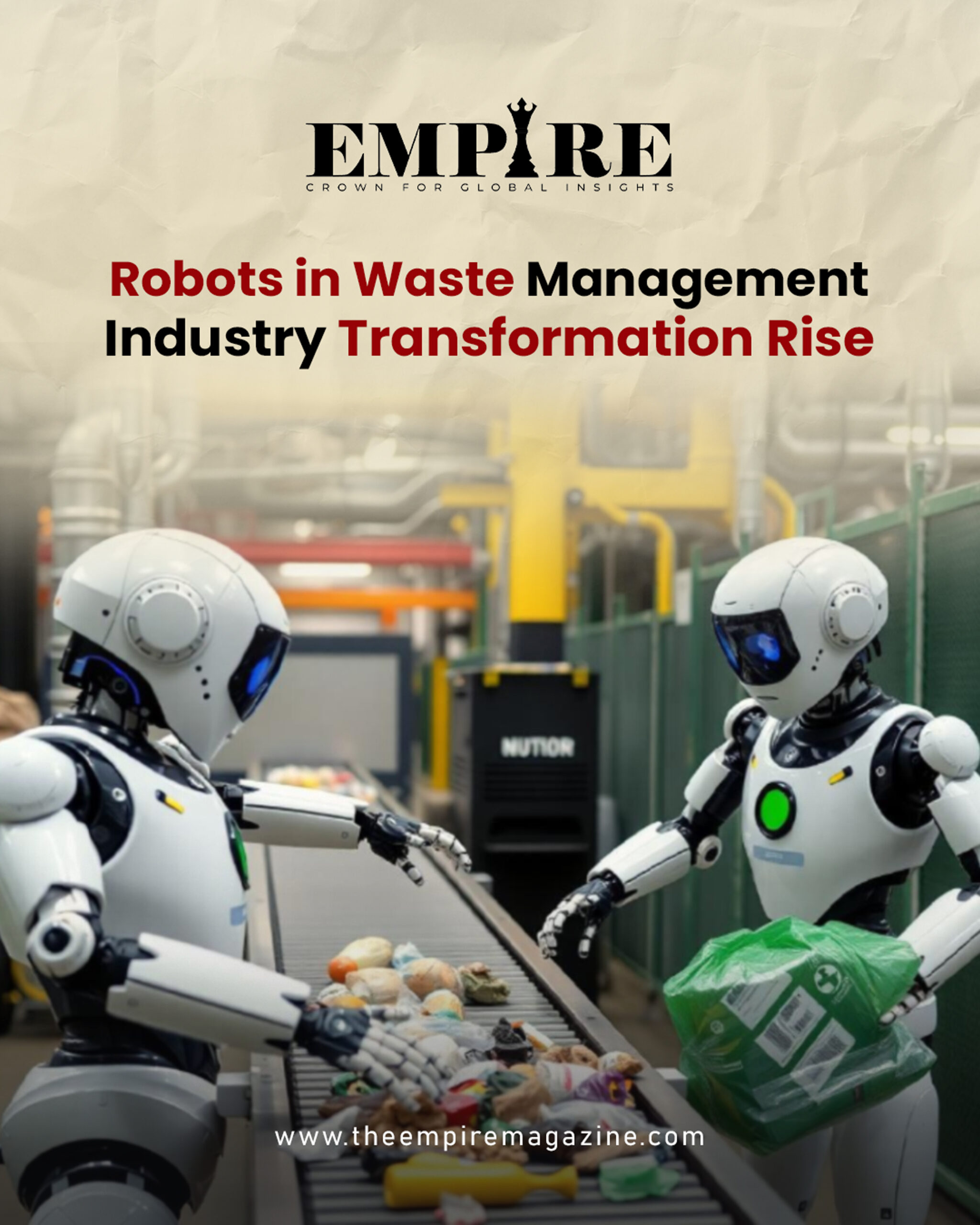
Robots in waste management are rapidly reshaping how recycling facilities operate, addressing one of the industry’s most persistent challenges—labor shortages. As global demand for efficient waste processing grows, companies are turning to advanced robotics and artificial intelligence (AI) to improve productivity, safety, and operational efficiency.
Modern recycling plants are complex, fast-moving environments. Conveyor belts carry a constant stream of mixed waste—ranging from household items to industrial debris—requiring quick and accurate sorting. Traditionally, this work has relied heavily on manual labor. However, the demanding nature of the job, combined with safety risks and high turnover rates, has made it increasingly difficult for companies to maintain a stable workforce.
This is where robotics is stepping in as a game-changing solution.
The Growing Challenges in Waste Management
Waste processing facilities face a unique set of operational difficulties. The environment is often noisy, dusty, and physically demanding. Workers are required to stand for long hours, continuously sorting materials from moving conveyor belts.
These conditions contribute to significant workforce challenges:
- High employee turnover rates
- Increased risk of injuries and health issues
- Difficulty in hiring and retaining skilled workers
- Operational inefficiencies due to labor shortages
In many cases, companies experience turnover rates as high as 40%, making workforce stability a constant concern. Additionally, injury and illness rates in the sector are significantly higher compared to other industries, further highlighting the need for safer alternatives.
The Rise of Robotics in Recycling
To tackle these issues, companies are increasingly adopting robotic systems designed to automate sorting processes. These robots are capable of identifying, picking, and sorting waste materials with remarkable precision.
One of the most innovative developments is the introduction of humanoid robots designed to mimic human movements. Unlike traditional robotic arms, these systems can integrate seamlessly into existing facilities without requiring major infrastructure changes.
How These Robots Work
Robotic waste sorting systems rely on a combination of advanced technologies:
- AI-powered vision systems to identify materials on conveyor belts
- Machine learning algorithms to improve accuracy over time
- Sensors and cameras to analyze objects in real time
- Robotic arms to pick and sort items efficiently
These systems are trained using vast amounts of data. Every item processed contributes to improving the robot’s performance, allowing it to adapt to new types of waste and complex sorting scenarios.
Training Robots for Real-World Conditions
Contrary to popular belief, robots are not instantly ready to perform complex tasks. They require extensive training and data to operate effectively.
In recycling environments, training involves two key processes:
- Object Identification:
The robot learns to recognize different materials such as plastics, metals, and paper. - Physical Interaction:
It is trained to pick up items of varying shapes, sizes, and weights.
Advanced systems use multiple cameras and simulation tools to guide robotic movements. Human workers may even use virtual reality (VR) systems to demonstrate proper sorting techniques, which are then replicated by the robots.
This continuous learning process allows robots to handle millions of data points daily, significantly improving their efficiency over time.
Benefits of Robotics in Waste Management
The adoption of robots offers several key advantages for recycling facilities:
1. Increased Efficiency
Robots can work continuously without breaks, significantly increasing processing capacity. Some systems operate up to 8–10 times faster than human workers.
2. Improved Accuracy
AI-driven systems can identify materials with high precision, reducing contamination and improving recycling quality.
3. Enhanced Safety
By replacing manual labor in hazardous environments, robots help reduce workplace injuries and health risks.
4. Cost Optimization
Although initial investment is high, long-term operational costs are reduced due to lower labor dependency and improved efficiency.
5. 24/7 Operations
Unlike human workers, robots can operate around the clock without fatigue, ensuring consistent productivity.
Different Approaches to Automation
Companies are adopting various robotic solutions to optimize waste processing:
- Humanoid robots: Designed to replicate human actions and fit into existing workflows
- AI-powered sorting systems: Use air jets and sensors to separate materials
- Robotic arms: Mounted systems that pick and sort items from conveyor belts
Each approach has its own advantages, depending on the facility’s size, budget, and operational requirements.
The Role of AI in Continuous Improvement
Artificial intelligence is at the core of modern waste management robotics. As systems process more data, their performance improves significantly.
AI enables:
- Real-time decision-making
- Continuous learning from new materials
- Adaptation to unpredictable waste streams
- Improved sorting accuracy over time
With billions of items being processed, AI systems become smarter and more efficient, making them increasingly valuable for both large-scale and smaller facilities.
Impact on the Workforce
One of the biggest concerns surrounding automation is its impact on jobs. While robots are reducing the need for manual sorting, they are also creating new opportunities.
Instead of eliminating jobs entirely, the industry is shifting toward:
- Robot maintenance and supervision roles
- Technical and operational management positions
- Data analysis and system optimization jobs
This transition allows workers to move away from physically demanding and hazardous tasks into safer, more skilled roles.
The Future of Waste Management
The shift toward automation in waste management is not just a trend—it is a necessity. As waste volumes increase and environmental regulations become stricter, companies must adopt more efficient and sustainable solutions.
Robotics and AI are expected to play a critical role in:
- Improving recycling rates
- Reducing environmental impact
- Enhancing operational efficiency
- Creating safer workplaces
To explore more insights on evolving business and technology trends, visit this internal resource:
https://theempiremagazine.com/?p=6179
Final Thoughts
Robots in waste management are transforming the recycling industry by addressing labor shortages, improving efficiency, and enhancing safety. While challenges remain in training and implementation, the long-term benefits far outweigh the initial investment.
As technology continues to evolve, the integration of robotics and AI will become increasingly essential for building a sustainable and efficient waste management system. Companies that embrace this transformation today will be better positioned to lead the industry in the future.
Stay connected for more insights:
Instagram: https://www.instagram.com/the_empire_magazine/
Facebook: https://www.facebook.com/profile.php?id=61573749076160
– The Empire Magazine
Crown For Global Insights