
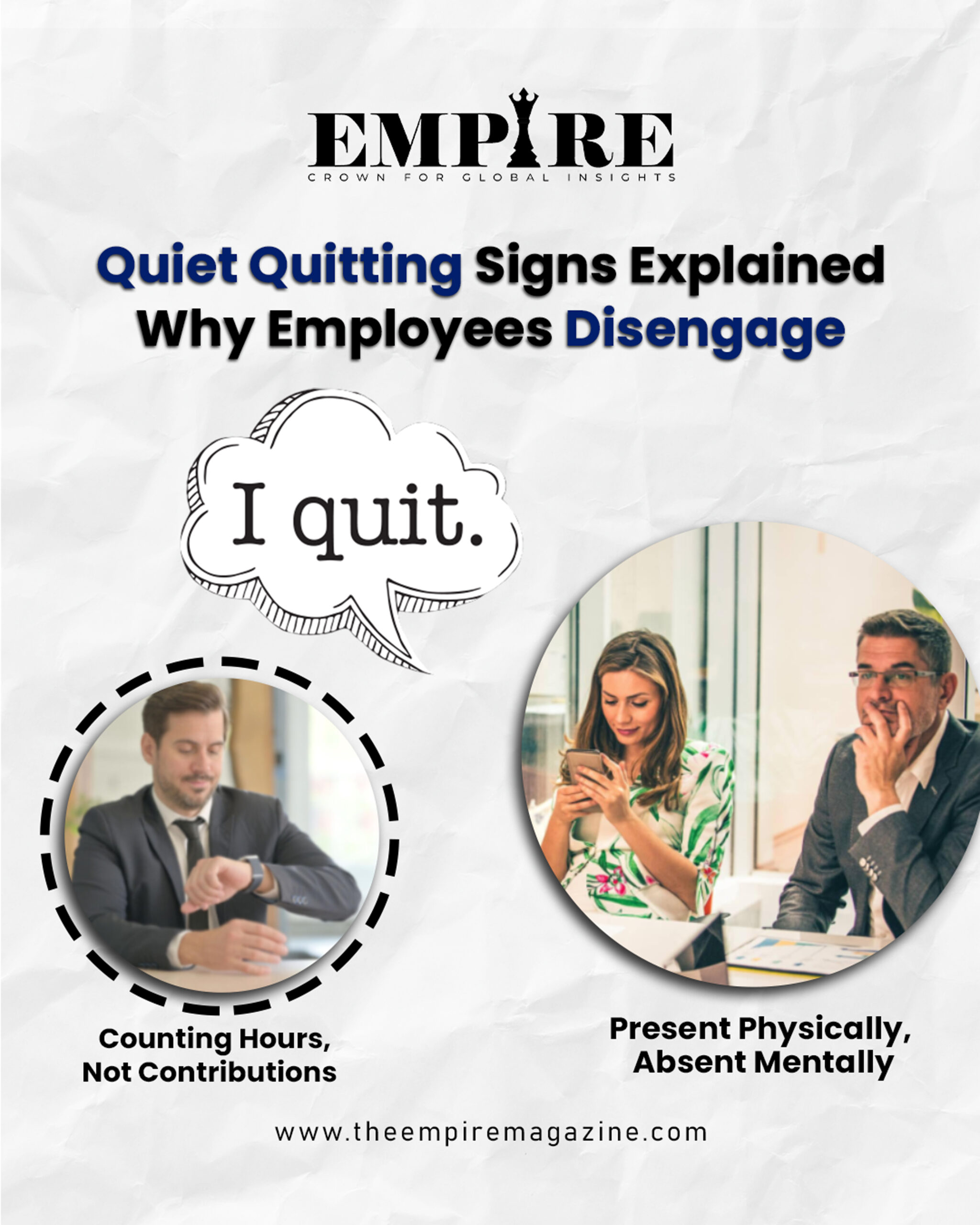
Quiet Quitting Signs Explained: Why Employees Disengage and how leaders can identify early warning signals to retain top talent and boost workplace engagement.
In today’s evolving workplace, employee behavior is changing in subtle but powerful ways. One of the most significant trends shaping modern organizations is quiet quitting. Quiet Quitting Signs Explained: Why Employees Disengage is not just a workplace concept—it is a growing challenge that reflects deeper issues in leadership, culture, and employee satisfaction.
Unlike traditional resignations, quiet quitting does not involve a formal exit. Employees continue to show up, complete their assigned tasks, and maintain professionalism. However, beneath the surface, their emotional connection to the organization fades. They stop going the extra mile, disengage from team dynamics, and lose their sense of purpose.
Understanding these signs early is critical for organizations that want to retain talent, improve productivity, and build a thriving work culture.
What Is Quiet Quitting?
Quiet quitting refers to a state where employees limit their work strictly to assigned responsibilities without investing additional effort, creativity, or emotional energy. It is not about laziness but rather a silent response to dissatisfaction or unmet expectations.
Employees who quietly quit are physically present but mentally distant. They perform tasks but lack enthusiasm, innovation, and commitment. This disengagement often stems from deeper workplace issues such as lack of recognition, ineffective leadership, or poor work-life balance.
Recognizing Quiet Quitting Signs
Identifying quiet quitting signs early can help organizations take corrective action before valuable employees are lost.
1. Reduced Participation and Initiative
Employees who once actively contributed ideas and participated in discussions begin to withdraw. They stop sharing feedback or engaging in brainstorming sessions. This often occurs when they feel their input is ignored or undervalued.
2. Emotional Detachment
One of the most noticeable signs is emotional withdrawal. Employees continue to perform their duties but lack passion and enthusiasm. They shift from proactive contributors to passive participants.
3. Minimal Team Engagement
Social interactions decline. Employees avoid collaboration, skip optional meetings, and limit communication with colleagues. This behavior signals a deeper disconnect from the organization.
4. Loss of Purpose
When employees no longer see meaning in their work, motivation declines. Even high performers begin to question their role and long-term future within the company.
5. Decline in Creativity and Innovation
Employees stop going beyond their basic responsibilities. They no longer suggest improvements or explore new ideas, which directly impacts organizational growth.
Why Good Employees Quietly Quit
Many leaders assume disengagement is caused by lack of effort or commitment. However, quiet quitting is often a response to workplace challenges rather than employee shortcomings.
Feeling Unheard
When employees feel their feedback is ignored, they gradually stop contributing. Communication becomes one-sided, leading to disengagement.
Toxic or Unsupportive Culture
A negative work environment—marked by favoritism, burnout, or poor collaboration—pushes employees to withdraw emotionally.
Lack of Recognition
Employees need acknowledgment for their efforts. When appreciation is missing, motivation decreases, and engagement fades.
Poor Leadership
Weak leadership, unclear direction, and ineffective communication create frustration. Employees lose trust and eventually disengage.
Limited Growth Opportunities
Without clear career progression, employees feel stuck. This lack of advancement leads to dissatisfaction and eventual disengagement.
The Psychological Journey of Quiet Quitting
Quiet quitting is not an overnight decision—it is a gradual process that unfolds over time:
- Disillusionment: Initial excitement fades due to unmet expectations
- Emotional Withdrawal: Passion turns into routine
- Social Detachment: Interaction with colleagues decreases
- Internal Justification: Employees mentally prepare to leave
- Silent Job Search: Exploring new opportunities
- Final Exit: Resignation after complete detachment
By the time an employee resigns, they have already mentally checked out of the organization.
The Impact on Organizations
Ignoring quiet quitting signs can have serious consequences for businesses:
- Reduced productivity as employees do only the minimum
- Lower team morale, as disengagement spreads
- Increased turnover, especially among high performers
- Decline in work quality due to lack of motivation
- Higher costs related to hiring and training new employees
Over time, these issues can significantly affect organizational performance and growth.
How Leaders Can Prevent Quiet Quitting
Preventing quiet quitting requires proactive leadership and a commitment to building a positive workplace culture.
Encourage Open Communication
Create an environment where employees feel comfortable sharing their ideas, concerns, and feedback.
Recognize and Reward Contributions
Acknowledging achievements boosts morale and reinforces engagement.
Provide Growth Opportunities
Offer training, mentorship, and clear career paths to keep employees motivated and invested in their roles.
Strengthen Leadership Skills
Managers should focus on building trust, communicating effectively, and supporting their teams.
Promote Work-Life Balance
Flexible work arrangements and manageable workloads help prevent burnout and maintain employee well-being.
Build a Positive Workplace Culture
Foster an inclusive, supportive, and respectful environment where employees feel valued and connected.
Creating a Culture of Engagement
To truly address quiet quitting, organizations must shift from reactive solutions to proactive strategies. Engagement should not be an afterthought—it should be embedded in the company’s culture.
This involves:
- Aligning employee goals with organizational objectives
- Encouraging collaboration and innovation
- Providing continuous feedback and support
- Investing in employee well-being and satisfaction
When employees feel valued, heard, and supported, they are more likely to stay engaged and contribute meaningfully.
For more insights, visit:
https://theempiremagazine.com/?p=6080
Stay connected:
Instagram: https://www.instagram.com/the_empire_magazine/
Facebook: https://www.facebook.com/profile.php?id=61573749076160
– The Empire Magazine
Crown For Global Insights