Being Busy vs Progress: Why Activity Isn’t Real Growth as constant work doesn’t guarantee success and how focusing on outcomes drives real results.
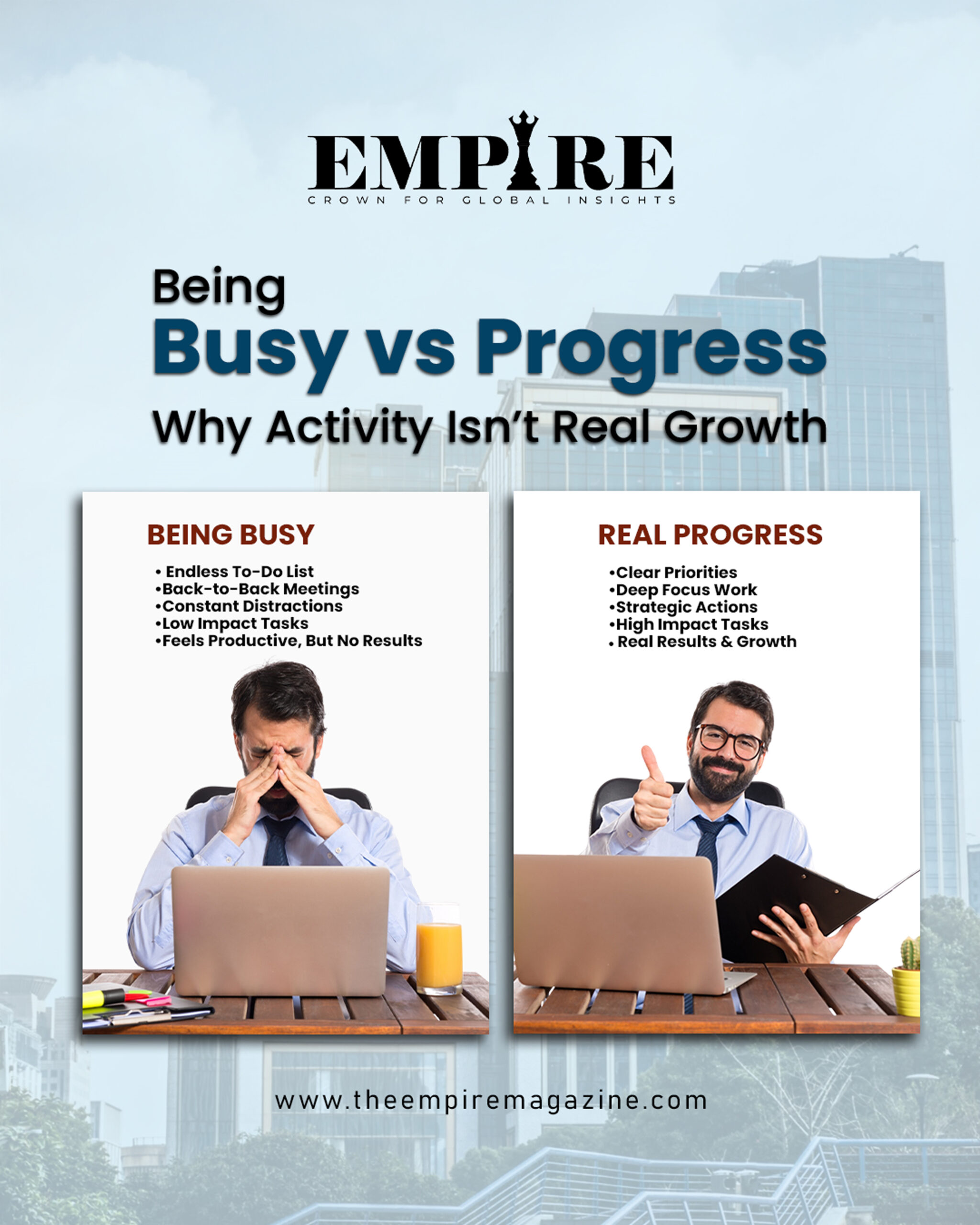
In today’s fast-paced professional world, staying busy is often seen as a sign of productivity and dedication. People fill their calendars with meetings, respond to emails instantly, and juggle multiple tasks at once. Yet, despite this constant activity, many individuals and organizations struggle to achieve meaningful results. This disconnect highlights an important concept: Being Busy vs Progress: Why Activity Isn’t Real Growth.
Understanding the difference between being busy and making real progress is essential for anyone aiming to succeed in modern business environments. While activity may create the illusion of productivity, true growth comes from achieving measurable outcomes.
The Illusion of Busyness
Modern work culture often glorifies busyness. Employees who are always occupied, constantly available, and working long hours are frequently perceived as high performers. However, this perception can be misleading.
Busyness provides a psychological reward. Completing tasks—no matter how small—gives a sense of accomplishment. This phenomenon, known as “busyness bias,” leads people to prioritize activity over meaningful progress.
Organizations also contribute to this mindset by rewarding visible effort rather than actual results. Over time, this creates a culture where employees focus on staying busy instead of being effective.
Activity vs Output vs Outcome
To truly understand being busy vs progress, it is important to distinguish between three levels of work:
- Activity: The effort invested, such as attending meetings or completing tasks
- Output: The deliverables produced, like reports or presentations
- Outcome: The actual results or impact achieved
Most professionals operate at the activity and output levels, but real success lies in outcomes. Execution is not about how much work is done—it is about how effectively that work translates into results.
For example, a team may complete multiple projects, but if those projects do not solve real problems or improve performance, they add little value.
Why Being Busy Doesn’t Lead to Progress
1. Lack of Clear Purpose
Many tasks begin without a defined goal. When teams do not understand the purpose behind their work, they focus on completing tasks rather than achieving outcomes.
2. No Measurement of Success
Without clear metrics or KPIs (Key Performance Indicators), it becomes impossible to evaluate whether progress is being made. Work continues, but its effectiveness remains unknown.
KPIs provide clarity by answering critical questions:
- What problem are we solving?
- What does success look like?
- How will we measure it?
3. Focus on Low-Value Tasks
People often prioritize tasks that are easy or urgent rather than those that create meaningful impact. This leads to a cycle of activity without progress.
4. Cognitive Overload
Handling multiple tasks simultaneously reduces focus and efficiency. Constant switching between activities drains mental energy and limits deep thinking.
5. Organizational Culture
Many workplaces unintentionally reward busyness. Employees who appear active are seen as productive, even if their work does not deliver results.
The Role of KPIs in Driving Progress
To shift from activity to outcomes, organizations must integrate KPIs into their workflows. KPIs align effort with measurable results, ensuring that every action contributes to a defined goal.
Effective KPIs help organizations:
- Track progress accurately
- Identify inefficiencies
- Align teams with business objectives
- Improve decision-making
When used correctly, KPIs shift the focus from “what we are doing” to “what we are achieving.”
Building a Results-Driven Culture
Creating a culture focused on progress requires intentional changes in how work is approached and evaluated.
Start with Clarity
Every project should begin with a clear understanding of:
- The problem being solved
- The expected outcome
- The metrics for success
Make Metrics Visible
Transparency is key. Dashboards, reports, and regular check-ins help teams stay aligned and accountable.
Focus on Outcomes
Encourage teams to evaluate whether their work contributes to meaningful results rather than just completing tasks.
Encourage Critical Thinking
Teams should feel empowered to question unclear initiatives. If a project lacks purpose or measurable impact, it should be reconsidered.
Celebrate Learning
Progress is not only about achieving results but also about improving continuously. Recognizing lessons learned encourages innovation and growth.
A Simple Framework for Real Progress
To move beyond busyness, organizations can adopt a simple framework:
- Define the Outcome: Identify the change or result you want to achieve
- Align Actions: Focus only on tasks that contribute to that outcome
- Measure Results: Track progress using meaningful metrics
This approach ensures that effort is always connected to impact.
The Cost of Confusing Activity with Progress
Failing to distinguish between busyness and progress can have serious consequences:
- Slower growth despite high effort
- Missed opportunities due to lack of focus
- Increased burnout among employees
- Inefficient use of time and resources
Over time, organizations that prioritize activity over outcomes struggle to scale and remain competitive.
Shifting Mindsets for Long-Term Success
Breaking free from the trap of busyness requires a shift in mindset. Individuals and organizations must move from a task-oriented approach to a results-driven perspective.
This means:
- Prioritizing high-impact work
- Eliminating unnecessary tasks
- Focusing on value creation
- Continuously measuring and improving performance
By aligning effort with outcomes, businesses can achieve sustainable growth and long-term success.
For more insights, visit:
https://theempiremagazine.com/?p=6078
Stay connected:
Instagram: https://www.instagram.com/the_empire_magazine/
Facebook: https://www.facebook.com/profile.php?id=61573749076160
– The Empire Magazine
Crown For Global Insights