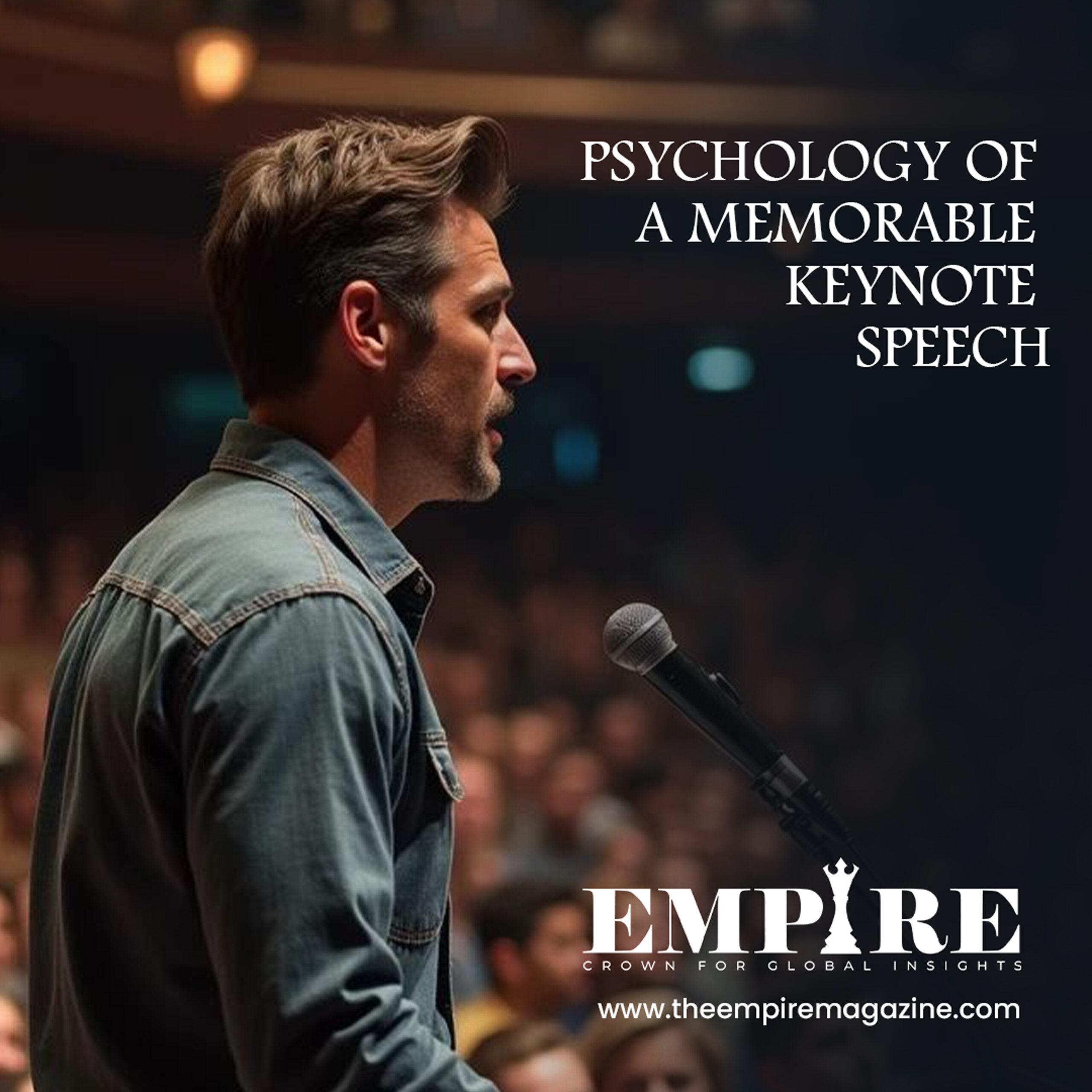
Psychology of a Memorable Keynote
Psychology of a Memorable Keynote is not about polished slides or perfectly memorized scripts. It is about understanding how the human mind processes stories, emotion, connection, and meaning. When we look back at the speeches that truly moved us, we rarely remember every statistic or sentence. What we remember is how they made us feel. That emotional imprint is what transforms a simple talk into a lasting experience.
In today’s attention economy, keynote speakers face a unique challenge. Audiences are overloaded with information. To stand out, speakers must go beyond delivering content—they must create impact. The science behind that impact lies in psychology.
The Brain’s Love for Storytelling
At the heart of the Psychology of a Memorable Keynote is storytelling. Humans are naturally wired for narrative. Long before technology, knowledge was passed through stories shared around fires. Stories activate multiple regions of the brain—language, emotion, and imagination—simultaneously.
When a speaker tells a story, the audience visualizes events, empathizes with characters, and anticipates outcomes. This neurological engagement makes messages more memorable than isolated facts. A list of statistics may inform, but a personal journey inspires.
Memorable keynote speakers reveal their struggles, lessons, and turning points. They allow audiences to see not only what they know, but who they are.
Emotion as the Memory Anchor
Emotion plays a central role in the Psychology of a Memorable Keynote. Neuroscience shows that emotionally charged experiences are stored more deeply in long-term memory. This is known as emotional tagging.
When a keynote sparks hope, courage, laughter, or reflection, it becomes unforgettable. Emotional resonance drives action. Facts may persuade, but emotion motivates.
Whether through humor, vulnerability, or a powerful call to action, great speakers understand that impact comes from connecting with the audience’s feelings—not just their intellect.
Simplicity Creates Clarity
The human brain has limited capacity for information. Overloading an audience with jargon or excessive detail weakens impact. The Psychology of a Memorable Keynote emphasizes simplicity.
Great speakers distill complex ideas into clear, relatable messages. They use metaphors and analogies that translate abstract concepts into everyday understanding. Instead of delivering twenty takeaways, they focus on one or two powerful ideas.
Clarity ensures that the message survives long after the event ends.
Engagement Through Participation
A keynote should feel like a shared experience, not a one-sided monologue. Psychological engagement increases when people feel involved.
Speakers who ask reflective questions, invite audience participation, or encourage moments of self-assessment activate attention and connection. Even a simple question—“Have you ever felt this?”—creates a sense of belonging.
The Psychology of a Memorable Keynote recognizes that participation strengthens memory retention. When audiences mentally engage, they internalize the message more deeply.
For additional insights into impactful leadership and communication strategies, explore this discussion:
https://theempiremagazine.com/?p=5248
The Influence of Body Language
Communication is far more than words. Non-verbal cues—tone, posture, gestures, and facial expression—carry significant psychological weight.
Confident body language signals credibility. Eye contact fosters trust. Controlled movement enhances emphasis. Vocal variation maintains interest. A monotone delivery weakens engagement, while dynamic pacing strengthens it.
Presence is not about theatrical performance. It is about authenticity and intentional energy. Audiences instinctively respond to speakers who embody belief in their message.
Timing and Rhythm
Attention fluctuates. The Psychology of a Memorable Keynote involves managing rhythm and pacing. Just as music relies on variation, speeches benefit from contrast—serious moments balanced with lightness, fast-paced sections followed by pauses for reflection.
Strategic pauses give the audience space to absorb meaning. Silence, when used intentionally, can amplify the weight of a statement.
Respecting time also matters. Memorable keynotes conclude at their peak rather than overstaying their welcome.
Authenticity Builds Trust
Authenticity is the foundation of psychological impact. Audiences quickly sense insincerity. Rehearsed enthusiasm without genuine conviction erodes trust.
The Psychology of a Memorable Keynote reveals that vulnerability strengthens connection. Sharing real challenges and lessons creates relatability. Authenticity does not require perfection—it requires honesty.
When audiences trust the speaker, they become more receptive to the message.
The Power of Anchoring
Great keynotes leave audiences with a clear mental anchor—a phrase, idea, or story that encapsulates the core message. Psychological anchoring ensures that even when details fade, the central takeaway remains.
Memorable speakers craft repeatable phrases that audiences carry forward. These anchors transform speeches into movements.
The Role of Surprise
Unexpected elements heighten attention. Humor, surprising statistics, or unexpected insights reset audience focus and deepen engagement.
Surprise works best when aligned with the main message. It should reinforce, not distract. When used effectively, it creates moments that linger long after applause fades.
Closing With Purpose
Psychologists describe the recency effect—the tendency to remember the final part of an experience most vividly. A keynote’s conclusion is therefore critical.
The strongest closings are intentional and emotionally resonant. They may revisit the opening story, present a final challenge, or deliver a concise call to action. The goal is to create an emotional echo.
Why It Matters
The Psychology of a Memorable Keynote reminds us that impact is not accidental. It is designed. It combines storytelling, emotion, simplicity, engagement, authenticity, and presence.
In a world saturated with information, keynote speakers have a rare opportunity: to create moments that inspire transformation. When psychology is understood and applied, a speech becomes more than words—it becomes an experience that audiences carry into their lives.
– The Empire Magazine
Crown For Global Insights