Introduction: A New Era of AI in Smartphones
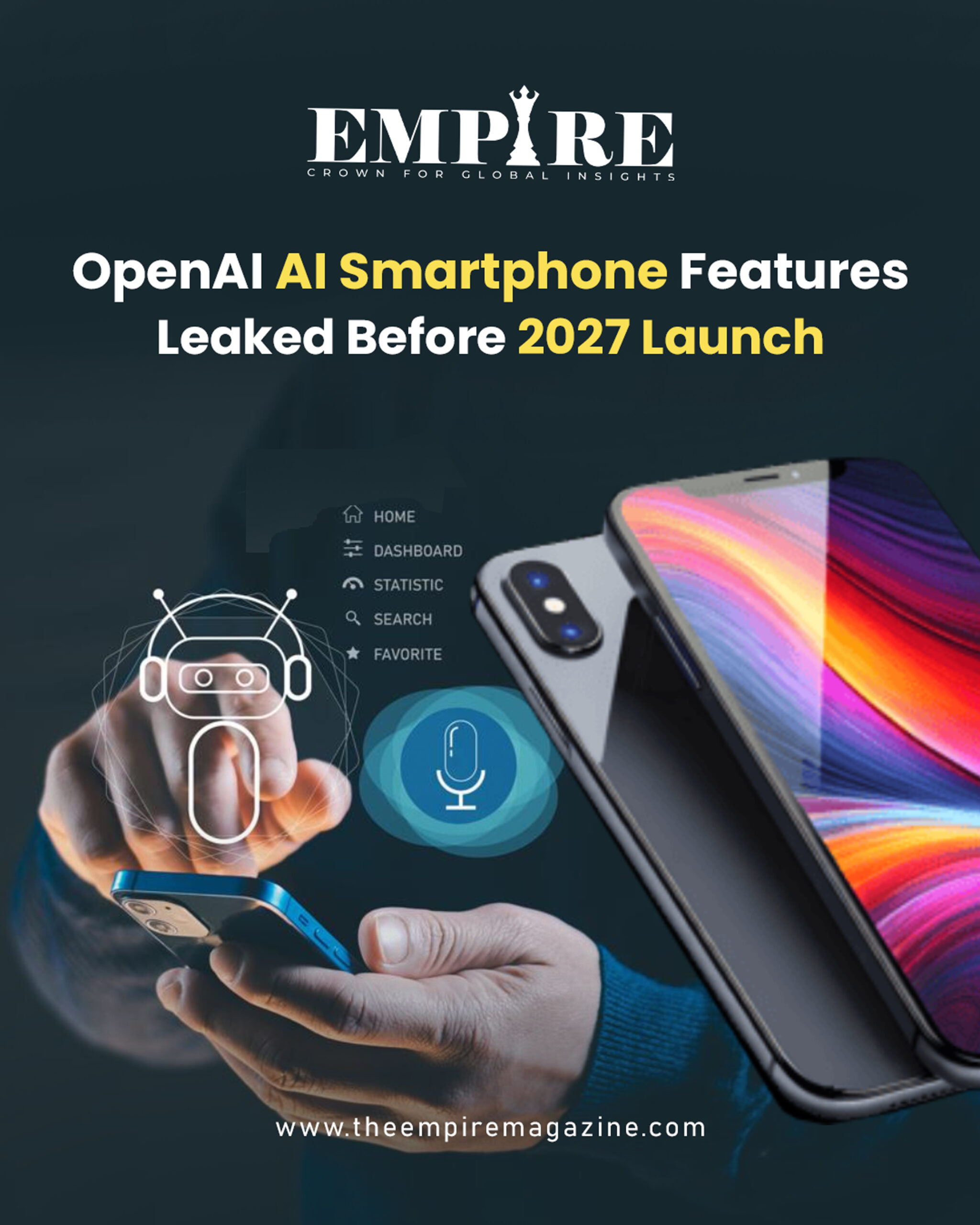
The OpenAI AI Smartphone is shaping up to be one of the most anticipated technological developments in the coming years. Fresh leaks suggest that OpenAI is preparing to step beyond software and cloud-based artificial intelligence into the world of consumer hardware. If these reports hold true, the company could launch a powerful AI-first smartphone by 2027, potentially redefining how users interact with mobile devices.
Unlike traditional smartphones that simply integrate AI features, this device is expected to be built entirely around artificial intelligence. This shift could mark a turning point in the evolution of smartphones, where AI is not just an add-on but the core of the entire user experience.
For more tech insights, read here:
👉 https://theempiremagazine.com/?p=6226
OpenAI’s Big Move into Hardware
OpenAI has primarily been known for its advancements in artificial intelligence software. However, entering the smartphone market would signal a major strategic expansion. By developing its own hardware, the company could gain full control over both the software and device ecosystem.
This approach has proven successful for other major tech companies, allowing them to deliver seamless integration between hardware and software. For OpenAI, this could mean:
- Optimized AI performance
- Better user experience
- Enhanced data processing capabilities
Reports indicate that the company is planning large-scale production, with estimates suggesting up to 30 million units between 2027 and 2028. This clearly shows that the OpenAI AI Smartphone is not a small experiment but a serious attempt to compete in the global smartphone market.
Powerful Chipset and Next-Gen Performance
At the core of the OpenAI AI Smartphone is a custom-designed chipset based on advanced semiconductor technology. The processor is expected to be built on a 2nm process, offering significant improvements in speed and energy efficiency.
Key highlights include:
- Faster processing speeds
- Lower power consumption
- Enhanced AI computation capabilities
This level of performance could enable the device to handle complex AI tasks directly on the phone, reducing reliance on cloud processing and improving privacy.
Dual AI Engines for Smarter Multitasking
One of the most exciting features of the OpenAI AI Smartphone is its dual NPU (Neural Processing Unit) system.
This setup allows:
- Simultaneous AI processing
- Real-time assistance
- Advanced background operations
For example, users could interact with a voice assistant while the phone processes images, analyzes data, or runs predictive tasks in the background—all without slowing down.
This dual-engine approach represents a major leap in mobile AI capabilities, making the device more intelligent and responsive than current smartphones.
Faster Memory and Storage Technology
To support its AI-driven performance, the smartphone is expected to feature:
- LPDDR6 RAM for faster multitasking
- UFS 5.0 storage for quicker data access
These upgrades will:
- Reduce lag during heavy tasks
- Improve app performance
- Enable smooth AI operations
This combination ensures that the phone can handle demanding workloads such as real-time translation, video processing, and AI-driven automation without performance bottlenecks.
Advanced Camera and AI Imaging
The camera system in the OpenAI AI Smartphone is also expected to receive significant upgrades. With an enhanced image signal processor (ISP) and improved HDR capabilities, the device could offer:
- Superior image quality
- Better low-light performance
- Real-time scene recognition
AI-powered imaging could allow the phone to understand what it is capturing, automatically adjusting settings for optimal results. Beyond photography, this could also enable features like:
- Object detection
- Augmented reality experiences
- Smart visual search
Security Built for the AI Age
With AI handling sensitive data, security becomes more critical than ever. The OpenAI AI Smartphone is expected to include advanced security features such as:
- pKVM-based isolation for data protection
- Inline hashing for real-time verification
These technologies aim to:
- Protect user data from threats
- Ensure secure processing of AI tasks
- Maintain privacy even during complex operations
This focus on security could make the device highly appealing to users concerned about data safety.
Strategic Partnerships and Manufacturing
To bring this ambitious device to life, OpenAI is reportedly collaborating with leading chipmakers and manufacturers. These partnerships are expected to play a key role in:
- Developing specialized AI processors
- Ensuring high-quality production
- Scaling manufacturing efficiently
A major manufacturing partner is likely to handle both design and assembly, ensuring that the device meets global standards while maintaining cost efficiency.
Why This Smartphone Could Change Everything
The OpenAI AI Smartphone is not just another device—it represents a shift toward AI-first computing.
Here’s why it matters:
1. AI at the Core
Instead of adding AI features later, the entire system is built around artificial intelligence.
2. Reduced Cloud Dependency
More processing will happen on-device, improving speed and privacy.
3. Smarter User Experience
From predictive assistance to real-time automation, the phone could anticipate user needs.
4. Industry Competition
This move could push other smartphone manufacturers to accelerate their AI innovations.
Challenges Ahead
While the concept is exciting, there are challenges that OpenAI will need to address:
- Competing with established smartphone brands
- Managing production at scale
- Ensuring affordability for consumers
- Delivering consistent AI performance
Success will depend on how well the company balances innovation with practicality.
The Future of AI Smartphones
The OpenAI AI Smartphone could mark the beginning of a new category of devices where AI becomes the primary interface between humans and technology.
In the future, smartphones may:
- Act as personal AI assistants
- Automate daily tasks
- Provide real-time insights
- Enhance productivity and creativity
If OpenAI executes its vision successfully, it could reshape the entire smartphone industry.
Stay updated with the latest tech trends:
📸 Instagram: https://www.instagram.com/the_empire_magazine/
📘 Facebook: https://www.facebook.com/profile.php?id=61573749076160
– The Empire Magazine
Crown For Global Insights