Oil Lockdown Fear: Is Another Global Crisis Near?
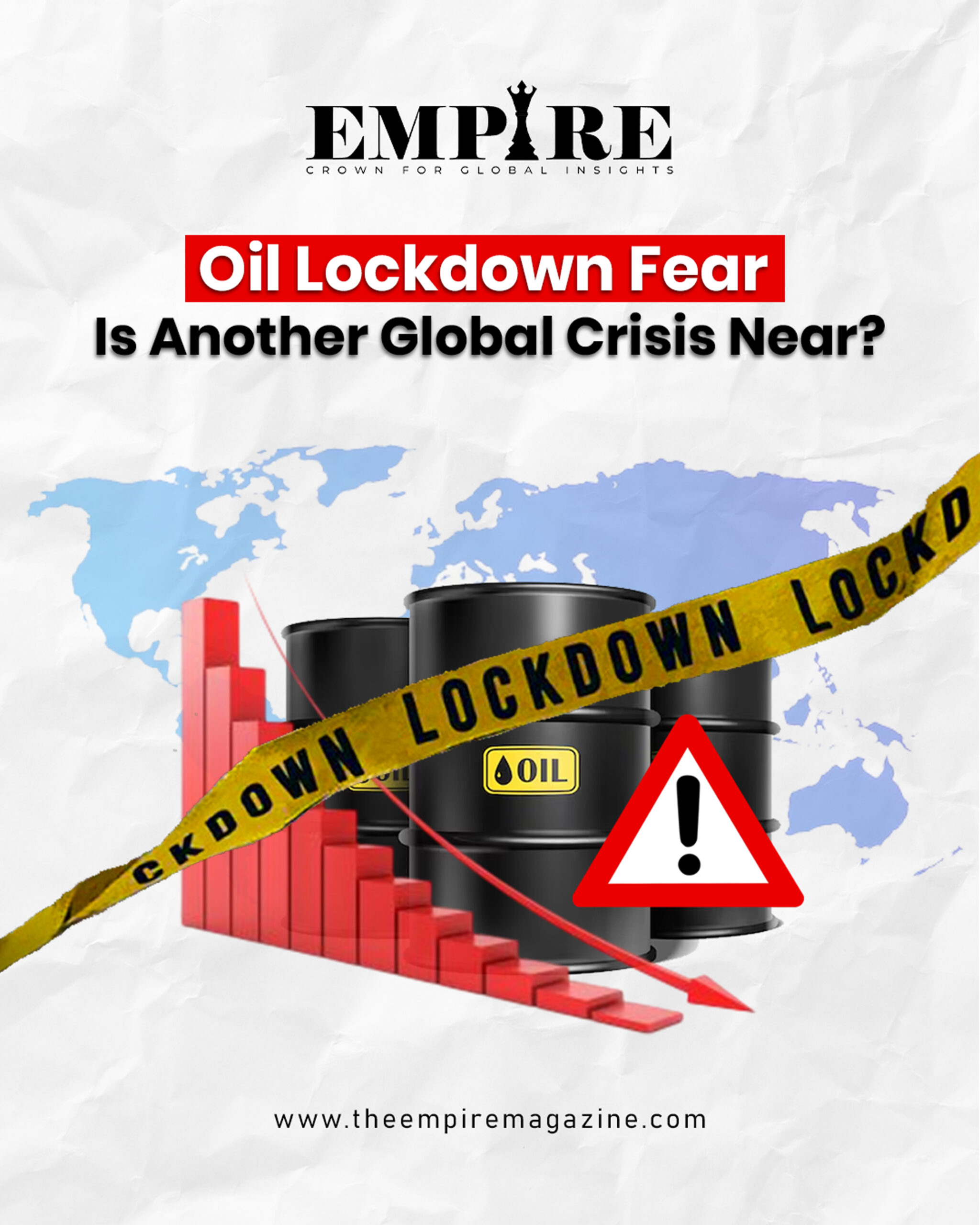
Oil Lockdown Fear is no longer just a dramatic phrase. It reflects a growing anxiety that a major energy disruption could once again reshape everyday life across the world. As global oil supply routes face instability, the effects are moving quickly beyond diplomacy and conflict into homes, roads, airports, businesses, and food systems. What once seemed like a distant geopolitical issue is now becoming a direct economic and social concern for ordinary people.
The reason this fear feels so powerful is simple: modern life depends heavily on uninterrupted energy flow. Oil is not just a commodity traded in global markets. It powers transport, food delivery, industrial production, farming, logistics, and mobility. When supply is threatened, the impact spreads fast. Fuel prices rise. Transport becomes more expensive. Supply chains feel pressure. Businesses begin adjusting operations. Families start noticing the cost in their everyday budgets.
This is why the phrase Oil Lockdown Fear has gained such emotional force. It captures the possibility that the next major global disruption may not come from disease or financial collapse, but from an energy crisis that changes how people travel, work, spend, and live.
Why Oil Supply Disruption Matters So Much
Oil remains one of the most important foundations of the global economy. Even in a world talking more about renewable energy and sustainability, oil still supports essential systems at a massive scale. Vehicles, shipping networks, airlines, tractors, machinery, and countless supply chains depend on steady fuel availability.
Because of this, a disruption in one major transit route or producing region can affect countries far beyond the immediate conflict zone. The global economy is interconnected. Energy shocks do not remain local. They spread through prices, trade systems, inflation, and consumer confidence.
What makes the current moment especially concerning is that it comes at a time when many economies are already under strain. Households in many countries are dealing with higher living costs, weak wage growth, and uncertainty about the future. In that context, a sharp rise in oil prices does not feel like a temporary inconvenience. It feels like the beginning of a much wider problem.
How Higher Oil Prices Hit Daily Life
One of the clearest reasons Oil Lockdown Fear feels real is that fuel price increases move quickly into daily life. The process is direct. When crude oil prices rise, fuel costs increase. When fuel costs increase, transport becomes more expensive. That higher cost then moves into almost everything else.
Airlines face higher operational expenses and may cut routes or raise ticket prices. Public transportation systems become more expensive to operate. Delivery services pass on higher fuel costs to customers. Retailers pay more to move goods across regions. Food prices rise as supply chains absorb the added expense.
For families, the pressure can be immediate. Petrol or diesel becomes harder to afford. Essential shopping becomes more expensive. Monthly budgets tighten. Businesses also begin to feel squeezed, especially smaller operators with limited flexibility. Restaurants, transport services, local distributors, and manufacturers may all face harder choices when energy costs rise too quickly.
This is how an oil problem becomes a daily life problem.
Why the Term “Oil Lockdown” Feels So Unsettling
The phrase “oil lockdown” is powerful because it reminds people of something they have experienced before: restrictions on movement and daily life. While an energy crisis is very different from a health emergency, the social feeling can appear similar if governments begin to control consumption to protect supply.
Possible emergency responses could include:
- discouraging non-essential travel
- encouraging remote work
- limiting fuel access
- reducing road use
- lowering transport capacity
- introducing energy conservation rules
Even if these measures are temporary and practical, they can create public anxiety because they feel like a return to managed movement and constrained routines. The memory of previous global restrictions remains strong. That is why energy-saving policies may trigger more emotional reaction than policymakers expect.
For citizens, phrases about rationing, reduced movement, or fuel restrictions touch on more than economics. They touch on freedom, stability, and the fear of losing normal life again.
Airlines, Mobility, and the Cost of Movement
Mobility is one of the first sectors to show signs of stress during an oil shock. Airlines are particularly vulnerable because fuel is a major part of their operating cost. When those costs rise sharply, they may reduce capacity, cancel routes, or increase fares. That affects tourism, business travel, migration, and personal movement.
But the issue goes beyond flights. Fuel cost pressure can also affect freight transport, ride services, bus systems, and private vehicle use. When movement becomes harder or more expensive, economic activity often slows with it. People delay trips. Businesses reduce travel. Consumers change habits. Local economies feel the effect.
That is one reason Oil Lockdown Fear is so closely tied to the idea of reduced mobility. A fuel crisis does not just change price charts. It changes how far and how freely people can move.
The Link Between Oil and Food Security
Perhaps the most serious part of this issue is its connection to food. Oil is closely linked to agriculture through machinery, fertilizer production, irrigation, storage, transport, and market distribution. When energy becomes scarce or more expensive, food systems feel the pressure at multiple levels.
Farmers face higher operating costs. Fertilizer becomes harder to produce or transport. Distribution networks become more expensive. Refrigerated supply chains face extra pressure. Retail prices rise. In lower-income regions, this can quickly become a major social problem.
This is why Oil Lockdown Fear is not only about vehicles, airlines, or petrol stations. It is about the broader stability of everyday life. If food prices rise sharply while energy access becomes less reliable, the pressure on vulnerable households can become severe.
In developing economies especially, such disruptions can create more than hardship. They can create real instability.
Public Panic and the Psychology of Scarcity
One of the most visible signs of a fuel crisis is the line at a petrol station. Even before a full shortage exists, public fear can produce scarcity behavior. People buy more fuel than they need. Businesses stock up defensively. Rumors spread. Confidence falls.
This is where the psychology of crisis becomes important. In many cases, panic grows faster than the actual shortage. Once people stop trusting that fuel will remain available, behavior changes rapidly. Queues grow, anxiety spreads, and the public starts preparing for worse conditions.
Governments must manage not only the supply side of an energy crisis, but also the trust side. Clear communication, transparency, and visible fairness are essential. Without those, even temporary pressure can escalate into social frustration.
Government Response and the Risk of Overreach
If fuel disruption deepens, governments may consider emergency energy-saving plans. Some of these may be reasonable and necessary. But the way they are introduced matters enormously.
Citizens are more likely to cooperate when measures are:
- clearly explained
- time-limited
- equally applied
- visibly necessary
- tied to a transparent public interest
If measures feel vague, inconsistent, or indefinite, public trust will weaken. That is why the challenge is not just technical. It is political and social. Managing an energy crisis requires legitimacy, not just control.
There is also a deeper concern. Temporary emergency systems can sometimes outlast the crisis that created them. That possibility makes people more alert when new restrictions or monitoring systems are discussed. Energy policy can quickly become a governance issue.
Is Another Global Crisis Really Near?
The most honest answer is that a full global oil lockdown is not inevitable, but the risk of wider disruption is serious enough to deserve attention. The world remains highly dependent on stable energy systems, and shocks in those systems move quickly across borders.
What happens next will depend on how long supply pressure lasts, how governments respond, and whether trust can be maintained during uncertainty. If disruption is contained early, the damage may remain manageable. If it deepens, it could reshape mobility, inflation, consumption, and public confidence in powerful ways.
That is the real meaning behind Oil Lockdown Fear. It is not simply fear of expensive fuel. It is fear that one critical shock could once again disturb the systems people rely on every day.
Final Thoughts
Oil Lockdown Fear reflects a larger truth about the modern world: societies are only as stable as the systems that keep them moving. Fuel powers transport, agriculture, supply chains, business activity, and daily rhythm. When that foundation is shaken, everything above it becomes more fragile.
People are not only reacting to rising prices. They are reacting to the possibility of another disruption to ordinary life. That is why this moment feels so heavy. It reminds the world that global crises no longer stay far away. They arrive through the systems people depend on most.
The challenge now is not just how to secure oil. It is how to protect normal life, maintain trust, and respond without turning temporary crisis management into lasting public uncertainty.
Read more here:
https://theempiremagazine.com/?p=5662
Follow us on social media:
Instagram: https://www.instagram.com/the_empire_magazine/
Facebook: https://www.facebook.com/profile.php?id=61573749076160
– The Empire Magazine
Crown For Global Insights