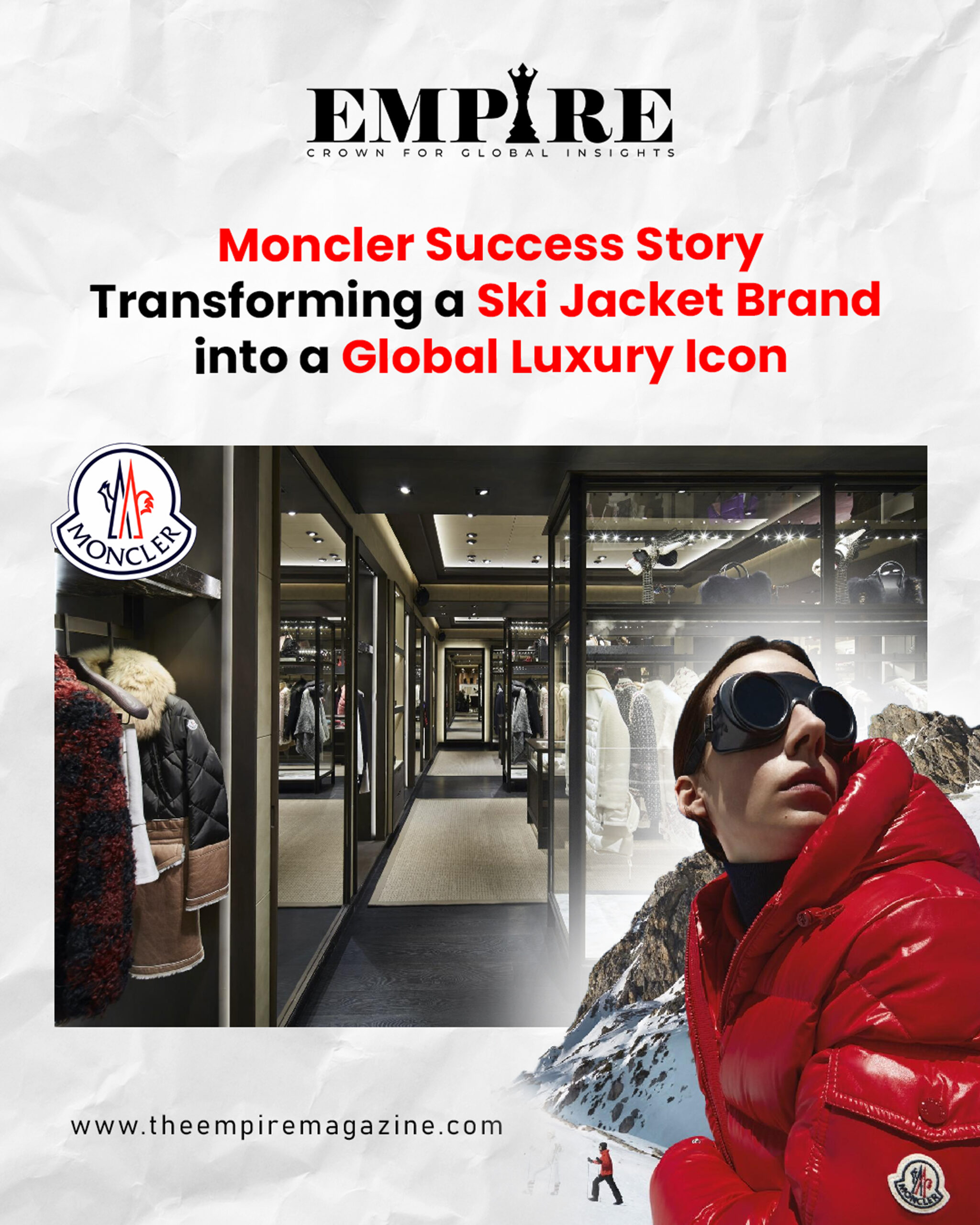
Moncler Success Story is one of the most impressive transformations in the luxury fashion industry. What began as a small French company specializing in down jackets for mountaineers and skiers has evolved into a global luxury powerhouse, known for its iconic puffer jackets, high fashion collaborations, and strong presence in the world’s most prestigious markets.
Moncler Success Story Humble Beginnings in the French Alps
Moncler was founded in 1952 by René Ramillon in the small town of Monestier-de-Clermont, near Grenoble in the French Alps. The name “Moncler” is a combination of “Monestier” and “Clermont.” The brand initially focused on making durable, high-quality down jackets for extreme weather conditions. These jackets were popular among mountain climbers, skiers, and workers in cold environments.
In the 1960s, Moncler gained international recognition when it supplied jackets for the French national ski team at the Winter Olympics. This association with performance and the outdoors became a core part of the brand’s DNA.
The Turning Point: Luxury Repositioning
The modern success story of Moncler began in 2003 when Italian entrepreneur Remo Ruffini acquired the company. At the time, Moncler was struggling and nearly forgotten. Ruffini saw untapped potential in the brand’s heritage and decided to transform it from a functional outdoor brand into a fashion-forward luxury label.
Ruffini’s vision was bold: keep the technical excellence of the down jackets but elevate them with premium materials, contemporary designs, and high fashion appeal. He moved the company’s headquarters to Milan and began repositioning Moncler as a lifestyle luxury brand.
Strategic Growth and Innovation Moncler Success Story
Under Remo Ruffini’s leadership, Moncler implemented several key strategies:
- Product Excellence: The company maintained its legendary quality standards while introducing new silhouettes, colors, and limited-edition collections.
- Fashion Collaborations: Moncler partnered with renowned designers and brands such as Virgil Abloh (Off-White), Pierpaolo Piccioli (Valentino), and many others. These collaborations brought fresh creativity and attracted younger, fashion-conscious customers.
- Iconic Collections: The launch of the “Genius” project in 2018 allowed different creative directors to reimagine Moncler each season, keeping the brand dynamic and culturally relevant.
- Retail Expansion: Moncler opened flagship stores in the world’s most prestigious shopping districts — from Avenue Montaigne in Paris to Fifth Avenue in New York and Ginza in Tokyo.
- Men’s and Women’s Lines: The brand successfully expanded its appeal across genders and age groups.
Global Expansion and Market Leadership
By 2026, Moncler has established itself as a true global luxury icon. The company generates billions in annual revenue with strong growth in Europe, Asia, and North America. China and other Asian markets have become particularly important growth drivers.
Moncler’s famous puffer jackets have become status symbols, worn by celebrities, athletes, and fashion enthusiasts alike. The brand successfully balanced its outdoor heritage with high fashion credibility, a rare achievement in the luxury industry.
Business Performance in 2026
Moncler continues to deliver impressive financial results. The company has shown strong resilience even during economic uncertainty, thanks to its loyal customer base and premium positioning. Its ability to maintain pricing power while growing volumes is the envy of many luxury competitors.
The brand has also made significant progress in sustainability, using traceable down, recycled materials, and more responsible production processes — areas increasingly important to modern luxury consumers.
Key Success Factors Moncler Success Story
Several elements contributed to Moncler’s remarkable transformation:
- Strong Leadership: Remo Ruffini’s clear vision and long-term commitment.
- Heritage + Modernity: Respecting its Alpine roots while embracing contemporary fashion.
- Product Innovation: Continuous improvement of technical performance combined with style.
- Emotional Connection: Creating products that make customers feel confident and stylish.
- Controlled Growth: Avoiding over-expansion and protecting brand exclusivity.
Challenges Overcome Moncler Success Story
The journey was not without difficulties. Moncler faced intense competition from other luxury houses, economic downturns, and the challenge of scaling while maintaining quality. However, the company’s focus on craftsmanship and brand integrity helped it navigate these obstacles successfully.
Lessons from Moncler’s Success
Moncler’s story offers valuable lessons for luxury and fashion brands:
- Heritage can be a powerful foundation when combined with fresh creativity.
- Bold repositioning can revive struggling brands.
- Balancing exclusivity with accessibility is key to long-term growth.
- Strong leadership and clear vision are essential for transformation.
The Future of Moncler
In 2026, Moncler continues to evolve. The brand is investing in digital innovation, expanding its men’s and accessories categories, and strengthening its sustainability commitments. With Remo Ruffini’s continued guidance, Moncler is well-positioned to maintain its status as a global luxury icon for decades to come.
Moncler Success Story: Transforming a Ski Jacket Brand into a Global Luxury Icon proves that with the right vision, creativity, and execution, even traditional heritage brands can achieve extraordinary success in the modern luxury world.
For more luxury and business insights, explore related coverage here: https://theempiremagazine.com/?p=6612
Follow The Empire Magazine on Instagram and Facebook for the latest updates.
– The Empire Magazine
Crown For Global Insights