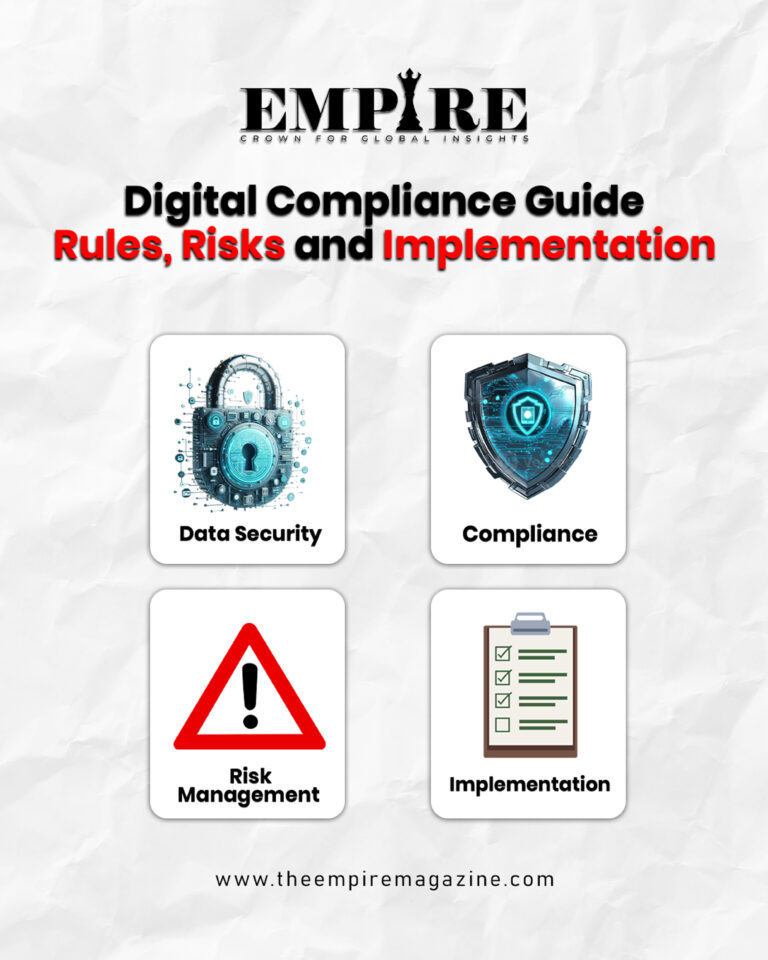
Legal Risks in Digital Business: Compliance Guide

Legal Risks in Digital Business are becoming one of the most important concerns for modern companies. As business activity shifts online, organizations gain speed, scale, and global reach, but they also face a growing number of legal responsibilities. Digital platforms create new opportunities for expansion, customer engagement, and innovation, yet they also expose businesses to complex risks involving data protection, intellectual property, contracts, cybersecurity, and regulatory compliance.
In the digital economy, legal problems do not always begin with a dramatic dispute. Often, they begin with small oversights such as weak privacy terms, unclear customer policies, unprotected intellectual property, poor cybersecurity controls, or a lack of understanding of cross-border rules. Over time, these gaps can create financial losses, reputational damage, and operational disruption. Recent legal risk management analysis emphasizes that frequent regulatory changes, stricter privacy standards, and growing operational complexity are pushing businesses to adopt more proactive compliance strategies. Pasted text
Why Legal Compliance Matters in Digital Business
Digital business models move quickly. Companies launch websites, e-commerce stores, subscription platforms, apps, and digital services at scale. However, legal compliance often moves more slowly unless it is made a core part of strategy.
That is why Legal Risks in Digital Business should be managed from the beginning, not only when a dispute appears. Legal compliance supports long-term growth by protecting business operations, customer trust, and market reputation. A business that ignores legal obligations may grow fast in the short term but expose itself to unnecessary risks that become more expensive later.
Strong compliance also improves confidence among customers, partners, and investors. When people believe a company respects privacy, protects transactions, and follows clear terms, they are more likely to continue doing business with it.
Intellectual Property Protection in the Digital Era
One of the first priorities in digital business is protecting intellectual property. Online markets make it easier to scale a brand, but they also make it easier for others to copy content, designs, products, or brand identity.
Businesses should protect trademarks, copyrights, patents where relevant, and proprietary content. This includes brand names, logos, original media, product designs, digital tools, and internal assets. Without proper protection, a business may lose control over valuable work or face disputes involving unauthorized use.
Intellectual property is not only a legal asset. It is also a competitive advantage. In digital markets, brand recognition and originality often play a major role in customer trust and business value. Securing these assets early can help a company defend its position and avoid confusion in the marketplace.
Data Privacy and Protection
Data is one of the most valuable resources in digital business. Companies collect customer details, payment information, browsing behavior, preferences, and communication history. But with that access comes legal responsibility.
A major part of Legal Risks in Digital Business relates to how data is collected, stored, used, and shared. Businesses need clear privacy practices and strong internal controls. Customers must understand what data is being collected and why. Transparency is essential not only for compliance but also for trust.
Digital legal risk analysis also shows that stronger data protection expectations are now shaping legal technology and compliance systems, especially as organizations deal with stricter privacy rules and growing concerns about sensitive information. Pasted text
Weak privacy management can create several risks. These include customer complaints, regulatory penalties, reputational damage, and exposure to data misuse claims. A responsible business should treat privacy as part of its core operating model rather than as a technical detail.
Terms of Service and Privacy Policies
A digital business should never operate without clear legal documents that define the relationship between the company and its users. Terms of service and privacy policies are foundational.
These documents should explain user responsibilities, payment terms, content rules, dispute procedures, privacy practices, and limitations of liability where appropriate. They must also be accessible and written in language users can understand.
Unclear, missing, or outdated policies increase the chance of confusion and disputes. In digital business, even routine user interactions can become legal issues if the terms governing them are poorly drafted or not communicated properly.
Well-structured policies reduce uncertainty. They also help businesses respond more confidently to complaints, refund demands, misuse of services, or content disputes.
E-Commerce and Cross-Border Regulations
Many digital businesses serve customers in multiple regions from the start. This expands opportunity, but it also creates cross-border legal obligations. Tax requirements, consumer rights, shipping restrictions, refund rules, and digital trade regulations may differ by market.
This is where Legal Risks in Digital Business become more complex. A company may be compliant in one jurisdiction but exposed in another. Even simple business activities such as offering subscriptions, shipping products internationally, or collecting customer data can trigger different legal standards.
As digital legal operations become more global, technology platforms are increasingly being used to support cross-jurisdictional compliance and remote legal collaboration. Pasted text Still, technology alone is not enough. Businesses also need internal awareness and careful planning.
Understanding the legal environment of each target market helps reduce surprises and supports more stable international growth.
Cybersecurity as a Legal Responsibility
Cybersecurity is not just an IT matter. It is also a legal and business risk issue. Digital businesses hold valuable customer and operational data, which makes them attractive targets for cyber threats.
Weak security can result in data breaches, service interruptions, financial fraud, and regulatory consequences. As digital legal risk management evolves, secure cloud storage, encryption, monitoring systems, and compliance-focused security tools are becoming essential rather than optional. Pasted text
Businesses should regularly review their cybersecurity measures, update internal protocols, and strengthen access controls. A breach can quickly undermine customer trust, damage the brand, and create expensive legal consequences.
Strong cybersecurity reduces risk exposure, but it also demonstrates that a business takes its legal and ethical duties seriously.
Building a Proactive Legal Risk Strategy
Managing Legal Risks in Digital Business requires more than reacting to problems after they appear. The most effective approach is proactive.
A proactive strategy includes legal review of digital operations, regular policy updates, clear data governance, intellectual property protection, secure systems, and internal awareness across teams. It also means involving legal thinking in product launches, customer experience design, digital marketing, and platform management.
Legal risk management today is increasingly supported by automation, analytics, and smarter compliance tools that improve workflow efficiency and help organizations identify risk earlier. Pasted text But even with technology, judgment still matters. Businesses need clear oversight and responsible decision-making.
To explore more insights, visit:
https://theempiremagazine.com/?p=5745
Follow us on social media:
Instagram: https://www.instagram.com/the_empire_magazine/
Facebook: https://www.facebook.com/profile.php?id=61573749076160
– The Empire Magazine
Crown For Global Insights