India Outsourcing Industry and AI: Can the Sector Survive the Shift?
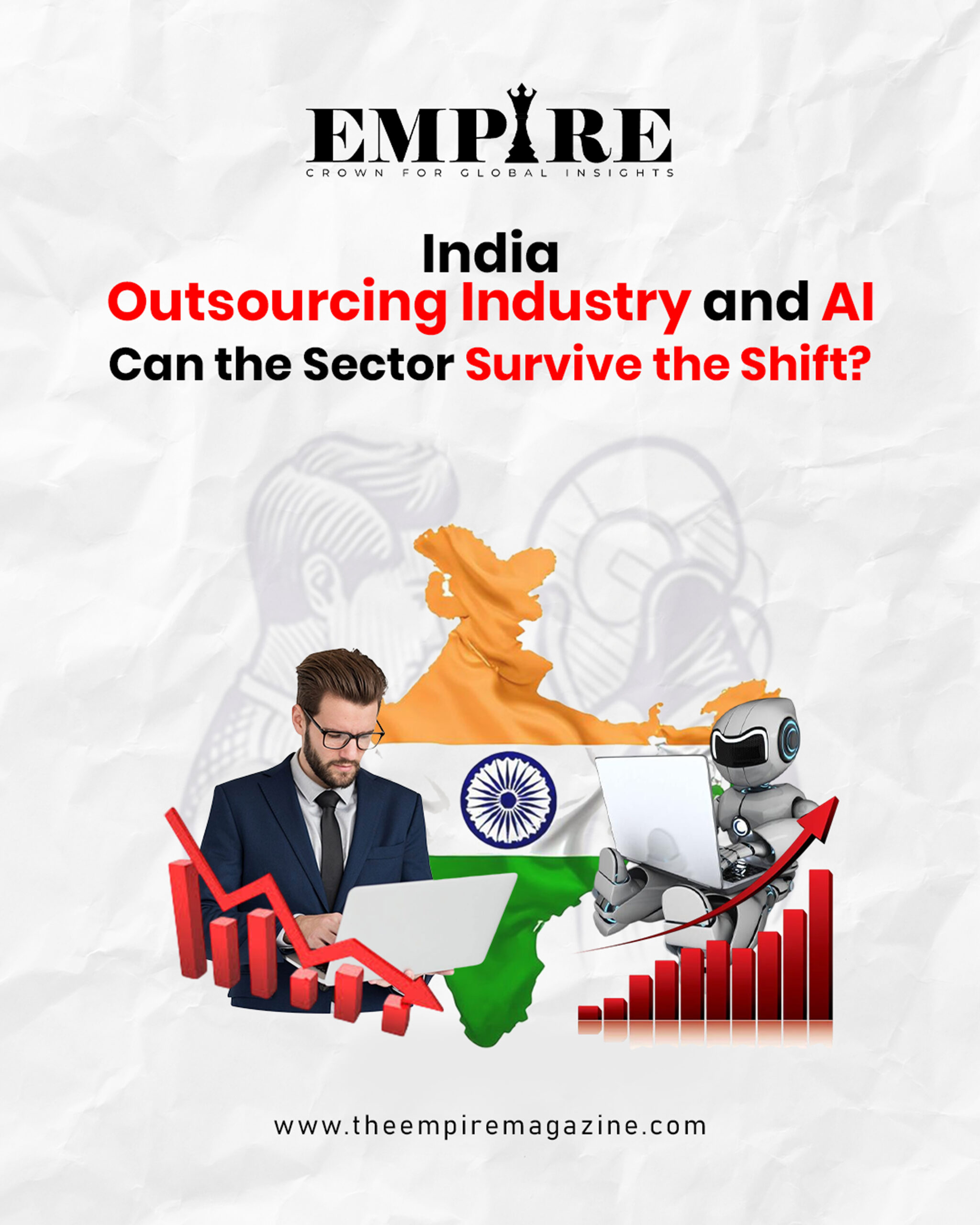
Table of Contents
- The Rise of India’s Outsourcing Power
- Why AI Is Creating Anxiety in the Industry
- How the Business Model Is Starting to Change
- Why AI Is Also Creating New Opportunities
- The Real Challenge for Jobs and Hiring
- What Indian IT Firms Must Do Next
- Final Thoughts
India outsourcing industry and AI is now one of the most important topics in global business and technology. For decades, India’s outsourcing sector has been a major engine of economic growth, job creation, and urban expansion. It has transformed cities, created a strong white-collar workforce, and helped position India as one of the world’s most important technology service hubs. However, the rapid growth of artificial intelligence has raised a serious question: can this industry continue to thrive as automation becomes more advanced?
This question matters not only to large technology companies but also to millions of professionals, fresh graduates, service providers, and businesses connected to the wider digital economy. The outsourcing sector has long relied on a labour-driven model in which skilled workers handled software maintenance, customer support, testing, compliance work, updates, and back-office operations for global clients. Artificial intelligence is now challenging that structure by reducing the time, cost, and manpower needed for many routine tasks.
At the same time, it would be too simplistic to assume that AI will completely destroy the industry. The more realistic picture is that the sector is entering a major transition. Some traditional roles may shrink, but new forms of work are likely to emerge. The future of India outsourcing industry and AI will depend on how quickly companies adapt, reskill talent, and move toward higher-value services.
The Rise of India’s Outsourcing Power
India’s outsourcing story is one of the most remarkable business transformations of the modern era. Over the last few decades, the country built a global reputation for software services, technology support, and back-office operations. International companies increasingly turned to India for cost efficiency, skilled professionals, English-language capability, and round-the-clock support.
This sector did much more than generate export revenue. It created a powerful urban middle class with rising incomes and strong spending power. That growth supported housing demand, consumer markets, restaurants, transport, retail, and many forms of city-based development. The impact of the outsourcing sector spread far beyond office campuses. It became deeply tied to India’s broader growth story.
That is why current concerns about India outsourcing industry and AI are being watched so closely. This is not just about one business segment facing competition. It is about a major pillar of employment and services exports confronting a deep structural shift.
For a broader perspective on leadership, innovation, and global business transformation, read The Empire Magazine’s feature on future-focused leadership.
Why AI Is Creating Anxiety in the Industry
The fear around India outsourcing industry and AI comes from the nature of artificial intelligence itself. Many outsourcing activities depend on repetitive, rules-based, process-heavy work. These are exactly the kinds of tasks that advanced AI tools are becoming better at performing.
Software debugging, data handling, document review, compliance assistance, testing, coding support, workflow management, and customer interaction can now be accelerated by AI systems. This shift has made investors and business leaders question whether the traditional outsourcing model can grow at the same pace as before.
The anxiety is especially strong around entry-level jobs. Many young professionals begin their careers by working on support, testing, operations, and maintenance functions. If AI reduces the number of such roles, the talent pipeline itself may change. This creates uncertainty not only for companies but also for educational institutions and job seekers preparing for the technology sector.
Another major concern is pricing pressure. In the past, service providers often billed clients based on manpower and hours spent. If AI enables the same task to be completed in less time, clients may become less willing to pay according to the old model. This pushes the industry toward a more outcome-based structure, where value is measured by results rather than effort alone.
How the Business Model Is Starting to Change
The future of India outsourcing industry and AI will likely look very different from its past. Traditional software support and managed services may become less profitable as automation increases efficiency. Businesses that once earned stable recurring fees for maintenance and process handling may now need to reposition themselves toward consulting, integration, transformation, and AI-led modernization.
This means outsourcing firms must move beyond being execution partners and become strategic partners. Instead of only running existing systems, they may need to advise clients on how to redesign workflows, modernize legacy platforms, deploy AI responsibly, and manage digital transformation in complex enterprise environments.
That shift is significant because strategic work is often higher-value but less repetitive. It may bring stronger margins in some cases, but it may also reduce the need for large teams doing standardised tasks. As a result, the sector may not disappear, but it may become leaner, more specialised, and more skill-intensive.
Why AI Is Also Creating New Opportunities
Despite the concerns, India outsourcing industry and AI is not only a story of disruption. It is also a story of reinvention. Artificial intelligence needs implementation, supervision, customization, governance, security, testing, and business integration. Large enterprises do not simply adopt new technology overnight. They need expert partners to help connect AI tools with legacy systems, compliance requirements, internal workflows, customer expectations, and long-term business goals.
This creates new areas of work. AI integration, model management, enterprise automation, data preparation, cybersecurity oversight, human-in-the-loop systems, AI governance, prompt engineering, and intelligent workflow design are all likely to expand. Companies that adapt quickly can turn AI from a threat into a new revenue stream.
This is why the debate around India outsourcing industry and AI should not be framed in purely negative terms. The industry already has deep enterprise relationships, global delivery experience, technical talent, and operational scale. Those strengths can still matter in an AI-driven world. What changes is the type of service being delivered.
You can also stay connected with business insights and digital updates from The Empire Magazine on Instagram and Facebook.
The Real Challenge for Jobs and Hiring
The most sensitive part of the India outsourcing industry and AI shift is employment. Even if AI creates new opportunities, there may still be short-term pain. Some lower-complexity tasks may require fewer workers. Hiring could become slower, especially for roles that involve repetitive work easily assisted by automation.
Fresh graduates may face a tougher entry path unless they develop skills in analytics, AI tools, enterprise systems, data processes, communication, and consulting-oriented work. The industry may increasingly favour professionals who can work alongside AI rather than compete with it. That changes what it means to be employable in the technology services sector.
Companies will need to invest more seriously in reskilling. This includes training existing employees not only in technical AI usage but also in problem-solving, domain knowledge, client advisory skills, and cross-functional thinking. The firms that build strong internal learning systems will be better positioned to survive the transition.
What Indian IT Firms Must Do Next
To remain competitive, the leaders in India outsourcing industry and AI must act decisively. First, they need to accelerate movement into higher-value services such as digital transformation, cloud modernization, cybersecurity, AI integration, and enterprise consulting. Second, they need to redesign pricing models around outcomes and business impact instead of only labour hours.
Third, they must build confidence with clients by proving that human expertise still matters in complex enterprise environments. AI may generate code faster, but businesses still require reliability, security, customization, compliance, and long-term support. Indian firms can use this moment to strengthen their position as trusted implementation and transformation partners.
Finally, they must treat talent development as a survival strategy. The future winners will be those that can turn large workforces into AI-enabled professionals capable of handling more complex and strategic tasks.
Final Thoughts
The debate around India outsourcing industry and AI is not really about whether the sector will vanish overnight. It is about whether the industry can evolve fast enough to remain globally relevant. Artificial intelligence will undoubtedly reduce demand for some traditional services and reshape billing, hiring, and project structures. Yet it is equally true that businesses across the world still need trusted partners to implement, customize, and manage technology transformation.
India’s outsourcing sector has overcome major shifts before by adapting to changing client expectations and new waves of innovation. This time, the challenge is larger and faster, but it also brings the possibility of reinvention. The future will likely belong to companies that can combine automation with advisory strength, technical depth, and human problem-solving.
So, can it survive AI? Yes, but not in the same form as before. The next chapter of India outsourcing industry and AI will belong to firms that are willing to transform themselves as boldly as the technology transforming the world.
– The Empire Magazine
Crown for Global Insights
Follow The Empire Magazine
Facebook | Instagram | LinkedIn