United Kingdom | Fashion & Startups
Gymshark began by selling supplements online. Its move into fitted workout clothing, followed by relationships with fitness creators, gave the British startup a distinctive product and a way to reach the people most likely to wear it.
The Gymshark success story began with a young fitness enthusiast trying to find a place in an industry he loved. In 2012, Ben Francis and his friend Lewis Morgan started a business that would eventually become an internationally recognised gymwear brand. Its early operations were modest: an online shop, limited money and a willingness to make products themselves.
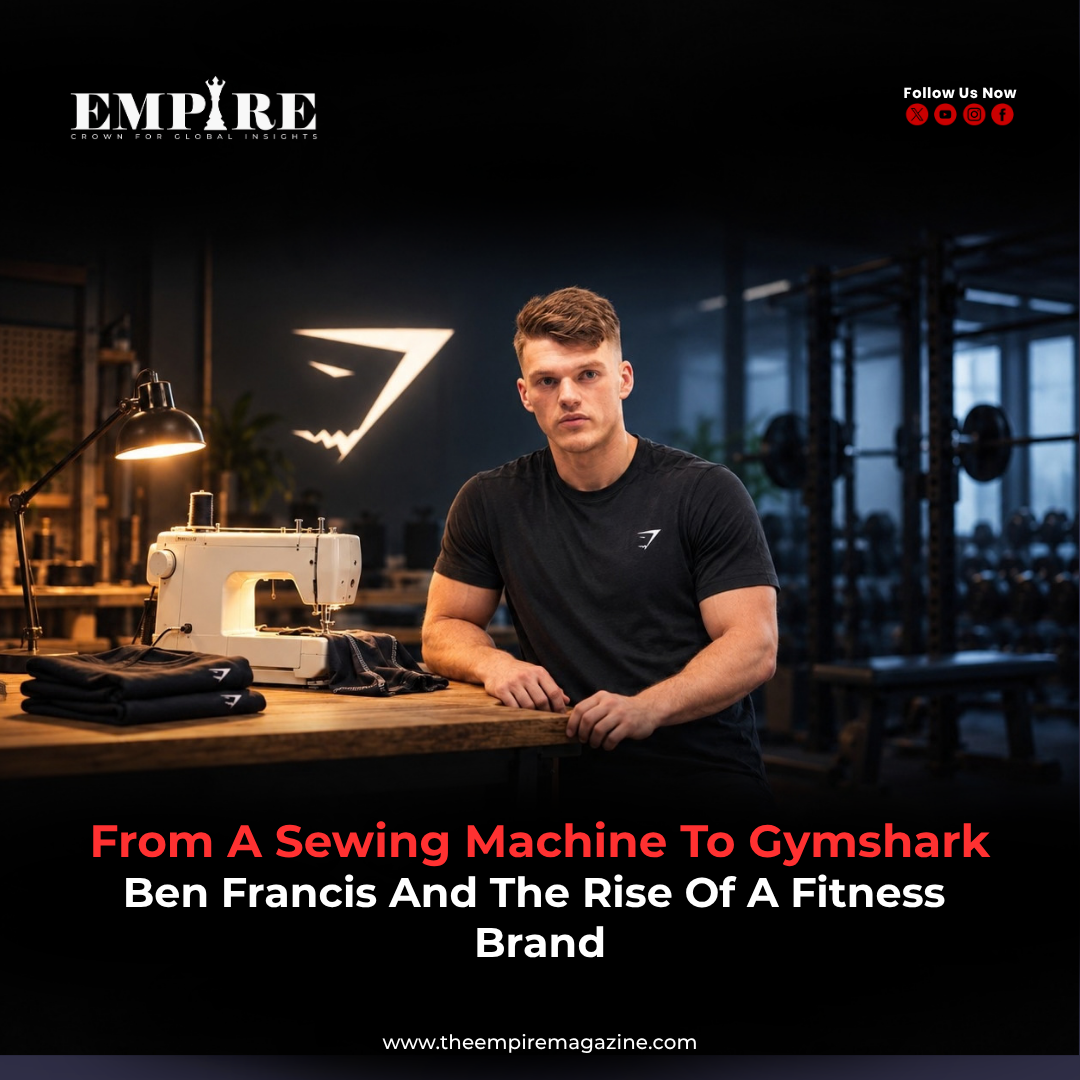
The sewing machine became a memorable symbol of those beginnings. The more revealing story lies in the decisions around it. Francis recognised a gap in workout clothing, developed products for that audience and approached fitness personalities whose followers shared the same interests. Together, these choices suggest why the brand gained traction.
How the Gymshark success story began
Francis was 19 when Gymshark started. He studied at Aston University, delivered pizzas for Pizza Hut and spent time training. He had also experimented with websites and fitness apps. That mix of interests placed him close to both online commerce and the gym culture he wanted to serve.
The first commercial idea was selling supplements through dropshipping. A customer ordered through Gymshark, and another business supplied the goods. This allowed the founders to offer products without financing a warehouse full of stock. Gymshark’s own history describes the margins as small.
The model offered a practical starting point, but its limitations mattered. A reseller has less control over the product itself, while a narrow margin leaves little money to reinvest. For a founder already interested in what gymgoers wore, making clothing offered a way to shape both the product and its identity.
From supplements to clothing made for lifters
Francis and Morgan wanted workout tops similar to those worn by the fitness personalities they watched online, with a closer fit for their own market. Francis learned to sew with help from his mother, and the business bought a screen printer. Early production involved making and printing garments by hand.
This was a specific customer problem. In a later Shopify interview, Gymshark chief brand officer Noel Mack described a generation of young lifters who felt poorly represented by the available sportswear. The founders understood that group because they belonged to it, including knowing where its members spent time online.
That account suggests an advantage in starting with a clearly defined customer. Product decisions become easier to test: does the top fit the way that person wants, and does it look appropriate in the setting where they will wear it? A small company can make those choices without needing to satisfy every kind of athlete.
Handmaking clothing also placed the founders close to the work behind each order. It brought practical questions about fabric, printing and fit into the business from the beginning. As an operating model, however, it had an obvious limit: demand could grow faster than a small team could sew.
How fitness creators helped Gymshark reach customers
Gymshark sent early products to fitness personalities including Lex Griffin, Matt Ogus and Chris Lavado. The company’s account describes the founders as fans of these creators. Some recipients shared the clothing with their audiences and became early Gymshark athletes.
The likely commercial advantage was the close match between creator, product and viewer. Someone watching lifting content was already interested in the activity for which the clothing was designed. A top seen during a workout also gave the viewer more context than an isolated product photograph could provide.
Repeated appearances could help an unfamiliar brand become recognisable. A viewer might first notice a logo, later see the garment in another video and eventually search for it. This is a plausible explanation of how creator exposure supported discovery; the public accounts do not isolate the sales effect of each individual appearance.
Relationships also gave Gymshark people around whom it could organise events. Forbes reported that the company developed paid arrangements with fitness personalities as the business grew. The history therefore includes commercial partnerships as well as the initial gifting of products.
For a startup, the useful question is how well a creator’s audience matches the intended customer. A large follower count alone cannot answer it. The content, the creator’s credibility within that activity and the way the clothing appears all affect whether a partnership makes sense.
BodyPower 2013 brought the audience together
A major early breakthrough came at BodyPower in Birmingham in 2013. Francis told Forbes that visitors came to meet the athletes and see the clothing, and that Gymshark sold out at the event. The exhibition brought online personalities, prospective customers and physical products into the same place.
The Luxe Tracksuit was part of this next stage. Gymshark says it developed the design and outsourced production, committing its available funds to the minimum order. This marked a move beyond the garments the founders could make themselves.
In GQ’s account, online transactions were paused during the exhibition. When sales resumed, Francis saw £30,000 in orders in 30 minutes. That figure describes a launch surge, rather than a normal trading day or profit. Its significance was the immediate demand following the event.
This episode helps explain the Gymshark success story. An event gave people a chance to inspect the clothing and meet familiar faces. The website then provided a way to act on that interest. Product, promotion and purchasing were connected closely enough for attention to turn into orders.
An online brand needed dependable operations
Selling through its own website gave Gymshark a direct route from creator exposure to purchase. Yet fast-growing demand created operational pressure. Shopify’s customer case study records a Black Friday outage that Francis said lasted eight hours and cost an estimated £100,000. Gymshark subsequently moved to Shopify Plus.
The case study is promotional material from a technology supplier, but the founder’s account illustrates a concrete problem: interested customers still need a functioning checkout. Traffic has limited commercial value if people cannot complete an order.
The same reasoning applies to stock availability, delivery and returns. A creator can encourage someone to try a brand. The experience after that decision determines whether the customer has a reason to return. Marketing success raises the demands on the rest of the business.
Community became part of the shopping experience
Gymshark continued combining online sales with physical encounters. Shopify’s case study describes events and world tours where customers could meet fitness personalities and buy products in person. These gatherings extended the relationship beyond a social media feed.
Mack’s Shopify interview also emphasised adapting content to each platform. He described differences between Gymshark’s approach to TikTok, Instagram and paid posts. The wider lesson is that knowing the audience includes understanding how people use the place where a message appears.
On 29 October 2022, Gymshark opened its first permanent store on London’s Regent Street. The company’s store information describes workout facilities and classes alongside retail. The location gave a business built online a permanent setting where customers could encounter the brand through shopping and exercise.
The store can be understood as a continuation of the event model. Both give customers an experience they cannot obtain from a product page alone. Whether any particular event or location delivers a financial return remains a separate question from the enthusiasm it generates.
The 2020 investment marked a different scale
On 14 August 2020, General Atlantic announced an investment valuing Gymshark at more than £1 billion. The firm took a 21 per cent stake in what the announcement described as Gymshark’s first external fundraise. The partnership was intended to support further growth, particularly in North America.
The date matters. This was the valuation associated with the 2020 transaction, not a claim about the company’s current value or its annual revenue. It provides a documented milestone in the journey from a small fitness business to a company attracting a major international investor.
It also changed the scale of the challenge. A larger company needs dependable manufacturing, distribution and management alongside a recognisable brand. The activities that attract the first customers must eventually be supported by systems capable of serving many more of them.
What founders can learn from the Gymshark success story
The strongest lesson is to examine the connection between a product and the people expected to buy it. Gymshark’s early clothing addressed an identifiable preference. Its creator relationships placed that clothing in front of an audience already interested in lifting. Its events gave that audience a way to participate in person.
For another founder, applying those lessons would mean testing a small product range with a defined customer group, choosing creators for audience relevance and measuring what happens after exposure. Useful measures include completed purchases, returns and repeat orders. Views and attendance describe attention; they do not, by themselves, establish a sustainable business.
The sewing machine remains an appealing starting image because it makes the work tangible. The enduring business question is equally practical: can a company keep making something its customers want, help them discover it and deliver an experience that brings them back?
Explore more global business, technology and innovation coverage in The Empire Magazine’s article archive.
Read our related coverage: bank-of-america-gold-forecast/
Follow The Empire Magazine:
Facebook | Instagram
The Empire Magazine | Crown For Global Insights