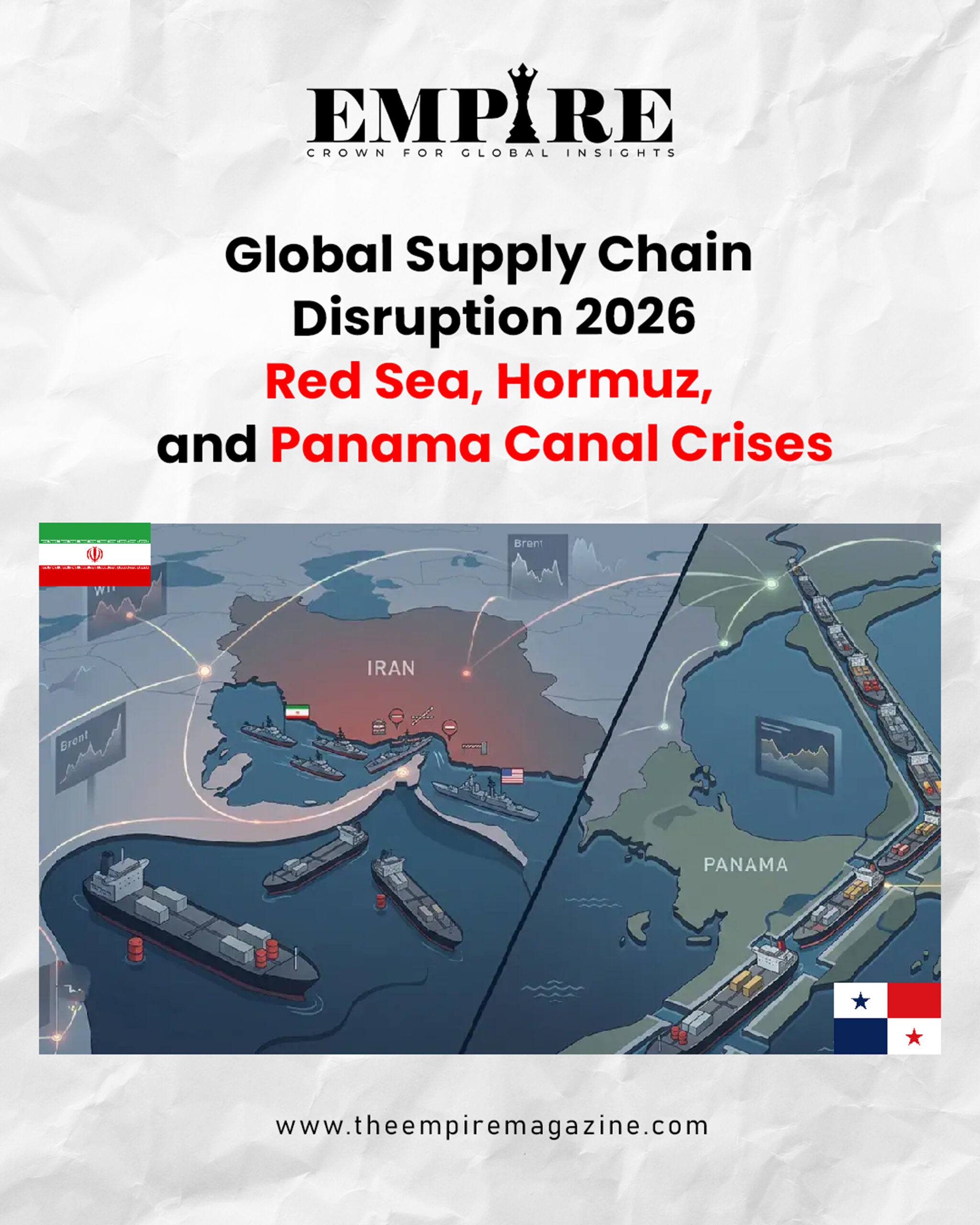
Global Supply Chain Disruption has intensified dramatically in 2026, driven by simultaneous crises in three critical maritime chokepoints: the Red Sea, the Strait of Hormuz, and the Panama Canal. These disruptions are causing delays, inflating shipping costs, and creating widespread shortages across multiple industries worldwide.
The Triple Threat to Global Trade
The world is currently facing an unprecedented convergence of geopolitical and environmental challenges affecting the three most vital shipping routes:
1. Red Sea Crisis Houthi attacks on commercial vessels in the Red Sea have forced major shipping companies to reroute around the Cape of Good Hope. This adds nearly 3,500 nautical miles and 10–14 days to journeys between Asia and Europe. Insurance premiums for vessels passing through the area have skyrocketed, and several shipping lines have suspended services entirely.
2. Strait of Hormuz Tensions Rising tensions in the Persian Gulf have created severe uncertainty around oil and gas shipments. The Strait of Hormuz handles nearly 20% of global oil trade. Any escalation here could trigger a massive energy crisis and further inflate shipping and commodity prices.
3. Panama Canal Drought Severe drought in Panama has drastically reduced water levels in the canal, limiting the number of ships that can pass daily. This has created massive backlogs, particularly affecting trade between Asia and the US East Coast, as well as grain and commodity exports from South America.
Economic Impact in 2026
The combined effect of these crises is being felt globally:
- Shipping Costs: Container shipping rates from Asia to Europe have increased by over 300% in some routes compared to early 2025.
- Inflation Pressure: Higher transportation costs are pushing up prices of consumer goods, electronics, clothing, and food items.
- Supply Shortages: Retailers and manufacturers are reporting delays in inventory replenishment, leading to stockouts in several categories.
- Energy Market Volatility: Oil prices have remained elevated due to Hormuz concerns, affecting transportation, manufacturing, and household budgets.
- Agricultural Disruptions: Panama Canal restrictions have impacted grain, soybean, and fertilizer shipments, raising food security concerns in import-dependent regions.
Industries Most Affected
- Automotive and Electronics: Severe component shortages due to delayed shipments from Asia.
- Retail and Fashion: Spring/Summer collections delayed, leading to lost sales.
- Energy and Chemicals: Rising costs and uncertainty affecting global production.
- Agriculture and Food: Increased prices and potential shortages in staple commodities.
- Pharmaceuticals: Critical medicine supply chains under strain.
How Companies Are Responding
Businesses are adapting through several strategies:
- Diversifying sourcing away from high-risk routes
- Increasing inventory buffers (nearshoring and stockpiling)
- Shifting to air freight for high-value, time-sensitive goods
- Investing in supply chain visibility and predictive analytics
- Exploring alternative routes such as the Arctic passage and African land corridors
Long-term Implications
The 2026 supply chain crisis is accelerating several structural changes:
- Greater emphasis on supply chain resilience over pure cost efficiency
- Rise of regional manufacturing and “China+1” strategies
- Increased investment in automation and AI for logistics
- Growing interest in nearshoring and friendshoring
- Development of alternative maritime routes and infrastructure
Governments are also taking action by investing in port infrastructure, exploring new trade corridors, and strengthening strategic reserves.
Outlook for the Rest of 2026
Analysts expect supply chain pressures to continue through the second half of 2026. A resolution in the Red Sea and stabilization in the Strait of Hormuz could bring some relief, but climate-related issues at the Panama Canal may persist longer due to long-term weather patterns.
Businesses and consumers should prepare for a period of elevated costs and occasional shortages. Companies with agile and diversified supply chains are likely to outperform those heavily dependent on traditional routes.
The current crisis serves as a wake-up call about the fragility of global trade networks in an increasingly volatile world. Building resilience will be one of the defining business challenges of the coming decade.
For more economic and global affairs analysis, explore related coverage here: https://theempiremagazine.com/?p=6599
Follow The Empire Magazine on Instagram and Facebook for the latest updates.
– The Empire Magazine
Crown For Global Insights