Education Leadership in the 21st Century: From Authority to Authenticity
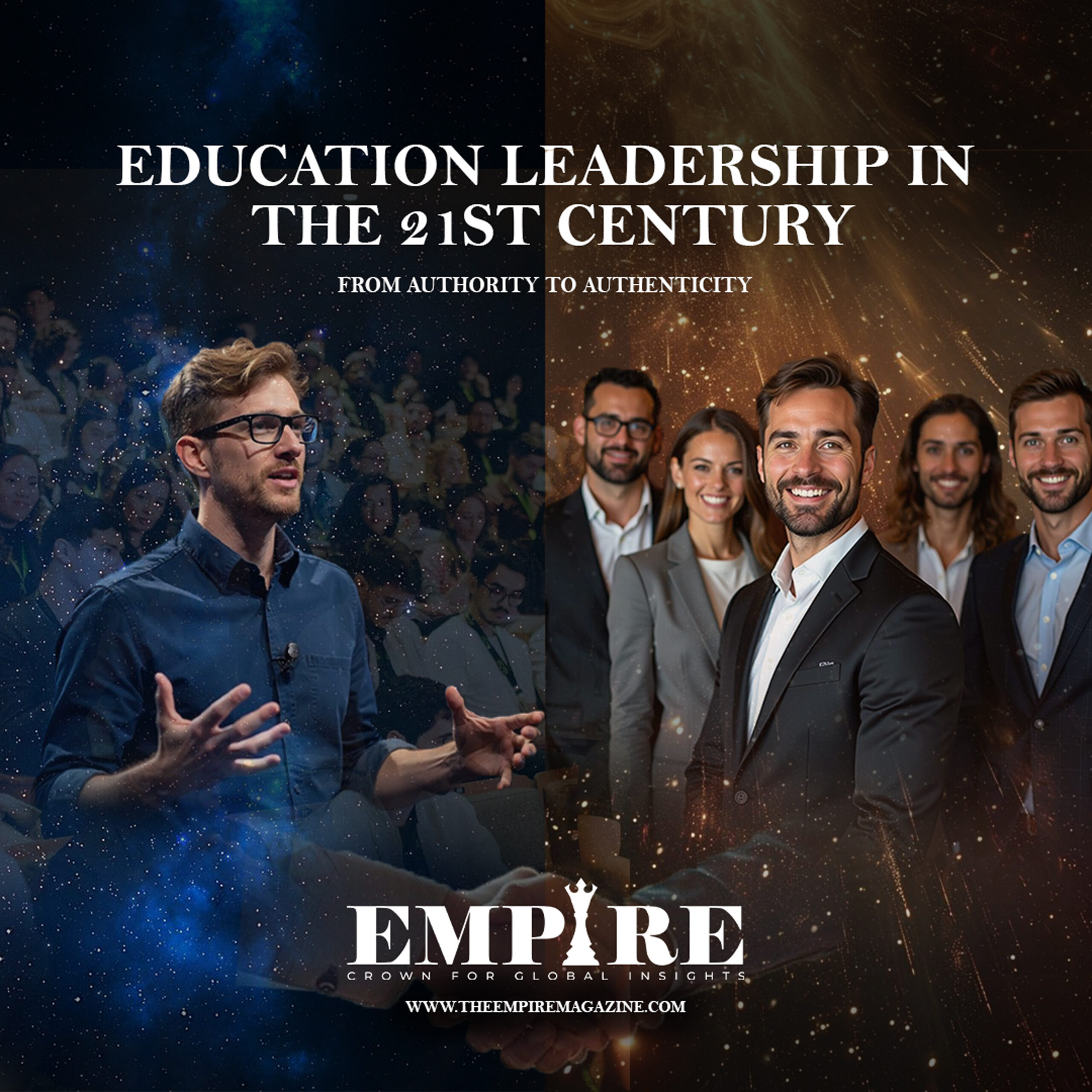
Education Leadership in the 21st Century is undergoing a profound transformation as schools and institutions navigate rapid digital change, artificial intelligence, evolving workforce demands, and shifting societal expectations. The traditional models of command-and-control leadership are no longer sufficient. Today’s leaders must balance vision with empathy, innovation with inclusion, and authority with authenticity.
At The Empire Magazine, we believe that Education Leadership in the 21st Century is not simply about managing institutions—it is about redefining what learning means for the next generation.
Leadership Beyond Titles and Positions
Education Leadership in the 21st Century is no longer confined to formal titles such as principals, deans, or superintendents. Leadership now emerges from classrooms, innovation labs, and community spaces.
A teacher implementing inclusive strategies, a counselor advocating for student mental health, or a curriculum designer promoting equitable digital access—all embody modern leadership. The focus has shifted from hierarchy to impact.
This democratization of leadership reflects a broader evolution in education systems worldwide. Institutions are recognizing that meaningful change often begins with those closest to the learners.
Embracing the Human Side of Learning
Education Leadership in the 21st Century demands a human-centered approach. Students are not data points, and educators are not merely content deliverers.
Modern leaders must prioritize:
- Student well-being
- Teacher support and empowerment
- Inclusive learning environments
- Equity and belonging
Creating psychologically safe and emotionally supportive environments is essential. Leaders today act not only as strategists but also as facilitators of growth and well-being.
Technology as a Strategic Tool
Technology plays a major role in Education Leadership in the 21st Century. However, digital transformation must be guided by purpose.
Leaders must determine:
- When AI enhances personalization
- When automation improves efficiency
- When human interaction is irreplaceable
Technology should empower educators—not replace them. The future of leadership in education depends on balancing innovation with humanity.
The Courage to Challenge Tradition
Education Leadership in the 21st Century requires the courage to question outdated systems. Many grading models, admission policies, and curriculum frameworks were designed for an industrial-era world.
Today’s leaders must be willing to:
- Invite student voice into decision-making
- Redesign outdated structures
- Promote interdisciplinary learning
- Address systemic inequities
True leadership is not about preserving tradition blindly—it is about honoring the past while building a better future.
Building a Legacy of Empowerment
The real measure of Education Leadership in the 21st Century lies in its lasting impact. Effective leaders leave behind empowered educators, confident learners, and inclusive systems.
Their legacy is reflected in:
- Classrooms that foster curiosity
- Teams that collaborate creatively
- Policies that promote fairness and opportunity
Leadership today is about cultivating environments where lifelong learning thrives.
Looking Ahead
Education Leadership in the 21st Century challenges leaders to move beyond management and toward meaningful transformation. It is about clarity of vision, compassion in action, and conviction in purpose.
For further insights on leadership and innovation shaping education systems, explore this related article:
👉 https://theempiremagazine.com/?p=5129
As education continues to evolve, leaders must embrace authenticity, adaptability, and courage. The future belongs to those who lead not with authority alone—but with integrity, empathy, and purpose.
– The Empire Magazine
Crown For Global Insights