Direct-to-consumer brands rise is redefining how modern businesses connect with customers, sell products, and build lasting relationships. In today’s digital-first economy, companies are no longer dependent on traditional retail channels. Instead, they are choosing to engage directly with their audiences through online platforms, creating a more personalized and efficient shopping experience.
This shift is not just a temporary trend—it represents a long-term transformation in the global retail ecosystem. As technology advances and consumer expectations evolve, direct-to-consumer (D2C) brands are setting new benchmarks for innovation, speed, and customer engagement.
What Are Direct-to-Consumer (D2C) Brands?
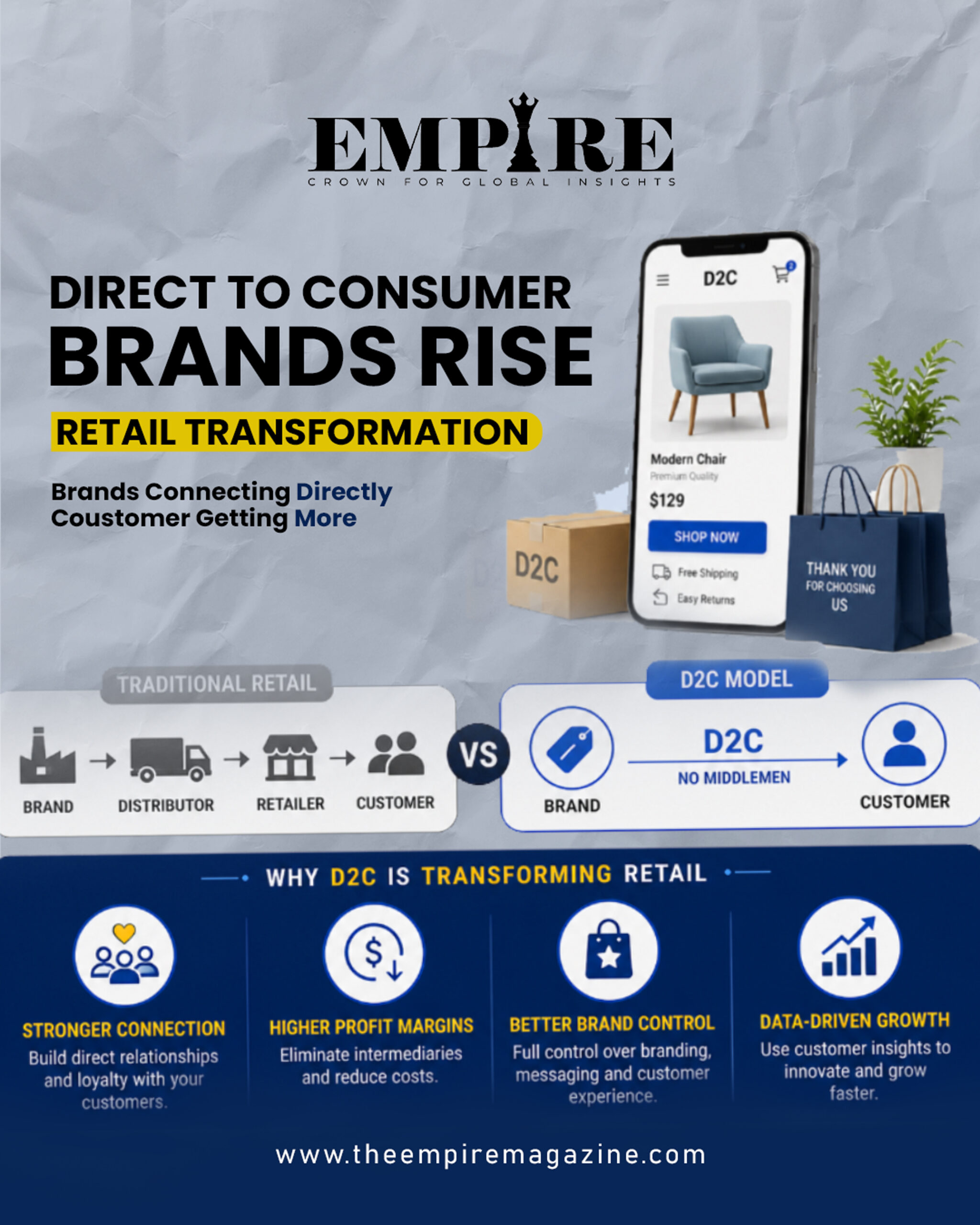
Direct-to-consumer brands are businesses that sell their products directly to customers without relying on intermediaries such as wholesalers, distributors, or retail stores. These brands typically operate through their own websites, mobile apps, and digital channels.
By eliminating middlemen, D2C brands gain complete control over pricing, branding, and customer interactions. This direct connection allows them to build stronger relationships and gather valuable insights into customer behavior.
From fashion and beauty to electronics and food products, D2C brands are rapidly expanding across multiple industries, challenging traditional retail models.
Why Direct-to-Consumer Brands Are Thriving
The growth of D2C brands is driven by several key factors shaping the modern marketplace.
1. Digital Transformation
The rise of e-commerce platforms, mobile technology, and social media has made it easier for brands to reach global audiences. Businesses can now launch online stores quickly without significant infrastructure investment.
2. Changing Consumer Expectations
Today’s consumers demand convenience, speed, and personalization. D2C brands meet these expectations by offering seamless online experiences and tailored product recommendations.
3. Cost Efficiency
By removing intermediaries, brands reduce distribution costs. This enables them to offer competitive pricing or invest more in product quality and marketing strategies.
4. Full Control Over Brand Experience
D2C brands manage every aspect of their identity, from storytelling and design to customer service. This ensures a consistent and engaging experience across all touchpoints.
Key Advantages of the D2C Model
Stronger Customer Relationships
Direct communication allows brands to understand customer needs, gather feedback, and build loyalty over time.
Faster Innovation
D2C brands can quickly adapt to market trends and launch new products based on real-time data and customer insights.
Data-Driven Decision Making
Access to customer data enables brands to optimize marketing campaigns, improve conversion rates, and enhance user experience.
Higher Profit Margins
Without third-party retailers taking a share, businesses can retain more revenue and improve profitability.
Challenges Facing Direct-to-Consumer Brands
Despite their benefits, D2C brands face several challenges that require strategic planning.
High Customer Acquisition Costs
Competing in a crowded digital market requires significant investment in advertising, content creation, and brand building.
Building Trust Without Physical Stores
Customers may hesitate to purchase from brands they cannot physically experience. Strong branding, reviews, and social proof are essential.
Logistics and Fulfillment Complexities
Managing inventory, shipping, and returns can become challenging as businesses scale.
Maintaining Personalization at Scale
As brands grow, delivering personalized experiences becomes more difficult, requiring advanced tools and automation.
How D2C Brands Are Transforming Retail
Direct-to-consumer brands are not just competing—they are reshaping the entire retail industry.
Personalization at Scale
Using data analytics, brands offer customized recommendations and tailored shopping experiences.
Streamlined Supply Chains
By cutting out intermediaries, D2C brands improve efficiency, reduce delays, and enhance product delivery.
Community-Driven Growth
Social media enables brands to build loyal communities through storytelling, engagement, and exclusive content.
Rapid Product Development
D2C brands can test and launch products quickly, responding to customer feedback in real time.
The Role of Digital Marketing in D2C Growth
Digital marketing plays a critical role in the success of D2C brands.
Search Engine Optimization (SEO)
SEO helps brands rank higher in search results, driving organic traffic and increasing visibility.
Social Media Marketing
Platforms like Instagram and Facebook allow brands to connect directly with customers and promote products effectively.
Influencer Marketing
Collaborating with influencers helps brands reach targeted audiences and build credibility.
Email Marketing and Personalization
Personalized campaigns nurture customer relationships and encourage repeat purchases.
Content Marketing
Blogs, videos, and interactive content engage users and strengthen brand identity.
Emerging Trends in Direct-to-Consumer Brands
As the retail landscape evolves, new trends are shaping the future of D2C brands.
AI-Powered Personalization
Advanced technologies enable brands to deliver highly customized experiences based on user behavior.
Subscription-Based Models
Recurring services provide consistent revenue and improve customer retention.
Augmented Reality (AR) and Virtual Reality (VR)
These technologies allow customers to visualize products before purchasing, enhancing the online shopping experience.
Social Commerce
Direct purchasing through social media platforms is becoming a major sales channel.
Sustainability and Ethical Practices
Consumers increasingly prefer brands that prioritize eco-friendly products and transparent operations.
The Future of Retail: A Hybrid Model
While D2C brands continue to grow, the future of retail lies in a hybrid approach that combines online and offline strategies.
Many D2C brands are experimenting with pop-up stores and physical locations to enhance customer engagement. At the same time, traditional retailers are adopting D2C strategies to stay competitive.
This convergence is creating a more flexible and customer-centric retail ecosystem where businesses can deliver seamless omnichannel experiences.
For more insights into modern business strategies, explore this detailed resource:
👉 https://theempiremagazine.com/?p=6179
Stay Connected for More Insights:
📸 Instagram: https://www.instagram.com/the_empire_magazine/
📘 Facebook: https://www.facebook.com/profile.php?id=61573749076160
– The Empire Magazine
Crown For Global Insights