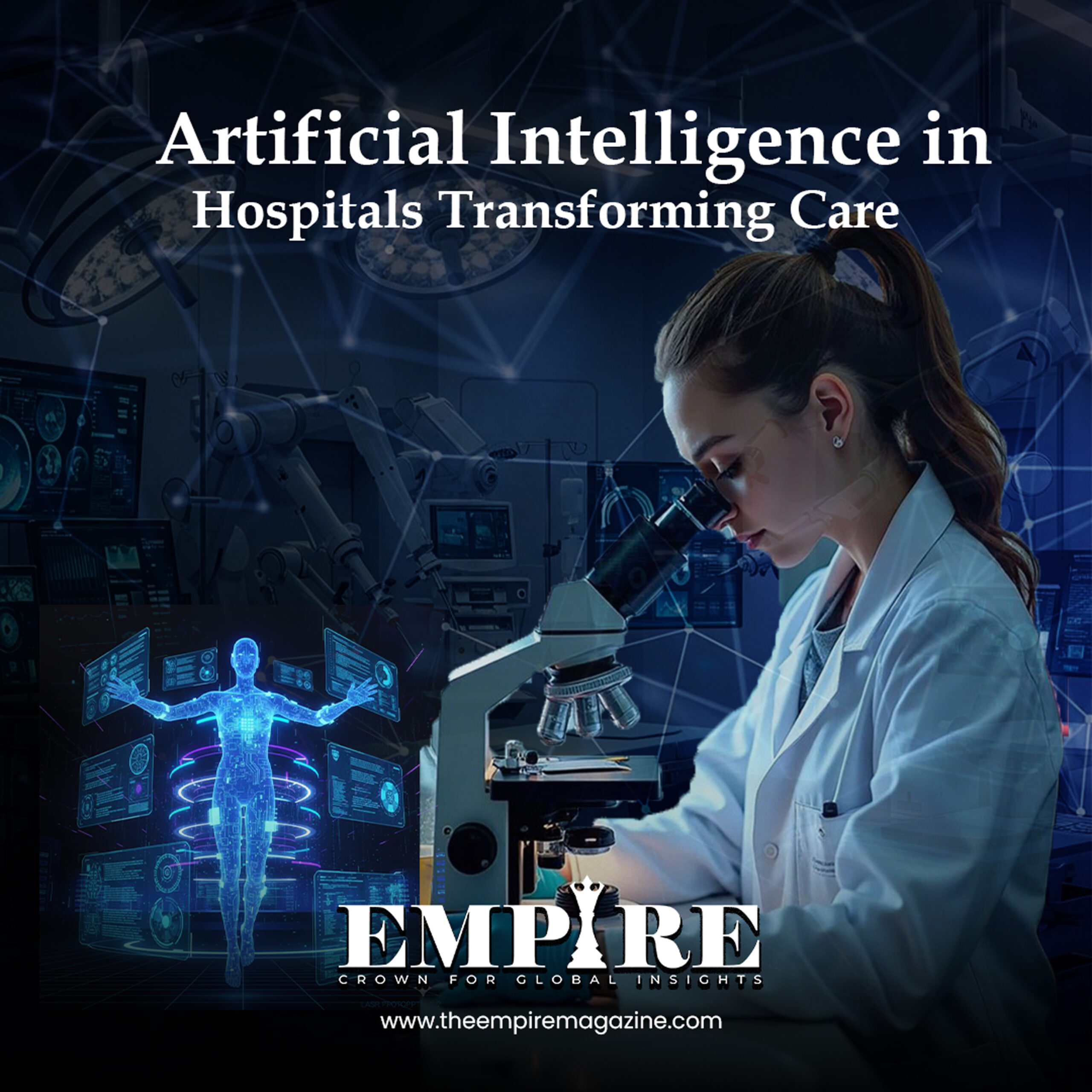
Artificial Intelligence in Hospitals Transforming Care
Introduction: A Quiet Revolution in Healthcare
Artificial Intelligence in Hospitals is reshaping the way modern healthcare operates, quietly but profoundly. Hospitals have always been places of urgency, emotion, and constant motion, where physicians, nurses, and staff work tirelessly to care for patients.
Behind this visible activity, a less obvious but equally powerful transformation is happening. Artificial intelligence (AI) is becoming an invisible but indispensable partner in hospitals around the world. It supports decisions, predicts outcomes, optimizes resources, and enhances patient experience — not with spectacle, but with sustained, data-driven impact.
This revolution is not coming in the distant future. It is happening now.
A New Kind of Medical Assistant
Artificial intelligence in hospitals does not resemble science fiction. There are no walking robots or autonomous surgeons. Instead, AI lives within systems that analyze massive amounts of data, find hidden patterns, and empower caregivers to make smarter decisions.
One of the most widespread uses of AI is in medical imaging. Scans such as X-rays, MRIs, and CTs generate an enormous volume of visual data. AI systems can scan these images in seconds, identifying areas that require closer inspection, such as tumors or fractures. This accelerates diagnosis and minimizes human error.
In countries like South Korea and the United Kingdom, hospitals use AI tools to detect early signs of lung cancer and stroke with impressive accuracy. These systems act like an extra pair of highly trained eyes — always vigilant.
Early Detection Saves Lives
Early detection is one of the most powerful advantages of AI in hospital care. In medicine, time truly matters. Detecting a condition before symptoms fully develop can dramatically improve outcomes.
For example:
- AI systems can analyze vitals to detect early signs of sepsis, a life-threatening infection.
- In the United States, some hospitals use AI to review patient data every 15 minutes to spot subtle changes that humans might miss.
- In India, AI tools help screen patients for diabetic retinopathy, bringing ophthalmic screening to remote clinics with limited specialist access.
This capability expands access to early diagnosis and strengthens preventive care.
Smarter Scheduling and Resource Management
Hospital operations involve more than clinical care. They require efficient scheduling, resource allocation, and bed management.
AI systems help hospitals predict patient inflow, estimate lengths of stay, and optimize bed assignments. Singaporean hospitals have deployed AI platforms that monitor patient transitions, predict discharges, and allocate rooms more effectively.
The result? Reduced wait times, smoother admissions, and improved patient satisfaction.
Enhanced Clinical Decision Support
Healthcare professionals carry a tremendous cognitive load. Clinical decisions often require synthesizing complex data, including symptoms, history, lab results, and emerging research.
AI systems augment clinical intelligence by comparing patient profiles against millions of records and medical literature. In emergency settings in Canada and Germany, AI tools assist doctors in predicting cardiac risk by processing ECG readings, blood markers, and prior history.
These tools do not replace clinicians. They enhance their confidence, clarity, and speed of decision making.
Personalized Treatment Selection
AI is not just about detection and diagnosis. It also helps tailor treatment plans to individual patients.
In oncology, for instance, AI systems analyze tumor genetics, past treatment responses, and biomarker profiles to suggest personalized chemotherapy plans. This individualized approach can improve outcomes while reducing side effects.
AI also accelerates clinical trials by identifying eligible participants faster, reducing delays in crucial drug research.
Virtual Nurses and Patient Interaction
Not all AI in hospitals works behind the scenes. Some tools interact directly with patients.
AI-powered virtual nurses and chatbots help:
- Answer treatment questions
- Provide medication reminders
- Monitor recovery progress remotely
For instance, an Australian hospital uses a chatbot to check how patients are recovering after discharge. It follows up, advises on symptoms, and alerts human nurses when necessary. This reduces readmissions and strengthens continuity of care.
Protecting Patient Data with AI
As hospitals digitize health records, data privacy and security become critical concerns. AI-enabled cybersecurity systems detect unusual patterns, flag suspicious behavior, and block threats before data is compromised.
Hospitals in Europe and North America deploy AI-driven security systems that learn from past incidents and continuously improve their defenses. These AI “guards” help protect sensitive medical and financial information.
Reducing Burnout and Supporting Care Staff
Healthcare workers face high stress, long hours, and emotional fatigue, contributing to burnout and staff turnover.
AI solutions help address this by handling repetitive and time-consuming tasks such as:
- Transcribing doctor–patient conversations
- Updating electronic health records
- Drafting discharge summaries
In Brazil and France, voice-to-text AI systems save clinical teams hours each week, allowing them to focus on direct patient care and reducing administrative burnout.
Challenges Along the Way
Despite its benefits, Artificial Intelligence in Hospitals faces challenges:
• Accuracy and Safety
Incorrect predictions can have serious consequences. Human oversight remains essential.
• Bias and Fairness
AI systems trained on limited datasets may not perform well across diverse populations.
• Privacy Concerns
AI requires large amounts of personal data. Hospitals must safeguard privacy with strong policies.
• Infrastructure Gaps
Many low-resource settings lack the financial and technical capacity to deploy advanced AI systems.
Addressing these challenges is essential to ensure equitable benefits for all populations.
The Global Picture
Around the world, hospitals are using AI in ways tailored to local contexts:
- Rwanda uses AI for disease surveillance.
- China implements AI to speed up triage.
- The United States uses AI to manage ER overcrowding.
These examples show that AI is flexible, scalable, and adaptable — from simple tools to complex predictive systems.
What Comes Next?
The future of Artificial Intelligence in Hospitals includes:
• Remote patient monitoring with wearables
• AI-guided robotic surgery
• Personalized prevention and wellness plans
• AI companions for mental health support
• Real-time language translation for multilingual care
However, the future of hospital care is not about replacing humans with machines. The goal is to strengthen caregivers, improve outcomes, and expand access to high-quality care.
🔗 Related Insight
For deeper exploration of how innovation and leadership are reshaping industries globally, read our previous feature here:
👉 https://theempiremagazine.com/?p=5140&preview=true
– The Empire Magazine
Crown For Global Insights