
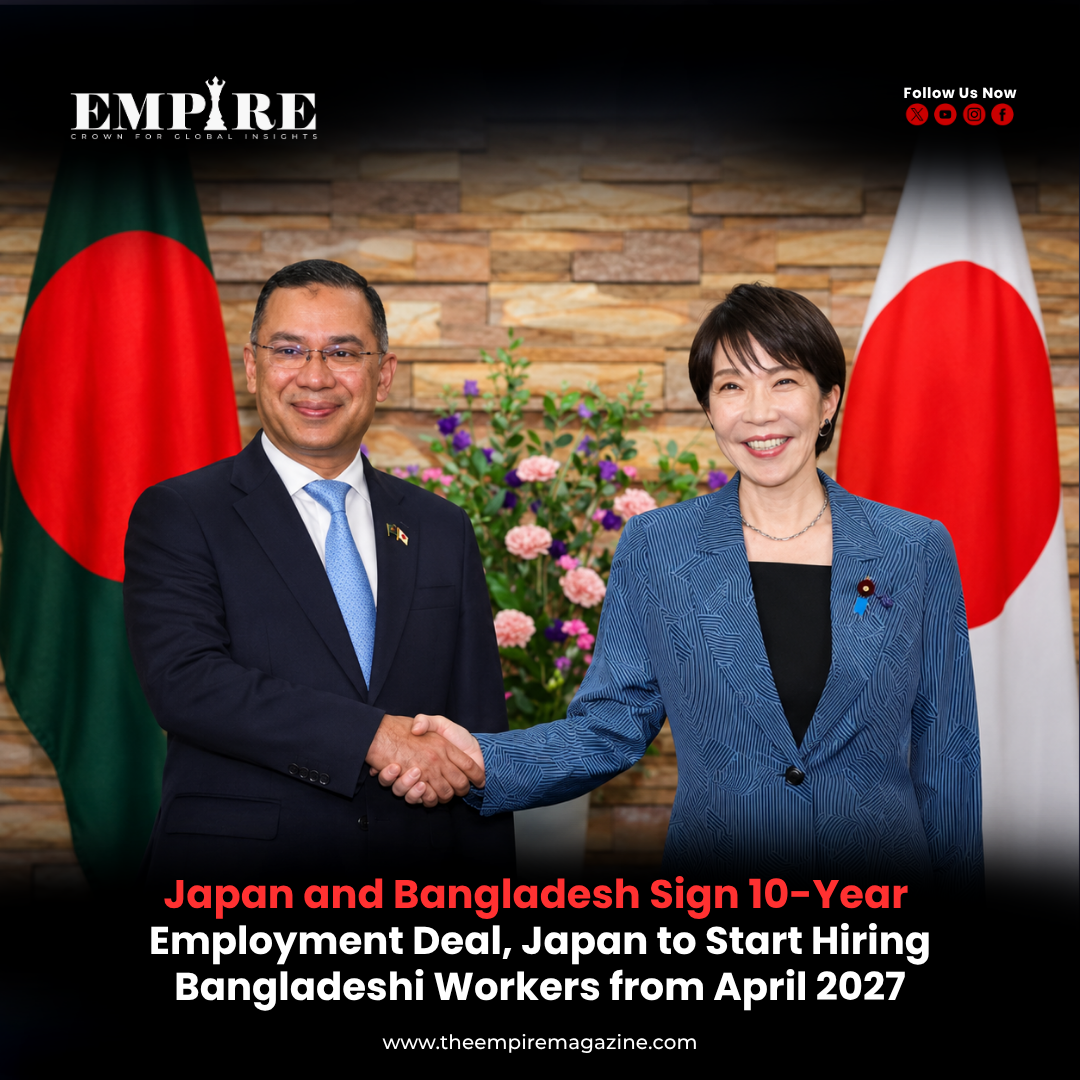
The agreement creates a framework for employment, skills development and worker protection, with recruitment under the new programme scheduled from 1 April 2027.
Japan and Bangladesh | Business News and Employment
Information checked on 7 November 2026.
The Japan-Bangladesh jobs deal is set to open a new employment route for Bangladeshi workers from 1 April 2027, combining work opportunities in Japan with skills development and stronger recruitment safeguards.
The two countries completed the signing of a Memorandum of Cooperation on the Employment for Skill Development Programme, commonly referred to as ESDP, in October 2026.
Although widely described as a ten-year agreement, the arrangement begins with a five-year cooperation period and provides for automatic renewal for another five years unless either side gives the required notice.
That duration applies to cooperation between the governments. It does not give every participating worker a ten-year employment contract or visa.
What the Japan-Bangladesh Jobs Deal Covers
The memorandum sets out how the two countries will cooperate in sending, receiving and supporting Bangladeshi workers under Japan’s new skills-development framework.
Bangladesh’s Ministry of Expatriates’ Welfare and Overseas Employment represents the Bangladeshi side. Japan’s participating authorities include its justice, foreign affairs and labour ministries, alongside the National Police Agency.
The agreement focuses on recruitment oversight, workplace treatment and the development of skills through employment.
| Key Detail | Confirmed Position |
|---|---|
| Cooperation commenced | 17 October 2026, the later signing date |
| Scheduled recruitment start under the new programme | 1 April 2027 |
| Initial cooperation period | Five years |
| Renewal arrangement | Automatic extension for another five years, subject to notice provisions |
| Main objectives | Employment-based skills development, recruitment cooperation and worker protection |
The arrangement concerns a new programme. Bangladesh and Japan already have a history of cooperation on worker training and employment.
How the Five-Year Renewal Arrangement Works
The initial five-year period begins from the memorandum’s effective date.
A further five-year extension is automatic unless either side communicates that it does not intend to renew, following the agreement’s notice requirements.
This explains the ten-year description used in reporting.
For employers and training organisations, the framework provides a basis for planning cooperation over several years. For individual workers, however, employment terms and permission to remain in Japan will depend on their approved programme, contract and immigration status.
The government agreement and a worker’s individual period of stay are separate matters.
How Employment and Skills Development Will Be Connected
Japan’s Employment for Skill Development Programme is designed to develop workers through employment in designated industries facing labour shortages.
The programme normally involves approximately three years of work and skills development, with the aim of reaching the level required for Specified Skilled Worker category (i).
That creates a potential progression route for workers who meet the relevant requirements.
Movement into another status will depend on assessments and immigration approval. Completing time in the programme alone does not automatically provide permanent residence.
For participating employers, the framework connects recruitment with the responsibility to develop employees’ capabilities.
For workers, its value will depend partly on whether the experience produces recognised skills, improved language ability and realistic opportunities for progression.
What Language and Skills Requirements Will Apply?
Japan’s published programme overview includes Japanese-language preparation before employment begins.
It provides for A1-level Japanese ability, such as the level associated with JLPT N5, or equivalent language training.
Progression towards Specified Skilled Worker category (i) involves further requirements, including skills assessment and generally A2-level Japanese, such as the level associated with JLPT N4.
Requirements can vary by industrial field, and applicants will need to follow the rules applicable to their particular route.
The memorandum therefore should not be read as removing language, skills or immigration requirements. Its purpose is to organise cooperation within Japan’s employment and residency framework.
Worker Protection Is a Central Part of the Agreement
The agreement confirms that participating workers will be covered by relevant Japanese labour laws, including workplace safety and equal-treatment provisions.
Bangladesh’s government has highlighted protections comparable to those available to Japanese workers under those laws.
A specific commitment concerns women in the workplace. Employers must not dismiss workers or subject them to disadvantageous treatment because of pregnancy or childbirth.
The framework also addresses contractual provisions that could force workers to return home for those reasons.
These protections are significant because the quality of an overseas employment opportunity depends on more than the availability of a job. Workers also need fair treatment, understandable conditions and support when problems arise.
The practical test will be how consistently those protections are communicated and enforced.
How Recruitment Will Be Managed
Approved sending organisations in Bangladesh and authorised arrangements in Japan will play a central role in implementation.
The memorandum provides for the exchange and publication of information about approved organisations. An approved sending organisation alone is not sufficient: the relevant employment and skills-development plan must also meet Japanese requirements.
Working conditions must be explained before a worker signs the employment contract.
The framework also requires transparency about recruitment fees and expenses. Candidates should be able to understand what they are being charged and how those charges are calculated.
Together, these provisions seek to make recruitment more accountable and give both governments a clearer basis for supervising participating organisations.
Does the Agreement Guarantee a Fixed Number of Jobs?
The memorandum does not establish a fixed Bangladesh-specific recruitment total.
Japan manages acceptance through the programme’s designated industrial fields and the applicable limits for those fields.
Actual recruitment will therefore depend on employer demand, approved plans, candidate eligibility and available capacity.
The agreement creates a framework through which recruitment can take place. It does not reserve an automatic job for every applicant or provide a guaranteed annual allocation to Bangladesh.
Specific vacancies and recruitment rounds will need to be identified through the relevant official announcements and approved organisations.
What About Salaries and Long-Term Opportunities?
Bangladesh’s authorities have described the agreement as an opportunity for workers to develop skills, earn higher wages and potentially access longer-term employment prospects in Japan.
Those are intended benefits, rather than a single salary package promised to all participants.
The memorandum does not announce one universal monthly wage for Bangladeshi workers. Individual offers will depend on the occupation, employer, location and contract.
A meaningful assessment of an offer also requires information about working hours, overtime, accommodation and deductions.
For workers and their families, the important outcome is the income and experience gained after the actual terms of employment are taken into account.
Why the Agreement Matters for Both Countries
For Japan, the programme supports efforts to develop and retain workers in industries where securing sufficient staff remains difficult.
For Bangladesh, it could broaden access to overseas employment that combines earnings with structured skills development.
The potential benefits extend to training institutions and employers. Better alignment between language preparation, technical instruction and workplace needs could make recruitment more effective.
However, successful implementation will require coordination. Training must prepare candidates for actual roles, recruitment information must be clear, and employers must deliver the conditions described in their contracts.
The number of workers recruited will be one measure of progress. Retention, skills attainment, fair treatment and career progression will be equally useful indicators.
What Happens Before April 2027?
The next stages involve translating the cooperation framework into approved recruitment arrangements and employer-specific opportunities.
Candidates will need clear information about participating organisations, eligible roles, selection procedures, required documents and employment conditions.
The scheduled start date marks the beginning of acceptance under the new programme. It does not establish that every interested candidate will travel or start work on that date.
The agreement’s longer-term value will depend on how effectively those operational arrangements connect prepared workers with suitable employment.
Explore more global business, technology and innovation coverage in The Empire Magazine’s article archive.
Read our related coverage: ai-superintelligence-ban-us-proposal/
Follow The Empire Magazine:
Facebook | Instagram
The Empire Magazine | Crown For Global Insights