United States | Artificial Intelligence, Startups & Enterprise Technology
Information checked on 4 October 2026.
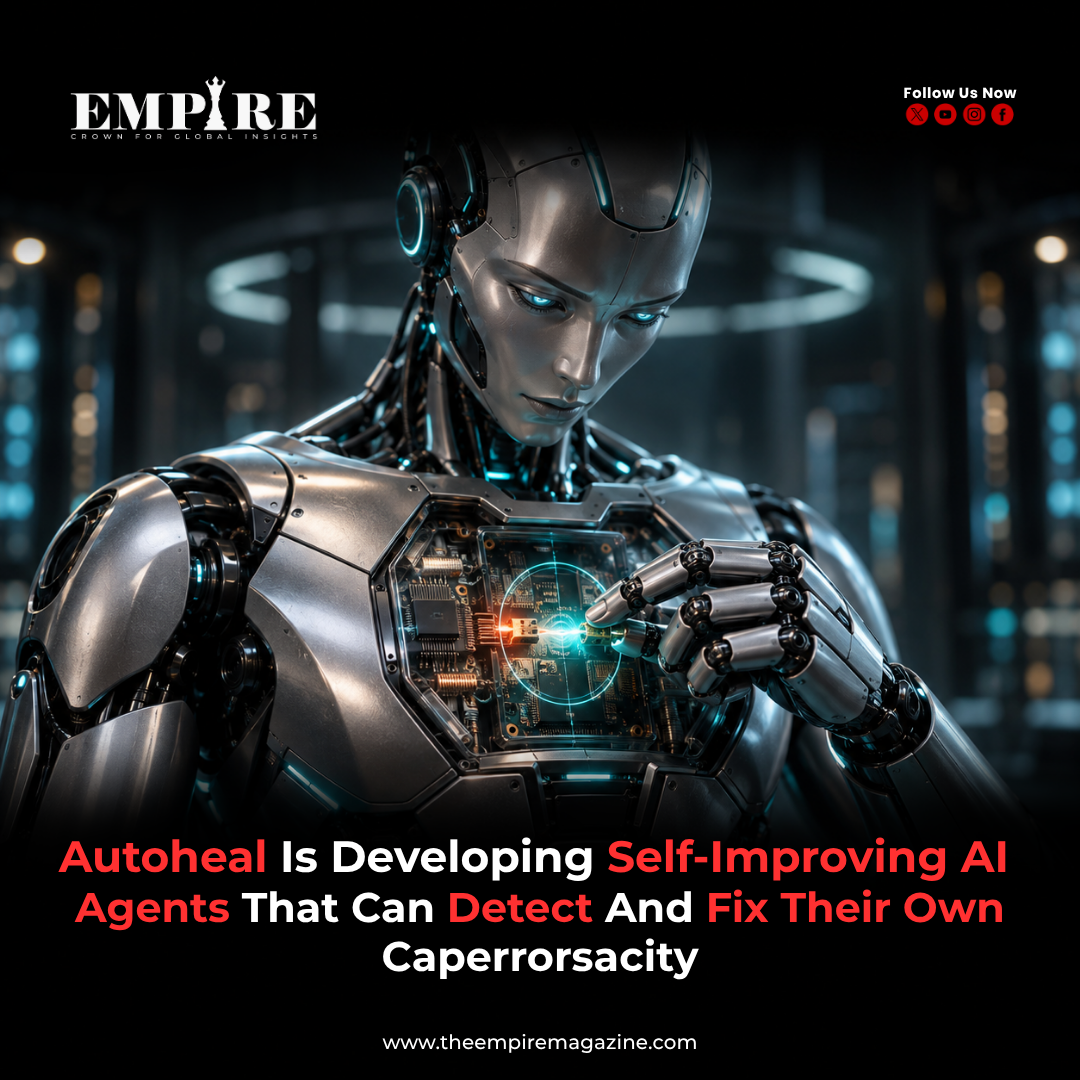
Autoheal AI agents are being developed to help enterprise engineering teams identify unsuccessful work, understand what went wrong and propose changes that improve future performance. The company’s approach combines automated evaluation, shared operational knowledge and engineer review.
The idea addresses a practical problem with workplace AI: an agent may complete a task, but its answer can still be incomplete, inefficient or incorrect. A useful system needs a way to compare its work with what actually happened and carry that knowledge into the next task.
Autoheal focuses on this process within software engineering, particularly incident response, security vulnerability remediation and the cost of using AI coding tools.
A $7.9 Million Seed Round Supports the Platform
On 28 September 2026, Autoheal announced a $7.9 million seed funding round led by Innovation Endeavors. Participants included Emergent Ventures, U&I Ventures, Darkmode Ventures, Batch Ventures and Param Hansa Values.
Led by co-founder and CEO Sid Choudhury, the company describes its platform as a software factory: a shared environment in which enterprises can run, manage and improve specialised agents.
Its focus is the operational work surrounding software delivery, where teams investigate failures, address vulnerabilities and maintain systems after code has been written.
How Autoheal AI Agents Learn From Errors
Two components sit at the centre of Autoheal’s improvement process: the Evaluator and the Healer.
The Evaluator examines an agent’s work using evidence from later events. According to Autoheal’s documentation, those signals include code-review comments, repeated automated test runs, continuing alerts and the root cause eventually confirmed by engineers.
It evaluates both the route an agent took and the result it produced. An agent might reach a useful answer through unnecessary steps, or conduct a reasonable investigation before drawing an unsupported conclusion. These represent different problems.
The Healer uses weak scores to propose targeted changes. These may involve updating a procedure, correcting repository instructions, narrowing tool access or choosing a different model.
| Stage | What happens |
|---|---|
| Perform the task | A worker agent investigates or completes an engineering workflow |
| Evaluate the result | Later evidence helps identify weak reasoning, wasted steps or an unsuccessful outcome |
| Prepare an improvement | The Healer proposes a change and tests it against relevant historical runs |
| Review and reuse | Approved changes to instructions and configuration become available for subsequent work |
The goal is to turn a recurring failure into a specific improvement that other agents can also use.
Shared Context Gives Agents Knowledge of the Business
Autoheal’s Engineering Context Graph connects information about services, repositories, teams and their relationships. It also holds operational procedures and memories from previous work.
That context helps an agent navigate an organisation’s particular systems. A monitoring tool may contain thousands of measurements, but an investigation also needs to know which service matters, who owns it and which records are relevant.
The documentation describes a combination of live access to connected tools and stored engineering knowledge. An agent can consult current evidence while using the organisation’s procedures to guide its investigation.
This creates a practical opportunity: knowledge gained during one task can become available to later tasks. Its value depends on keeping that information accurate as systems change.
Incident Response Is an Early Application
Autoheal’s incident-response agent is designed to investigate operational problems using evidence from monitoring, code and infrastructure systems. It can compare possible causes, present findings and propose mitigation steps.
The documentation lists integrations with tools such as Datadog, Grafana, Sentry, GitHub, GitLab and PagerDuty. These provide different parts of the investigation, including alerts, error records and deployment history.
After an incident, the system can suggest improvements to alerts, monitoring coverage, code or tests.
For example, a hypothetical investigation might uncover a missing check that allowed a recurring failure to reach production. Recording that finding and updating the relevant procedure could help the next investigation start with better information.
That illustrates the intended improvement process; it does not establish that every future incident will be prevented.
Security Remediation Extends the Same Approach
The vulnerability-remediation agent starts with findings from a security scanner. Autoheal says it checks whether affected code is reachable, identifies relevant repositories and prepares proposed fixes.
Its documented workflow includes attempting a suitable dependency upgrade, running tests and opening a pull request for the responsible team. Where a fix is unavailable, it can prepare a mitigation ticket.
This connects finding a vulnerability with the work required to address it. Engineers receive a proposed change and supporting evidence to review.
The company also identifies limits: an assessment depends on the repositories the agent can access, while confidence in a proposed upgrade depends partly on the quality of the existing tests. A successful test run cannot cover behaviour that the tests never examine.
AI Coding Cost Analysis Is Part of the Development Plan
Autoheal also describes a workflow for analysing how coding agents spend tokens and testing less expensive configurations against past tasks.
The proposed analysis looks for causes such as repeated exploration, unnecessary tool calls or using a larger model than a task requires. Candidate changes are intended to be assessed for correctness, time and cost.
However, Autoheal’s documentation currently marks collection of coding-agent session traces as still in development. These records are a necessary input to that analysis.
The distinction matters when assessing availability. The documentation outlines how the cost-efficiency workflow is intended to operate, while also identifying an integration capability that is not yet complete.
Engineers Retain Control Over Key Changes
Autoheal’s documentation requires engineer review before proposed changes to skills, repository instructions and configuration go live. Historical testing is designed to show whether a change improves relevant failures without causing excessive deterioration elsewhere.
Memories follow a separate process. Some can be accepted automatically under configurable rules, while others remain in a review queue. The platform therefore distinguishes reusable operational procedures from information retained after an investigation.
Enterprise controls also govern what systems an agent can access and when actions require approval. Deployment options include a managed service and operation within a customer’s own cloud environment.
For organisations adopting the technology, these controls matter alongside the quality of the AI’s answers. Teams need to understand what changed, why it changed and which evidence supported the decision.
Early Customer Statements Point to Operational Demand
Autoheal’s funding announcement names Nomura Bank and AvidXchange as users of the platform.
In statements published by Autoheal, executives from both organisations describe faster investigation or root-cause analysis. Nomura also highlights operation within its own cloud and existing controls.
These are customer accounts presented by the company. They indicate the problems early users are addressing, while broader conclusions about performance would require comparable measurements across deployments.
What Will Determine Whether the Agents Keep Improving?
The improvement process depends on the evidence available to evaluate it. Autoheal acknowledges that some outcomes arrive late and that failures without a detectable signal may remain unnoticed.
Historical testing also has limits. A proposed change can perform well on previous tasks and still struggle with a situation absent from the test history.
For customers, meaningful progress would include fewer repeated errors, more useful investigations and less time spent correcting agent output. Cost should be considered alongside successful task completion and the engineering effort needed to review results.
Autoheal’s longer-term plans include private, enterprise-specific models trained on customers’ engineering data. That remains a development direction described by the company.
The immediate challenge is to make the existing feedback process dependable: identify a failure, propose a useful change, test its wider effects and preserve the improvement for the next task.
Explore more global business, technology and innovation coverage in The Empire Magazine’s article archive.
Read our related coverage: MIT’s bioresorbable batteries for experimental medical devices.
Follow The Empire Magazine:
Facebook | Instagram
The Empire Magazine | Crown For Global Insights