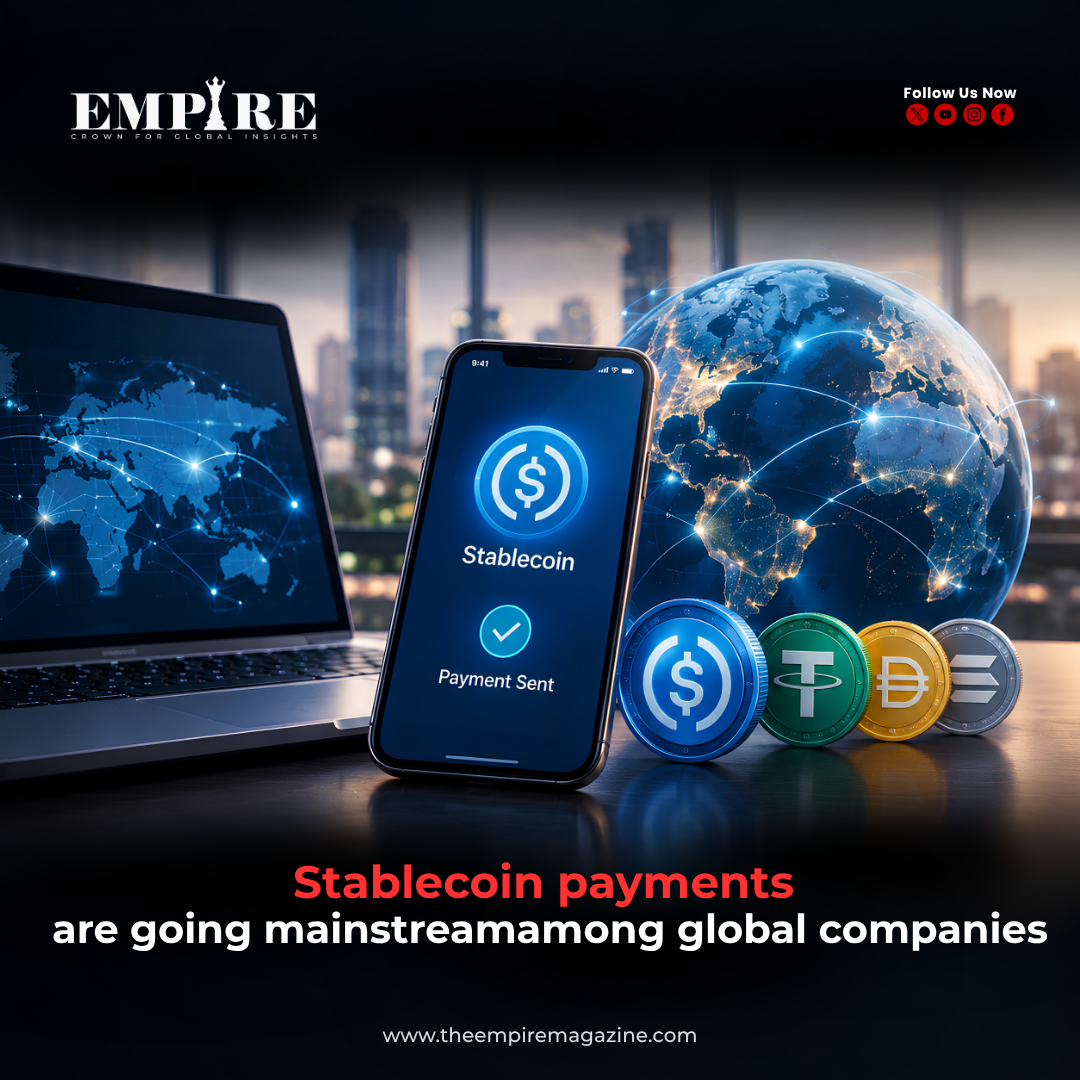
Stablecoin payments are going mainstream among global companies as businesses increasingly explore blockchain-based financial solutions for faster, more efficient, and more flexible transactions. Once mainly associated with cryptocurrency markets, stablecoins are now becoming part of broader discussions around international payments, corporate finance, and digital commerce.
Stablecoins are digital assets designed to maintain a stable value by being linked to traditional assets such as the US dollar or other currencies. Unlike highly volatile cryptocurrencies, stablecoins aim to provide price stability, making them more suitable for everyday financial activities.
Companies are exploring stablecoin payments because they can offer potential advantages in areas such as cross-border transactions, settlement speed, and financial accessibility.
The growing adoption of stablecoins reflects a larger transformation taking place in global finance, where traditional payment systems are increasingly connecting with blockchain technology.
Stablecoin Payments Are Going Mainstream as Businesses Explore Digital Finance
Stablecoin payments are going mainstream as companies look for alternatives to traditional payment methods that can be slow, expensive, or complicated across international markets.
Global businesses often face challenges when sending payments between countries, including:
- Currency conversion costs
- Banking delays
- Complex financial processes
- Limited access to international payment networks
Stablecoins provide a digital payment method that operates on blockchain networks, allowing transactions to move between participants without relying entirely on traditional banking infrastructure.
Businesses are exploring stablecoins for applications such as:
- International payments
- Supplier settlements
- Digital commerce
- Treasury management
- Financial services
The technology is attracting attention from companies seeking more efficient payment solutions.
Stablecoin Payments Are Going Mainstream Through Faster Cross-Border Transactions
One of the biggest reasons companies are interested in stablecoins is their potential role in cross-border payments.
Traditional international payments often involve multiple financial institutions, which can increase processing time and costs.
Stablecoin transactions can operate on blockchain networks that allow digital transfers to be completed more quickly.
For global companies, faster settlement can improve:
International Business Operations
Companies working across multiple countries can potentially move funds more efficiently.
Supplier Payments
Businesses may explore stablecoins for faster settlements with international partners.
Digital Marketplaces
Online platforms can use blockchain-based payment systems to support global transactions.
However, businesses must also consider regulatory requirements and compliance standards before adopting stablecoin payment systems.
Stablecoin Payments Are Going Mainstream as Major Companies Enter Digital Payments
The growth of stablecoin adoption has attracted attention from major financial and technology companies.
Payment companies, fintech firms, and blockchain organisations are developing products and services around stablecoins.
Companies are exploring stablecoins because digital payments are becoming increasingly important in a global economy where businesses operate across borders.
Financial technology companies are focusing on creating systems that combine:
- Blockchain infrastructure
- Traditional financial services
- Digital identity solutions
- Compliance technology
This combination is helping create a bridge between traditional finance and digital assets.
Stablecoin Payments Are Going Mainstream With Corporate Payment Innovation
Businesses are not only looking at stablecoins for customer payments but also for internal financial operations.
Corporate finance teams manage complex processes involving multiple currencies, international payments, and liquidity management.
Stablecoins could potentially support:
Treasury Operations
Companies may use digital assets to manage certain financial activities.
Global Workforce Payments
Businesses operating internationally may explore digital payment options for global teams.
Digital Commerce
Online businesses can integrate blockchain-based payment methods for customers.
The adoption of stablecoins depends on factors including regulatory clarity, infrastructure development, and business requirements.
Stablecoin Payments Are Going Mainstream as Regulations Develop Worldwide
Regulation is one of the most important factors influencing stablecoin adoption.
Governments and financial regulators worldwide are developing frameworks to address digital assets, consumer protection, and financial stability.
Stablecoin regulations focus on areas such as:
- Reserve management
- Transparency
- Consumer protection
- Anti-money laundering requirements
- Financial system risks
Clear regulatory frameworks can provide businesses with greater confidence when considering stablecoin adoption.
At the same time, regulators continue evaluating how digital currencies should operate alongside traditional financial systems.
Stablecoin Payments Are Going Mainstream Alongside Blockchain Innovation
The rise of stablecoins is connected to the broader growth of blockchain technology.
Blockchain allows digital transactions to be recorded and verified through decentralised networks.
Businesses are exploring blockchain applications beyond payments, including:
- Supply chain tracking
- Digital identity
- Asset management
- Smart contracts
Stablecoins represent one of the most visible examples of blockchain technology moving into practical business applications.
The development of digital payment infrastructure is part of a wider technology transformation affecting industries around the world.
Read more technology and business insights here: https://theempiremagazine.com/coastal-assembly-uses-ai-beach-restoration/
Stablecoin Payments Are Going Mainstream But Challenges Remain
Although stablecoins are gaining attention, companies still face several challenges before widespread adoption.
Regulatory Uncertainty
Different countries have different approaches to digital asset regulation.
Security Risks
Blockchain systems require strong security measures to protect users and transactions.
Market Acceptance
Businesses and consumers need confidence before changing established payment habits.
Infrastructure Development
Companies need reliable technology platforms to support stablecoin transactions.
These challenges will influence how quickly stablecoins become integrated into mainstream business payments.
Stablecoin Payments Are Going Mainstream as the Future of Digital Transactions Evolves
Stablecoin payments are becoming an important part of the conversation around the future of global finance.
As companies search for faster and more efficient payment methods, blockchain-based solutions are receiving increasing attention.
Stablecoins provide a connection between traditional currencies and digital financial systems, offering businesses a new way to explore international transactions and digital commerce.
The future growth of stablecoin payments will depend on technology development, regulatory progress, and how businesses integrate digital assets into their financial operations.
Follow The Empire Magazine for global business, technology, innovation, and leadership insights:
Facebook: https://www.facebook.com/profile.php?id=61573749076160
Instagram: https://www.instagram.com/the_empire_magazine/
The Empire Magazine | Crown For Global Insights