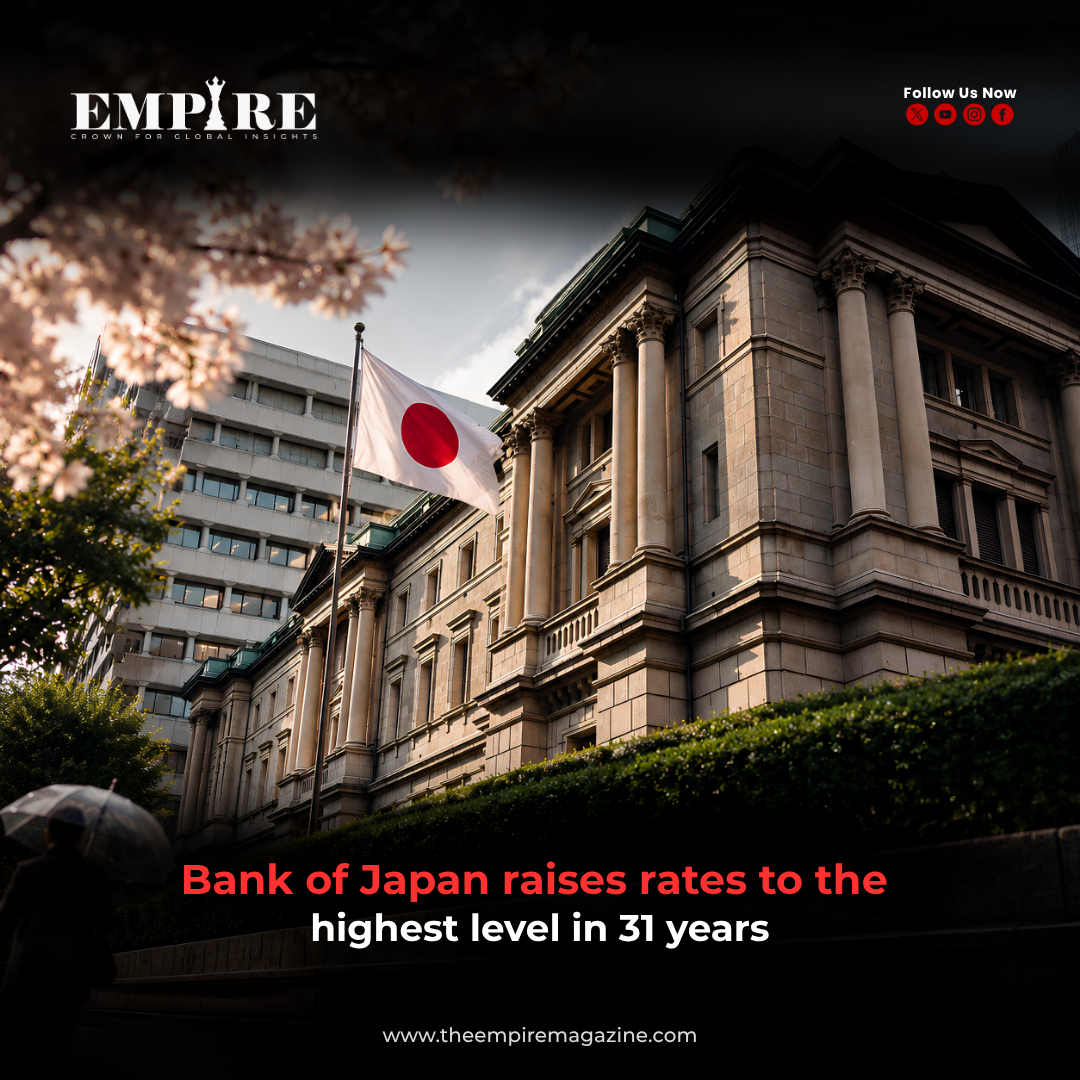
Bank of Japan raises rates to the highest level in 31 years as the country’s central bank continues adjusting its monetary policy after years of ultra-low interest rates. The decision marks an important moment in Japan’s economic journey, reflecting changing inflation conditions, stronger wage growth, and efforts to normalise financial policy.
For decades, Japan maintained some of the world’s lowest interest rates as the economy struggled with weak inflation, slow growth, and persistent deflation concerns. The Bank of Japan (BOJ) used extremely accommodative monetary policies to support economic activity and encourage spending.
The recent rate increase represents a significant shift from that long-standing approach. It signals that Japan’s central bank believes economic conditions have changed enough to gradually move toward more traditional monetary policy.
Bank of Japan Raises Rates as Japan Moves Away From Ultra-Low Interest Policy
Bank of Japan raises rates as the country enters a new phase of monetary policy management.
For many years, Japan’s central bank maintained negative interest rates and large-scale monetary support to stimulate the economy.
Japan’s economic challenges included:
- Low inflation expectations
- Weak consumer spending
- Slow wage growth
- An ageing population
The BOJ’s previous policies aimed to encourage borrowing, investment, and economic activity.
However, rising inflation and improved wage trends changed the economic environment. The central bank began moving toward policy normalisation as price increases became more consistent.
The rate increase reflects a major transition after a long period of unconventional monetary policy.
Bank of Japan Raises Rates as Inflation and Wage Growth Influence Decisions
One of the main factors behind the Bank of Japan’s policy changes has been inflation.
For years, Japan experienced very low inflation compared with many other developed economies. However, global supply chain disruptions, higher energy costs, and changing economic conditions contributed to stronger price increases.
At the same time, Japan experienced improvements in wage growth.
Wage increases are important because they can support consumer spending and create a more sustainable inflation cycle.
The Bank of Japan has closely monitored:
Consumer Prices
Higher prices influence how central banks manage interest rates.
Wage Negotiations
Annual wage discussions between companies and workers have become an important economic indicator.
Business Conditions
Corporate earnings and investment trends also influence monetary decisions.
Bank of Japan Raises Rates and Signals a New Economic Direction
The interest rate increase represents more than a single policy decision. It reflects a broader change in Japan’s economic strategy.
For decades, Japan’s central bank focused on preventing deflation and encouraging economic activity through low borrowing costs.
Now, policymakers are balancing different priorities:
- Maintaining stable inflation
- Supporting economic growth
- Managing borrowing costs
- Maintaining financial stability
Higher interest rates can affect households, businesses, investors, and financial markets.
When rates increase:
Borrowing Costs Rise
Loans and mortgages may become more expensive.
Savings Returns May Improve
Higher rates can increase returns for savers.
Currency Effects Can Change
Interest rate differences between countries can influence currency movements.
Bank of Japan Raises Rates After Historic Period of Negative Interest Rates
Japan’s monetary policy history is different from many other major economies.
The country introduced negative interest rates in 2016 as part of efforts to encourage lending and economic activity.
This approach meant financial institutions were charged for some deposits held at the central bank.
The policy reflected Japan’s long struggle with low inflation and limited economic momentum.
The move toward higher rates represents a departure from that strategy.
The Bank of Japan has gradually adjusted its approach as economic indicators improved.
Bank of Japan Raises Rates With Impact on Businesses and Consumers
Changes in interest rates affect many parts of the economy.
For businesses, higher rates can influence:
- Investment decisions
- Expansion plans
- Financing costs
- Corporate borrowing
For consumers, interest rates can affect:
- Housing loans
- Savings
- Spending behaviour
- Personal finance decisions
Japanese companies have been adapting to changing economic conditions, including higher wages and increased costs.
The impact of higher interest rates will depend on how the broader economy responds.
Bank of Japan Raises Rates as Global Markets Watch Japan’s Policy Shift
The Bank of Japan’s decisions are closely followed by global investors because Japan is one of the world’s largest economies.
Changes in Japanese monetary policy can influence:
- Currency markets
- Bond markets
- Global investment flows
Japan’s previous low-rate environment encouraged some investors to seek higher returns in overseas markets.
As Japan’s interest rates rise, investors may reassess global investment strategies.
The policy shift also highlights differences between major central banks as countries respond to changing inflation conditions.
Bank of Japan Raises Rates While Facing Economic Challenges
Although Japan’s monetary policy is changing, the country still faces economic challenges.
Important long-term issues include:
Demographic Changes
Japan has an ageing population, which affects labour markets and economic growth.
Productivity Growth
Improving productivity remains important for long-term economic development.
Consumer Confidence
Sustaining domestic demand is a key economic priority.
The Bank of Japan must balance interest rate increases with the need to support economic stability.
Bank of Japan Raises Rates as Japan Enters a New Financial Era
Bank of Japan raises rates to the highest level in 31 years, marking one of the most important changes in Japan’s financial policy landscape.
The decision reflects a transformation in economic conditions after decades of low inflation and unconventional monetary policies.
Japan’s central bank will continue monitoring inflation, wages, economic growth, and financial stability as it manages this new phase.
The development is part of a wider global economic transformation where central banks are adjusting policies in response to changing market conditions.
Read more global business and economic insights here: https://theempiremagazine.com/d-robotics-raises-400-million-ai/
Follow The Empire Magazine for global business, technology, innovation, and leadership insights:
Facebook: https://www.facebook.com/profile.php?id=61573749076160
Instagram: https://www.instagram.com/the_empire_magazine/
The Empire Magazine | Crown For Global Insights